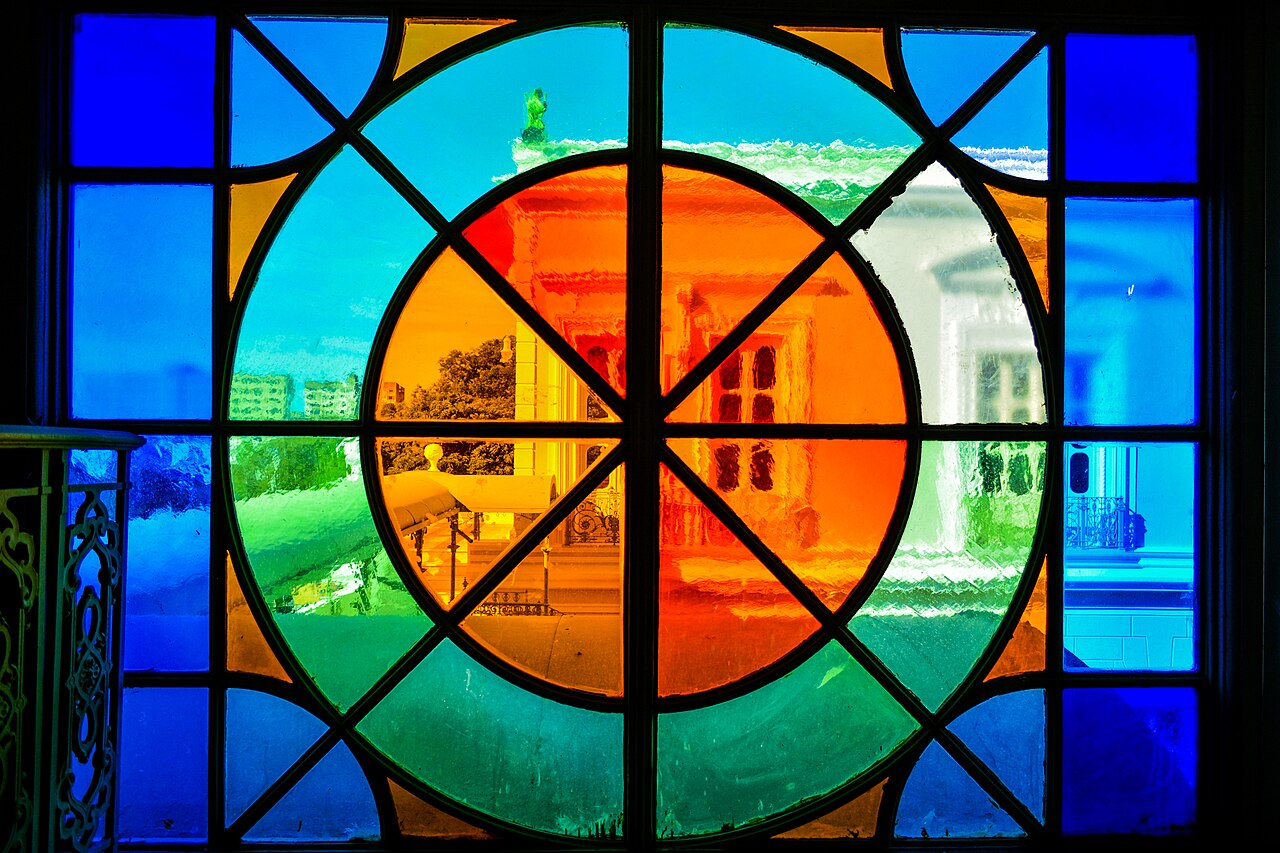
The Theatro Jose de Alencar is the most elegant building in downtown Fortaleza. It opened in 1910 and was named after the novelist Jose de Alencar, born in Ceara and author of Brazilian classics such as Iracema, the story from which the city's best-known beach takes its name. The theatre was built in a mixture of styles, with a neoclassical facade in pale tones and an interior framework of cast iron that was manufactured in Scotland and shipped across the Atlantic, then assembled on site. Inside, the lobby and auditorium are decorated with Art Nouveau details, painted ceilings, carved wood, and above all the stained glass windows and glass panels that glow in different colours as the daylight moves. The adjoining garden, with its small patio and iron structures, is a peaceful pause from the heat and traffic of the surrounding streets. The theatre is part of the state cultural network and still stages concerts, plays, dance and opera, so you can experience it either as a historic monument by day or as a working venue by night. It stands on a square near the Praca do Ferreira, the Passeio Publico and the old commercial streets, which makes it an easy stop on a walking route through the historic centre. For visitors who have only seen Fortaleza as a beach city, this building is a revelation about its past as a thriving commercial port.
How to visit well
The theatre usually offers guided visits during the day on weekdays, and there are periodic free cultural programmes. Because the schedule depends on rehearsals and performances, check the theatre's website or ask at the door about visiting hours before you make the trip. Guided visits, when offered, typically last around forty-five minutes to an hour, are most often given in Portuguese, and take in the auditorium, the stage area and the garden.
If you can, combine the visit with an evening performance: even a modest concert in the main hall is a memorable experience because of the acoustics and the decoration. Look for the details: the delicate ironwork columns, the painted ceiling, the boxes arranged in horseshoe tiers and the glass work of the facade and the garden pavilion. The theatre is surrounded by other historic buildings, so you can continue on foot to the Passeio Publico, the old fort area and the cathedral.
The historic centre is busy and commercial on weekdays and quiet on Sundays, so plan your walk for a weekday morning when shops are open and streets feel lively, and keep an eye on phones and bags in the crowds. The area is hot in the middle of the day, so carry water, wear a hat and use the shade of the squares. Architecture enthusiasts, photographers and anyone interested in how Fortaleza grew rich in the cotton and trading era will get the most from this stop, while families can combine it with the central market for a shorter, varied morning.
An extra tip for photographers
The stained glass is at its best in the morning when light passes through the garden pavilion, and the foyer is quieter before groups arrive. Wear modest clothing, keep your voice low in the auditorium and ask before using a tripod. If the main hall is closed for a rehearsal, the garden and foyer are usually still worth a look.
What to expect
The experience
A guided or self-paced look at the auditorium, the iron structure and the garden, or an evening performance in the hall.
Best time
Weekday mornings for visits; evenings when a concert or play is on.
How long
One to two hours including the surrounding square.
Tips
Check visiting hours and any ticket needed before you go, carry water, and watch your bag in the busy centre.
Quick picks
- Best for
- Architecture and history lovers, and anyone who wants a break from the beach.
- Families
- Older children who enjoy buildings and stories will like it; very young ones may tire of a guided visit.
- Couples
- An evening concert in the hall is a romantic option.
- Pair with
- Mercado Central, the cathedral and the Passeio Publico.
- Time needed
- A weekday morning.
Good questions
When was the Theatro Jose de Alencar built?+
It opened in 1910 and is named for the Ceara-born novelist Jose de Alencar. The cast-iron framework was made abroad and assembled on site.
Can I visit without seeing a show?+
Usually yes, through guided visits during the day, although the schedule depends on rehearsals and events. Confirm hours with the theatre before travelling to the centre.
Is the guide available in English?+
Visits are most often in Portuguese. A translation app or a local guide can help, and the building speaks for itself even without commentary.
What else is nearby?+
The Passeio Publico, the cathedral, the Mercado Central and the Dragao do Mar centre are all within a short walk or ride.
Is it worth seeing a performance?+
Yes if your schedule allows. The hall is small and beautiful, and a concert or play is a good way to experience it as a living building.