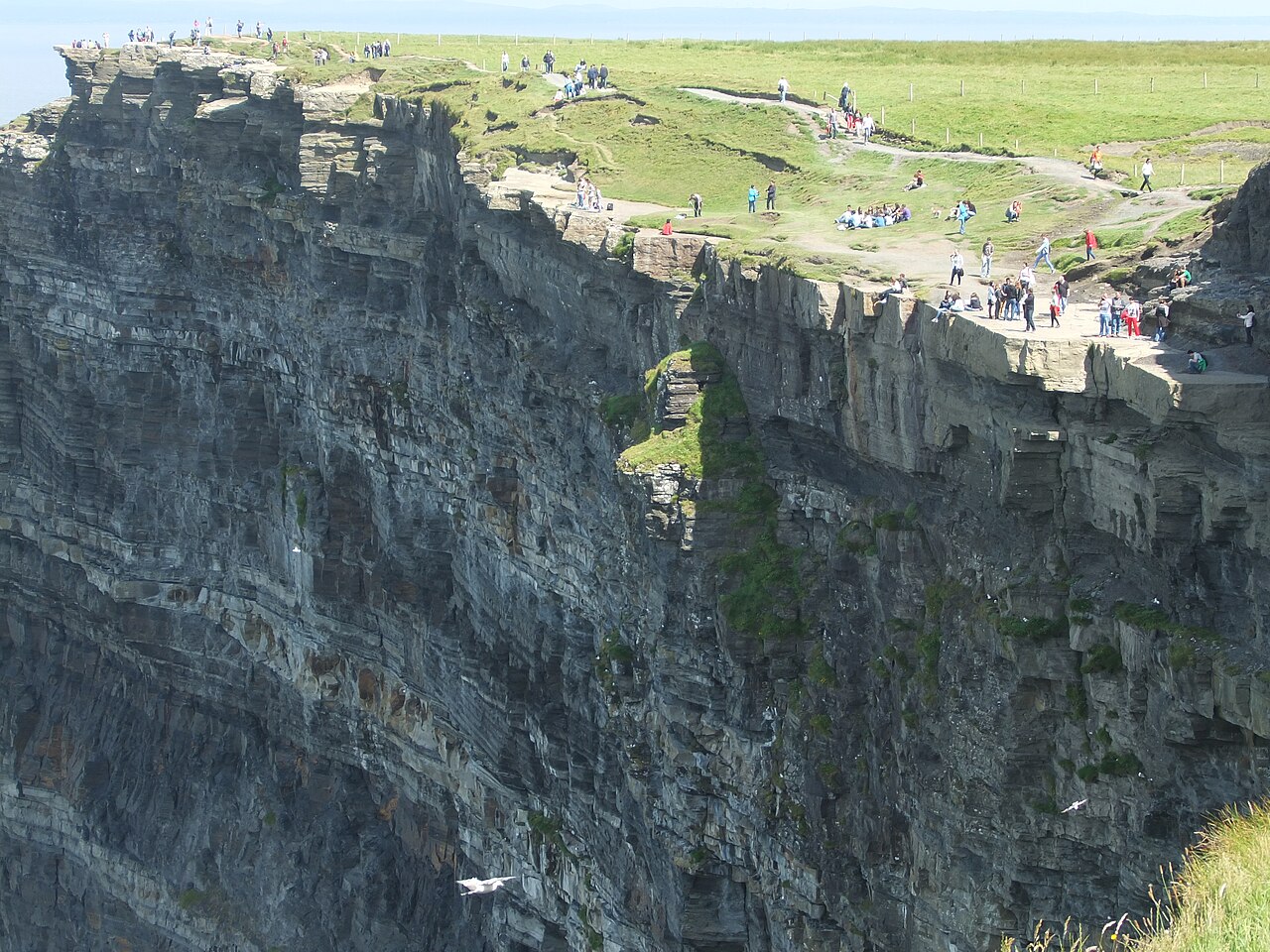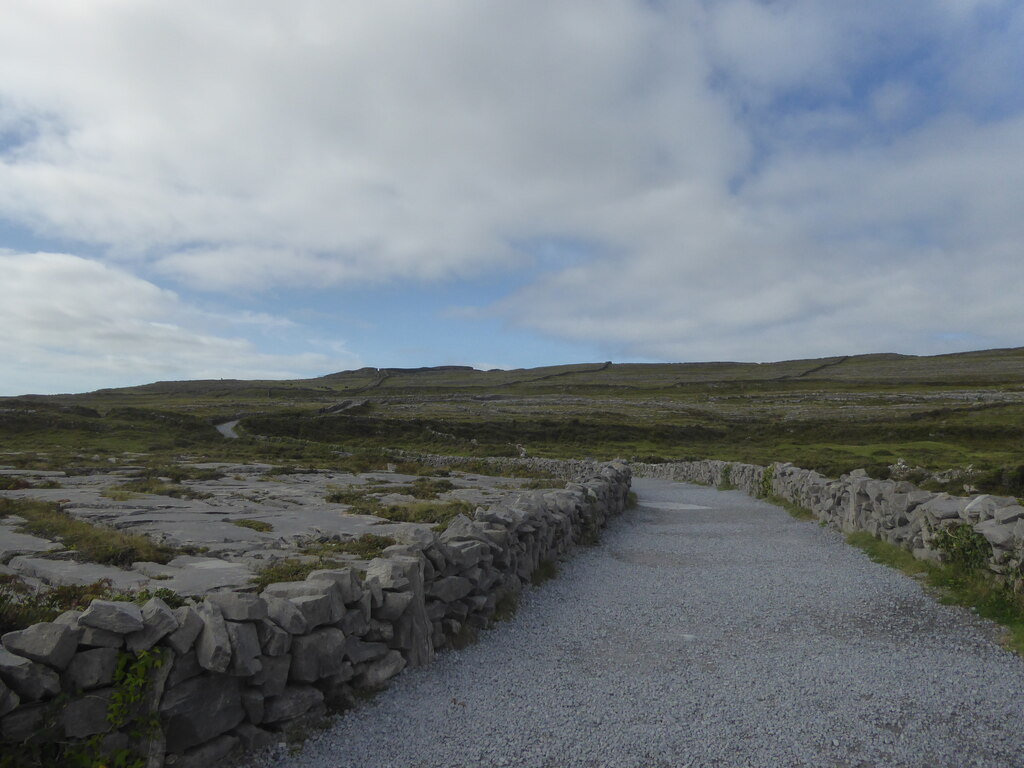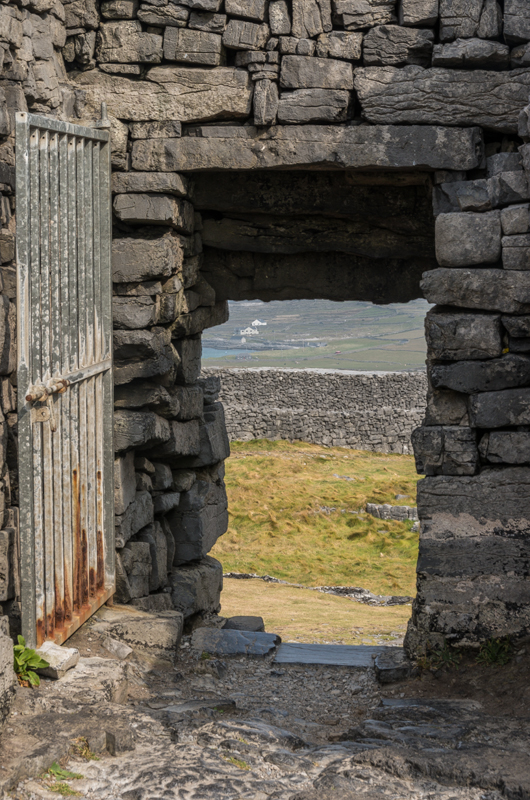
Dún Aonghasa is the most spectacular of the ancient forts of the Aran Islands, a semicircular stone enclosure built in layered rings on the edge of a cliff on Inis Mór. The visible walls date from the Bronze Age or Iron Age, and the whole thing ends abruptly at the cliff edge, where the rock drops into the sea. It stands in State care and is run by Heritage Ireland, with a visitor centre near Kilmurvey that is the gateway to the monument. The site is about one kilometre from the centre by a path over rising ground and rough natural rock, and the average visit takes an hour to an hour and a half. In November and December the site opens from about half past nine to four, closes for the days after Christmas, and charges a modest entry fee, with discounts for children, students and families, and free entry for visitors staying overnight in participating island accommodation.
What is here: three or four lines of stone walls, with an outer ring, a field of sharp stones called a chevaux-de-frise set to slow attackers, and an inner enclosure that faces the cliff. No one is certain of the fort's purpose; it may have been a defensive stronghold, a ceremonial site or both, and archaeologists have found evidence of occupation over thousands of years. The effect is dramatic regardless of the history, particularly when the Atlantic is rolling in below.
Getting there: from Kilronan pier you can cycle, take a minibus or join a pony and trap tour to Kilmurvey, about seven kilometres west, then walk from the visitor centre up the path. The path is uneven and slippery after rain, and the cliff edge is unfenced, so wear grip-soled shoes, hold children's hands, avoid the edge in wind and follow the site's safety guidance. The visitor centre has been undergoing an upgrade, so check the Heritage Ireland page for the status of facilities before you travel.
Making the most of it: arrive as early as the ferry schedule allows, because daylight and opening hours both end early in winter. If you are on a day trip from Galway, prioritise this over other stops, and consider a minibus tour so you have energy for the walk. Bring a waterproof, some water and a snack. For a calmer visit, stay a night on the island and walk up in the morning light before the day-trippers arrive.
What to expect
The experience
A self-guided walk of about one kilometre from the visitor centre to the stone fort, with guided tours available at the centre.
Best time
As early as your ferry allows, since winter opening ends in the afternoon and light fades early.
How long
An hour to an hour and a half at the site, plus the walk up and down.
Tips
Wear grip shoes, avoid the unfenced edge, check the visitor centre status and carry a waterproof.
Quick picks
- Best for
- Anyone interested in ancient history and dramatic views.
- Families
- Best with older children; the path is rough and the edge is unprotected.
- Couples
- Walk up early or stay overnight for a quieter experience.
- Pair with
- A bike ride along the island and the seven churches site.
- Time needed
- Allow at least two hours including the approach.
Good questions
How much does Dún Aonghasa cost?+
Entry is a modest fee with reduced rates for children, students, seniors and families. Visitors staying overnight in participating island accommodation enter free.
What are the winter opening hours?+
In November and December it opens from about half past nine to four, and it is closed from 24 to 30 December.
How far is the walk?+
The fort is about one kilometre from the visitor centre over rising ground and rough rock, and a typical visit lasts an hour to an hour and a half.
Is the cliff edge fenced?+
No, the cliff edge is not fenced, so stay back, keep children close and avoid the edge in wind or rain.
Is the visitor centre open?+
It has been undergoing an upgrade ahead of a 2026 reopening, so check the Heritage Ireland page for current facilities.