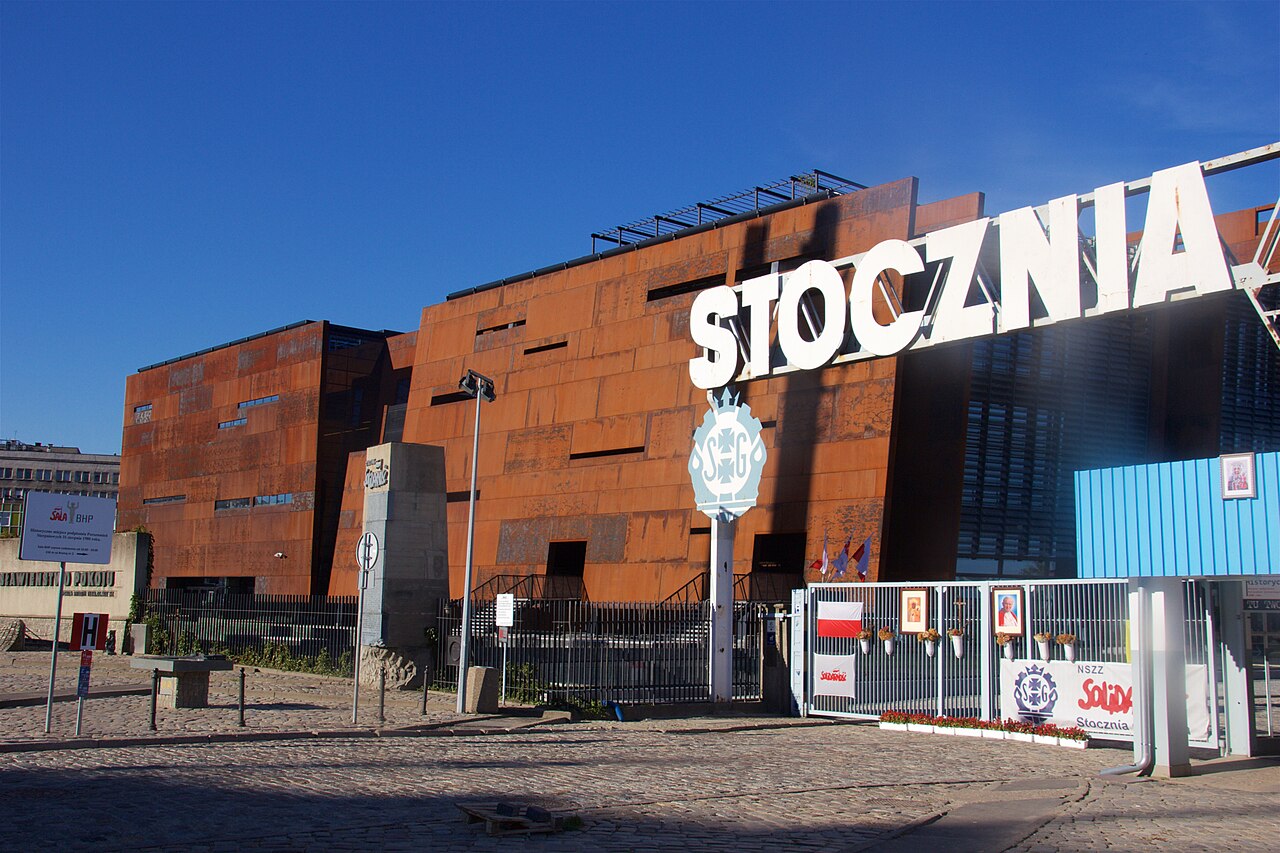
The European Solidarity Centre, known in Poland as ECS, stands on Solidarity Square at the edge of the former Gdańsk Shipyard, the place where the modern history of central Europe changed course. In August 1980 the shipyard workers went on strike, led by an electrician called Lech Wałęsa, and their protest grew into Solidarity, the first independent trade union in the Soviet bloc. Within a decade, Poland held partly free elections and communism across the region began to fall. The building, clad in sheets of rust-coloured steel that recall the hulls of ships, houses a permanent exhibition that walks you through the story room by room: the shipyard and its workers, the strikes and their demands, martial law in 1981, the underground years, the Round Table talks and the transition of 1989. Outside, the monument to the shipyard workers killed in 1970 and the historic Gate No. 2 are free to see.
Booking: the linked Tiqets product is an entry ticket with a live guided tour of about two and a half hours, in English or Polish, for groups of up to twenty-five. A guide is genuinely useful here, because the exhibition is dense and the story of strikes, negotiations and underground politics is easier to follow with someone to explain it. If you prefer to go alone, standard tickets are sold at the centre.
Opening times: from October to April the permanent exhibition is open on Monday and from Wednesday to Friday from 10:00 to 17:00, and at weekends from 10:00 to 18:00. It is closed on Tuesdays in that season, which catches many visitors out. From May to September it opens every day, with longer hours. The centre is at Plac Solidarności 1, about fifteen minutes on foot north of the Main Town, or a short tram ride.
Who it suits: anyone curious about how communism ended, and especially history lovers. It pairs naturally with the Museum of the Second World War: together they tell the story of Gdańsk from 1939 to 1989. Older children and teenagers will find the shipyard setting and the archive film engaging; younger ones may tire of the text. Leave time afterwards to walk past the shipyard cranes and the new cafes and venues that have grown up around them.
What to expect
The experience
A modern history museum with film, documents and personal objects, best seen on a guided tour that explains the strikes, martial law and 1989.
Best time
A weekday morning, avoiding Tuesdays from October to April, when the exhibition is closed.
How long
About two and a half hours with a guide, two to three hours on your own.
Tips
Check the Tuesday closure in the low season, book the guided tour for context, and see the 1970 monument and Gate No. 2 outside.
Quick picks
- Best for
- Anyone who wants to understand how a shipyard strike in Gdańsk helped end communism in Europe.
- Families
- Best with older children and teenagers, who tend to enjoy the shipyard setting and the archive film.
- Couples
- Pair the museum with a walk among the shipyard cranes and dinner back in the Main Town.
- Pair with
- The Museum of the Second World War for the full 1939 to 1989 story, or the Royal Route a short walk south.
- Time needed
- Half a day.
Good questions
When is the European Solidarity Centre closed?+
From October to April the permanent exhibition is closed on Tuesdays. From May to September it opens every day, with longer hours.
How long does a visit take?+
Allow two to three hours for the permanent exhibition. The guided tour sold on Tiqets lasts about two and a half hours.
Is the guided tour in English?+
Yes. The Tiqets entry ticket with guided tour runs with a live guide in English or Polish, for groups of up to twenty-five.
Where is the European Solidarity Centre?+
It is at Plac Solidarności 1, beside the historic Gdańsk Shipyard gate, about fifteen minutes on foot from the Main Town. Trams also stop nearby.
What is outside the centre?+
The tall monument to the shipyard workers killed in 1970 and the historic Gate No. 2 stand on the square outside. Both are free to see at any time.