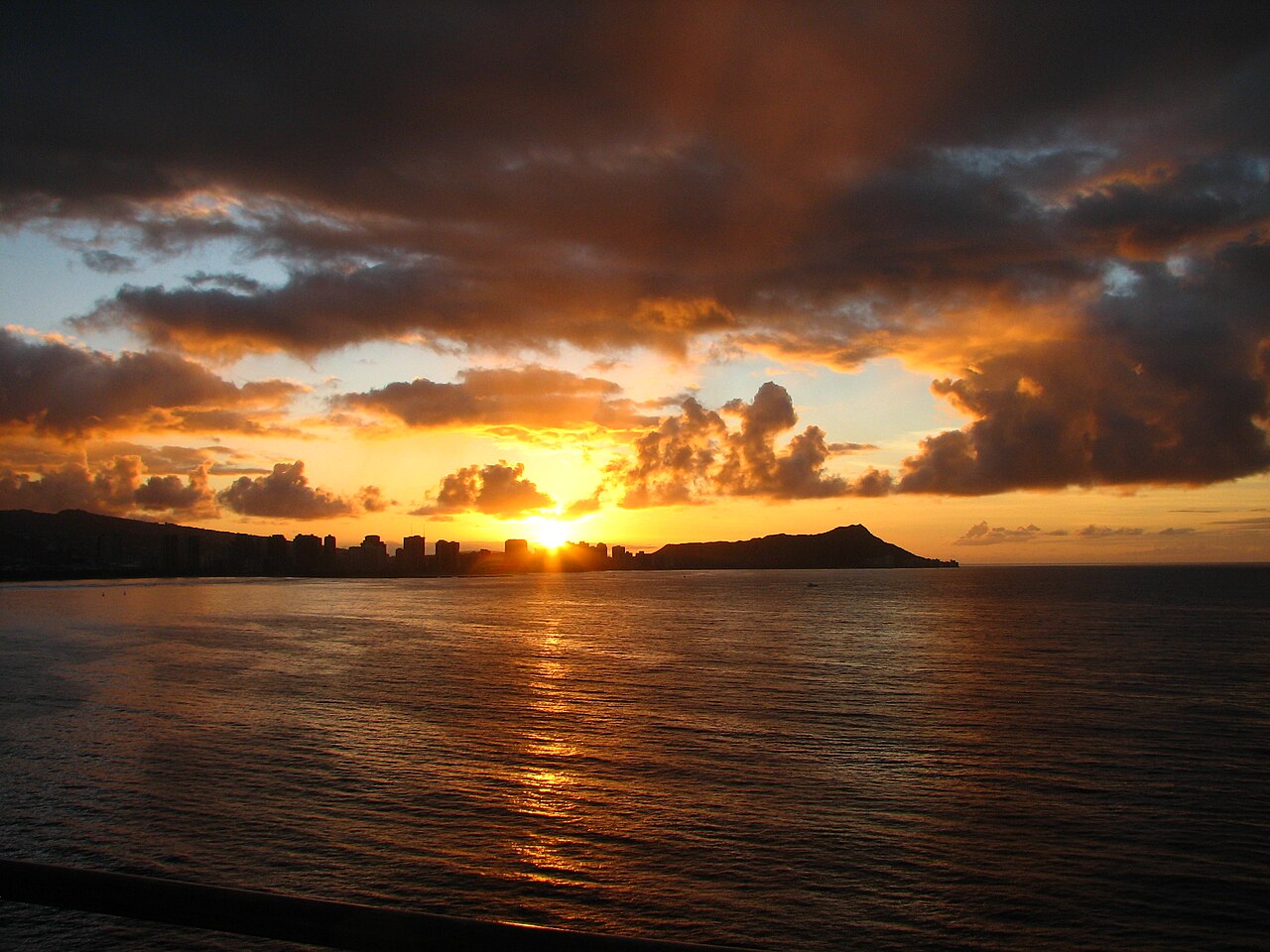
Diamond Head is the volcanic crater that defines Honolulu's skyline, and its summit trail is Hawaii's most famous hike: a 1.6-mile round trip climbing through the crater, up switchbacks, stairs, and a WWII-era tunnel and bunker system to a summit with sweeping views over Waikiki, Honolulu, and the Pacific. It's short but steep in stretches, doable for most fitness levels, and best at first light. Out-of-state visitors need advance reservations and pay entry/parking fees via the state system — book ahead, bring water, and go early.
Known in Hawaiian as Leahi, Diamond Head is a 300,000-year-old volcanic tuff crater rising directly behind Waikiki — the most recognizable landmark in Hawaii. The summit trail, built in 1908 as part of the island's coastal defense, climbs from the crater floor through a historic military tunnel and spiral staircase to old fire-control bunkers at the rim, where the payoff is a full panorama: Waikiki's beaches and towers below, the Koolau ridges behind, and whales offshore in winter.
The hike is only about 1. 6 miles round trip with roughly 560 feet of climbing, but it's sun-exposed and includes steep stairs and tight tunnel sections — take water, a hat, and good footwear, and allow 1.5 to 2 hours at an easy pace. Sunrise and early morning are the prime windows: cooler air, softer light, and thinner crowds. The crater interior and trail are managed as a state monument.
Access is regulated
Out-of-state visitors must reserve entry (and parking, if driving) in advance through Hawaii State Parks' online system, with timed slots; Hawaii residents enter free without reservations. Slots open ahead of time and the sunrise windows go fast. It's minutes from Waikiki — many visitors simply rideshare to the entrance. Combine it with a Waikiki beach morning or the nearby Kapiolani Park and Honolulu Zoo area.
What to expect
The experience
A 1.6-mile round-trip summit hike inside and up the crater rim — paved and dirt trail, switchbacks, steep stairs, and a historic tunnel to WWII bunkers and a panoramic summit. Timed entry for non-residents via the state reservation system.
Best time
First slots of the morning, ideally around sunrise — cooler, quieter, and the best light over Waikiki. Midday is hot and exposed.
How long
About 1.5-2 hours round trip at an easy pace, plus time at the summit.
Tips
Reserve ahead (non-residents) — sunrise slots sell out. Bring water, sun protection, and real shoes; the stairs and tunnel are the workout. Rideshare to skip the parking queue. Winter mornings sometimes add whale sightings offshore.
Quick picks
- Best for
- First-timers and anyone who wants the classic Waikiki panorama — the effort-to-reward ratio is unbeatable.
- Families
- Great for kids about 6 and up who can handle stairs; carriers over strollers for the littlest ones.
- Couples
- A sunrise summit followed by Waikiki breakfast is one of Oahu's best simple mornings.
- Pair with
- Waikiki Beach, Kapiolani Park, or the Honolulu Zoo and Waikiki Aquarium at the crater's foot.
- Time needed
- Half a morning.
Good questions
Do I need a reservation?+
Out-of-state visitors do — timed entry (and parking, if driving) must be reserved in advance through the Hawaii State Parks online system. Hawaii residents enter free without reservations.
How hard is the hike?+
Short but real: about 1.6 miles round trip with ~560 feet of gain, including switchbacks, steep stair sections, and a tunnel. Most reasonably mobile visitors manage it fine with water and decent shoes.
When should I go?+
Early morning — ideally the first slots around sunrise — for cooler temperatures, lighter crowds, and the best light. The trail is very sun-exposed by midday.
How long does it take?+
Plan 1.5 to 2 hours round trip, plus summit time for photos.
How do I get there from Waikiki?+
It's just behind Waikiki — a few minutes by car or rideshare, or a longer walk/bus ride. Parking inside the crater is limited and reserved; rideshare is often easiest.