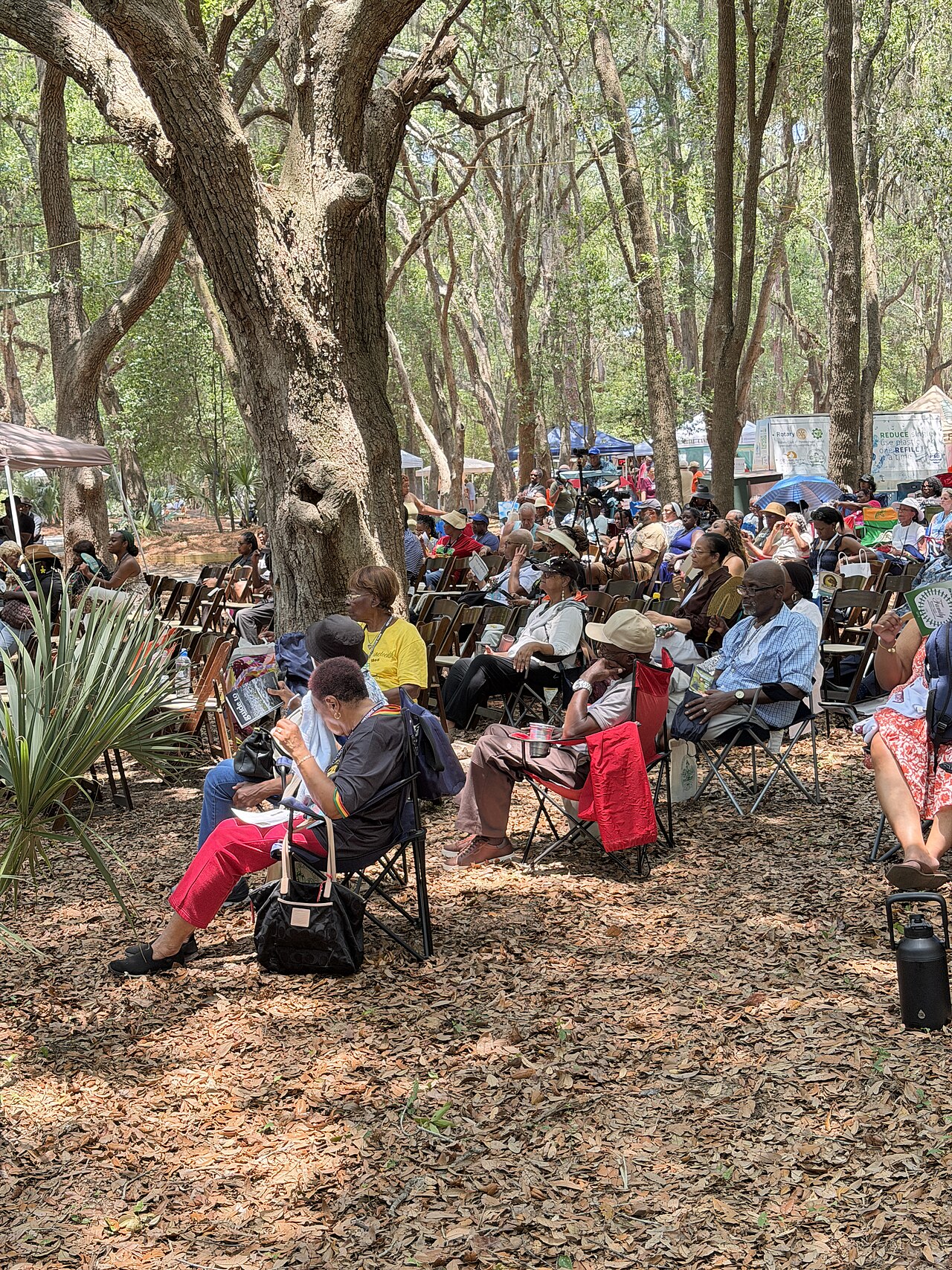
Historic Mitchelville Freedom Park preserves one of the most important places in the story of American freedom, and it sits quietly on Hilton Head's north end, beside Port Royal Sound. In November 1861, early in the Civil War, Union forces captured the forts guarding the sound, and Hilton Head became a major Union base. Thousands of enslaved people from the surrounding plantations fled to the island seeking freedom, and in 1862 the Union commander, General Ormsby M. Mitchel, set aside land for them to build a town of their own. Mitchelville, as it was named, became what the park describes as the first self-governing town established by formerly enslaved people in the United States: residents elected their own officials, laid out streets, built houses on quarter-acre lots, ran churches and stores, and established schools, with education made compulsory for children. Mitchel himself died of yellow fever only weeks after launching the project and never saw it flourish. The town declined after the war as the Union garrison left and land was returned or sold, but many of its families stayed on the island, and their descendants are part of Hilton Head's Gullah community. The site was listed on the National Register of Historic Places in 1988, and the nonprofit Historic Mitchelville Freedom Park, renamed in 2018, now interprets it. What you see today is a peaceful waterfront park with interpretive signs, ghosted outlines of structures, walking paths, and a hand-built Gullah-style flat-bottom boat on display, with views across the water toward Camp Saxton, where the Emancipation Proclamation was read on January 1, 1863. Self-guided tours are free, and guided tours can be booked online.
The park is in the middle of an ambitious transformation. Its master plan for about 36 acres, described by executive director Ahmad Ward in 2026, includes an interpretive center telling Mitchelville's history, with event space overlooking Port Royal Sound; an event lawn; a replica general store along one of the paths; and a layout that shows visitors the size of the quarter-acre lot each family was originally allotted. Archaeological work continues alongside development, and the park expects years more of discoveries. For now, the experience is low-key and reflective, which suits the place. Read the signs, walk to the water, and imagine a town of freedpeople organizing their own government here while the war raged on the mainland.
Plan your visit around a tour if you can. The guided tours, booked through the park's website, bring the history to life with the stories of the people who lived here, and the park also offers self-guided and augmented tours. Check the calendar for special events: the park hosts Juneteenth celebrations and Freedom Day programs that draw descendants and visitors from across the region. The park states that it operates as a public historic site with meaningful access for visitors with disabilities. Bring water and sun protection, as there is limited shade along the waterfront, and insect repellent in warm months.
The park sits next to Fish Haul Beach Park, a quiet town beach on Port Royal Sound with views across to Parris Island and the Beaufort shore, so it is easy to pair history with a walk on the sand. To go deeper, combine it with the Gullah Heritage Trail Tours, which depart from the Coastal Discovery Museum and explore the island's historic Gullah communities, and with the Penn Center on St. Helena Island near Beaufort, where one of the first schools for formerly enslaved people opened in 1862. Together they tell a story that is central to the Lowcountry and too often missing from beach-vacation itineraries.
What to expect
The experience
An outdoor historic park with interpretive signs, ghosted structures, paths and waterfront views over Port Royal Sound; free self-guided visits and bookable guided tours.
Best time
Morning or late afternoon for comfortable temperatures and soft light on the sound; check the calendar for Juneteenth and Freedom Day events.
How long
About an hour on your own; longer with a guided tour.
Tips
Book a guided tour for the full story, bring water and sun protection, and pair the visit with a walk on neighboring Fish Haul Beach.
Quick picks
- Best for
- Anyone who wants to understand the Lowcountry's history beyond the beach.
- Families
- Good for school-age children, especially with a guide; the quarter-acre story resonates with kids.
- Couples
- A thoughtful morning followed by a quiet walk on Fish Haul Beach.
- Pair with
- Gullah Heritage Trail Tours and the Coastal Discovery Museum.
- Time needed
- One to two hours.
Good questions
Why is Mitchelville important?+
Founded in 1862 on Union-held Hilton Head, it is described by the park as the first self-governing town established by formerly enslaved people in the United States.
Is it free to visit?+
The park grounds can be explored on a free self-guided visit. Guided tours are booked online through the park's website.
Where is it?+
On the island's north end at 40 Harriet Tubman Way, beside Fish Haul Beach Park on Port Royal Sound.
Is there a museum building?+
Not yet. The park's master plan includes an interpretive center and other features; for now the experience is outdoor, with signs, paths and tours.
What else is nearby?+
Fish Haul Beach Park next door, and the Coastal Discovery Museum about fifteen minutes' drive away, where Gullah Heritage Trail Tours depart.