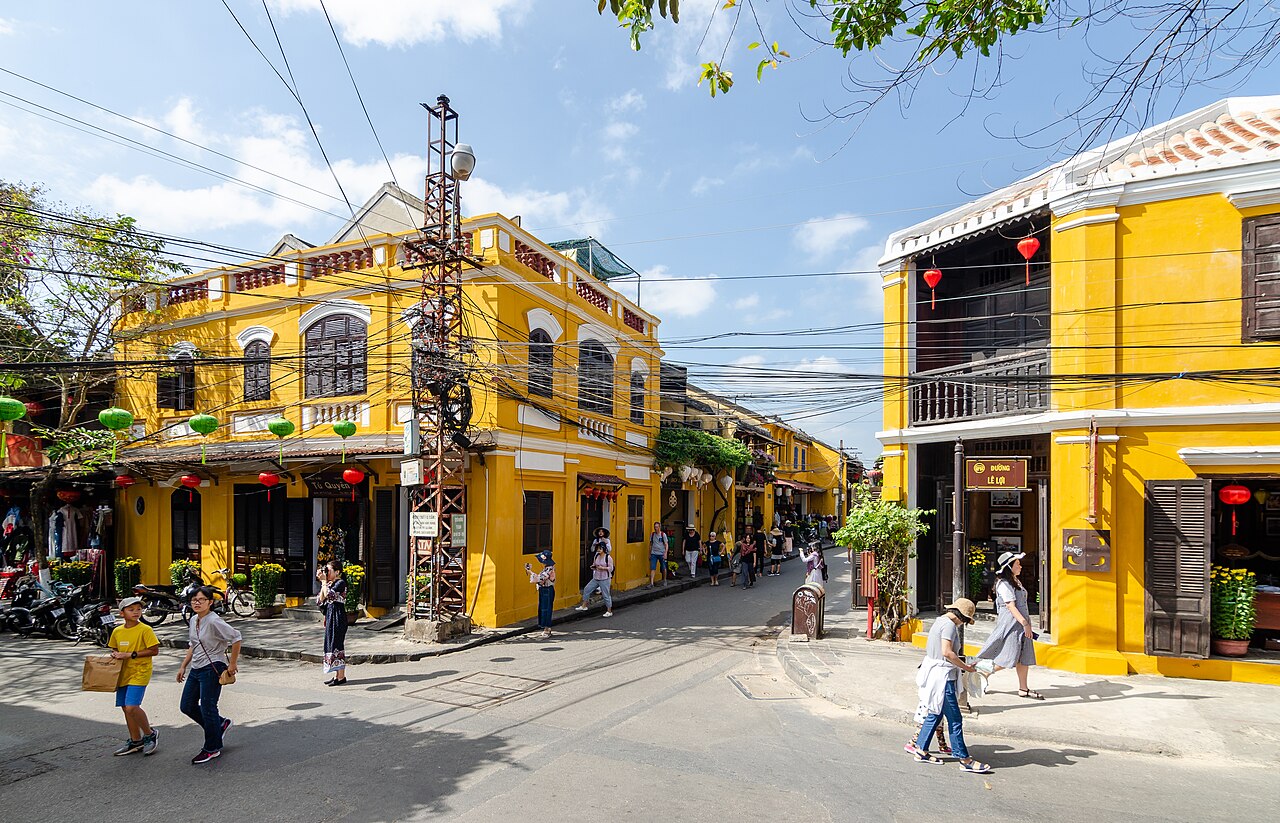
Hoi An Ancient Town is the reason most people come to central Vietnam. For centuries the port on the Thu Bon river drew Chinese, Japanese and European merchants, and the narrow streets they built are still standing: low tiled shophouses with carved wooden doors, ochre walls, clan assembly halls, family merchant houses and the small Japanese Covered Bridge that appears on the local banknote. The whole old quarter is a pedestrian-friendly grid of lanes a few minutes wide, so it is easy to explore on foot and easy to lose an entire day. There is an entrance ticket system that confuses first-timers: the town itself is a living neighbourhood, but a ticket is needed to enter the listed monuments, and the booths sell it at the edges of the old quarter. Beyond the monuments you can eat at the market, browse silk and lantern shops, cross to the Cam Nam night market, and sit by the river as the lanterns come on at dusk.
The ticket rules matter, so here is the current picture from the heritage centre announcement published in January 2026. A standard ticket costs 120,000 dong and allows entry to the general old-town area, one of the Japanese Covered Bridge or Quan Cong Temple, one museum-system site and three more monuments of your choice. A cheaper 80,000 dong ticket covers the old-town area, one of the bridge or temple, and two more sites. One purchase is described as covering your whole stay, up to three days, and the stub is kept to hand over at each site. Children under 16 are free. The ticket also includes cultural activities such as a traditional art performance at set times and a Japanese tea ceremony, though venues can change during renovations, so confirm on the day.
Opening times shift with the season. The announcement lists the old town as open from nine in the morning until half past nine in summer and nine in winter, with Phan Chau Trinh street opening for evening walking and cycling. Enforcement can be uneven, but the sensible approach is to buy a ticket, because you will want to go inside the merchant houses, assembly halls and the museums, which are where the history comes alive. Pick sites that differ: a merchant house such as Tan Ky or Phung Hung, a Chinese assembly hall such as Fujian, the bridge, and a museum.
Timing helps enormously. Go at first light, when the yellow walls are empty and the light is soft, then retreat from the midday heat and return for sunset, when the lanterns, the river boats and the night market fill the lanes. In the wet season, roughly October and November, the river can rise and flood the lower streets, which is dramatic but disruptive; check the weather and local news before you go and allow flexibility in your plans.
What to expect
The experience
A self-guided walk through the old quarter, using one ticket to enter a handful of heritage houses, halls, a museum and the Japanese Covered Bridge.
Best time
Early morning for empty lanes and soft light, then again after dusk for lanterns and the riverfront.
How long
Half a day covers the highlights, and a full day lets you enter four or five sites and eat well.
Tips
Buy the ticket at a booth on the edge of the old town, choose different kinds of sites, keep the stub, and carry small notes for entry and street food.
Quick picks
- Best for
- Every first-timer, because this is the heart of Hoi An and the reason for the trip.
- Families
- Children under 16 are free, the lanes are mostly flat, and the lantern shops and river boats keep younger ones interested.
- Couples
- Wander at dusk, take a river lantern boat, and have a quiet dinner on a rooftop or riverside terrace.
- Pair with
- A lantern-making class, a Cam Thanh basket boat trip and a cooking class built around the market.
- Time needed
- Half a day minimum, and most visitors return across two or three days.
Good questions
How much is the Hoi An Ancient Town ticket?+
The heritage centre lists a 120,000 dong ticket and a cheaper 80,000 dong option for 2026. Children under 16 enter free.
What does the ticket include?+
It covers the old-town area plus a set number of monuments, including either the Japanese Covered Bridge or Quan Cong Temple. The 120,000 dong version adds a museum-system site and more choices.
How long is the ticket valid?+
The announcement says one purchase covers your whole stay for up to three days. Keep the stub so you can present it at each site.
Do I really need a ticket to walk around?+
Officially a ticket is needed to enter the old town and its monuments, although checks vary. You will want it anyway for the houses and halls inside.
When is the old town least crowded?+
Early morning, before about nine, is quietest. Evenings are lively and beautiful but busy, especially on lantern festival nights.