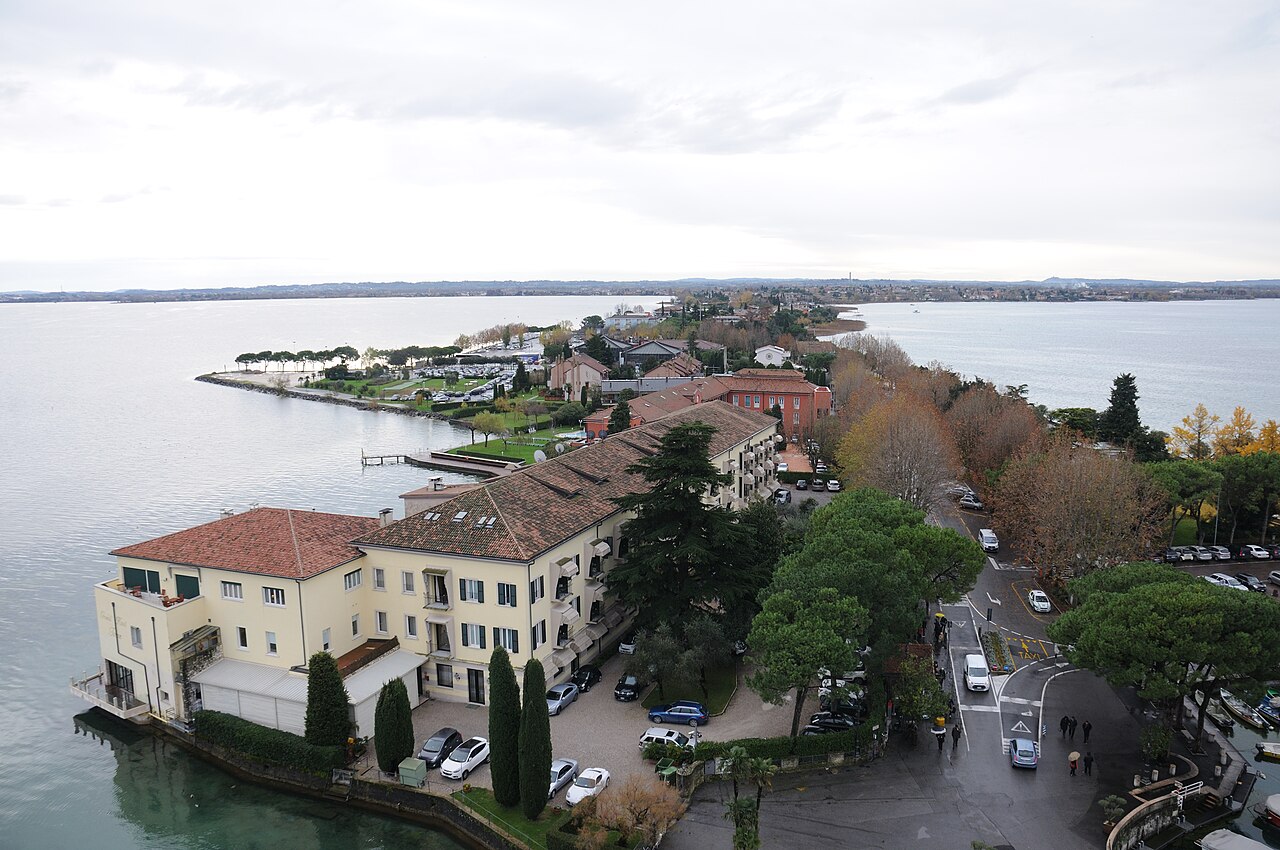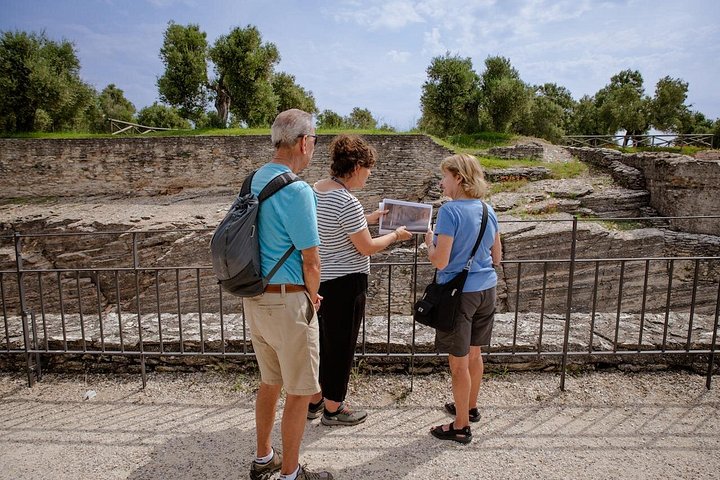
At the very end of the Sirmione peninsula, where the land narrows to a point, lie the Grotte di Catullo, the remains of one of the largest Roman residential complexes in northern Italy. The name is a little misleading. The poet Catullus, who wrote of his love for Sirmione, may have had a villa on the peninsula, but the ruins seen today date from a later period and probably belonged to a wealthy Roman family. The word grotte, or caves, comes from the vaulted underground rooms that early visitors mistook for natural caverns. The site spreads across a terrace of olive trees high above the water, and the scale of the stone platforms, arches and vaults gives a sense of the luxury that wealthy Romans expected on the lake. From the upper terrace you can look across the water to the opposite shore on a clear day, and the wind and light make it an unusually atmospheric spot. A small museum at the entrance shows frescoes, objects and models that help to make sense of the ruins.
What to see
Walk the paths through the ruins to the arches and platforms of the villa, then climb to the highest terraces for the view. The museum displays wall paintings, everyday objects and a plan of the complex, which is very useful before you walk the site. Information panels explain the different areas, but a guide brings the layout to life, and the guided tour we recommend is a good choice if you want context for the stones. Check whether tickets and the museum are included.
Getting there
The ruins are at the far end of the peninsula, about a thirty-minute walk from the castle through the old town and along a quiet path through olive groves. There is also a small tourist train and boat connections in season. If you walk, you can combine the visit with a swim at the small rocky beaches nearby. The site is usually closed on Mondays and has seasonal hours, so check ahead and avoid the hottest part of summer afternoons, as there is very little shade on the upper terraces.
Making the most of it
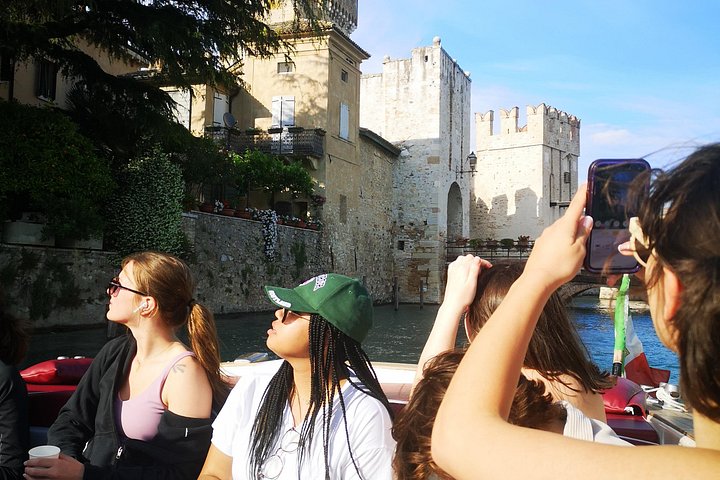
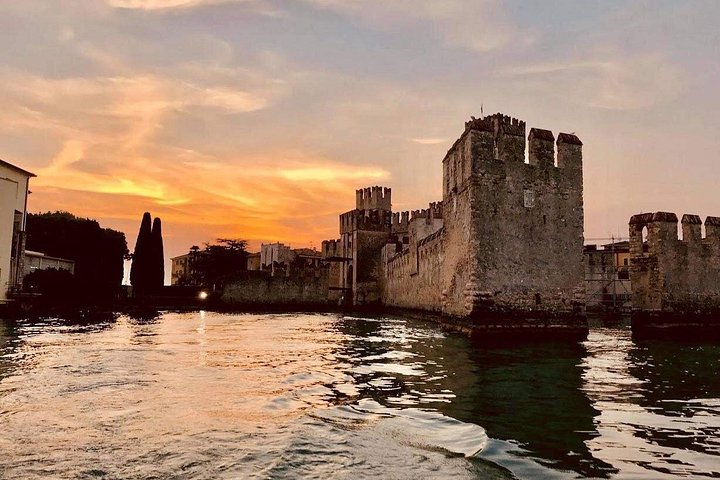
Late afternoon is a lovely time to visit, when the light softens and the crowds thin. The paths are uneven and include steps, so wear sturdy shoes. Photographers love the arches framing the lake, and anyone interested in archaeology will appreciate the scale of the site. Children can run around the open terraces, but keep a close eye near the edges. Pair the visit with a boat cruise around the peninsula, which shows the ruins from below, perched on the cliff above the water.
A word on the history of the site. The complex was built over a long period from the late first century BC to the first century AD, and it is thought to have been a grand residence with terraces, baths, porticoes and rooms for entertaining, arranged to follow the shape of the headland. Later centuries buried and covered it, and excavations began in the nineteenth century, with further work through the twentieth century.
Many of the original decorations are lost, but the sheer size of the footprint explains why the villa has fascinated visitors for generations. Reading the information boards slowly, or joining a guide, helps you imagine the rooms that once stood where only arches remain.
What to expect
The experience
A guided archaeological visit to the Roman villa ruins and their museum at the tip of the peninsula.
Best time
Late afternoon in spring or autumn, avoiding the hottest hours of summer.
How long
One to two hours, plus travel time from the old town.
Tips
Wear sturdy shoes, bring water and a hat, and check closing days before you go.
Quick picks
- Best for
- History fans and photographers who want views and ruins in one place.
- Families
- Open terraces suit children, but there are drops and uneven paths.
- Couples
- A quiet late-afternoon walk among the olives is a romantic end to the day.
- Pair with
- The old town of Sirmione, the Scaliger Castle and a swim at the nearby rocky beaches.
- Time needed
- One to two hours on site, and thirty minutes each way on foot from the castle.
Good questions
Did Catullus really live here?+
The poet wrote about Sirmione and may have owned a villa here, but the surviving ruins date from a later period. The name links the site with the poet in popular tradition.
How far is it from the old town?+
It is about a half hour on foot from the castle gate, along the peninsula through olive groves. A small tourist train also runs in season.
Is there much shade?+
Very little, especially on the upper terraces. Bring a hat, sunscreen and water in summer, or visit in the late afternoon.
Is the site open on Mondays?+
It is usually closed on Mondays, and hours change with the season. Check before you travel to avoid a wasted walk.
Is a guide worth it?+
Yes if you want to understand the layout. The stones are impressive, but a guide explains what each area was and how the villa was used.