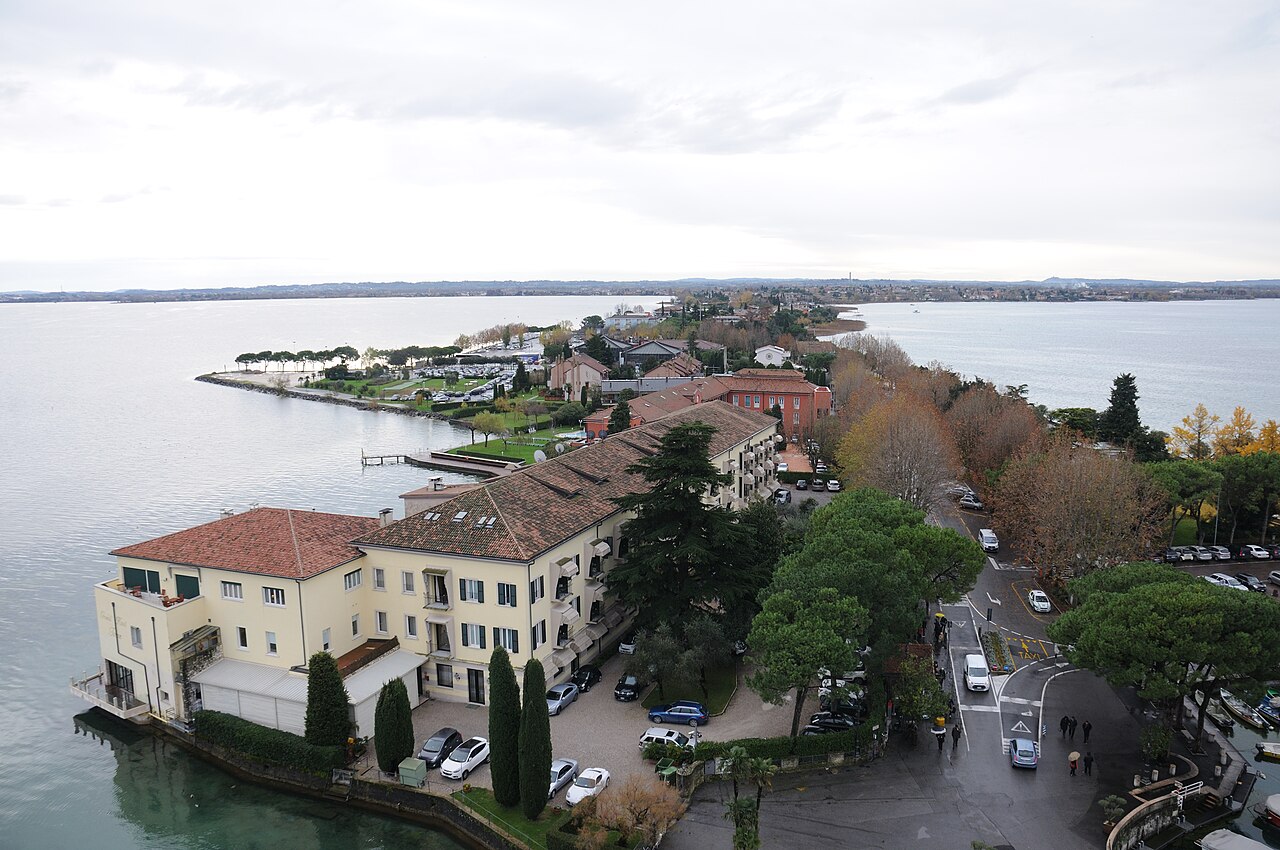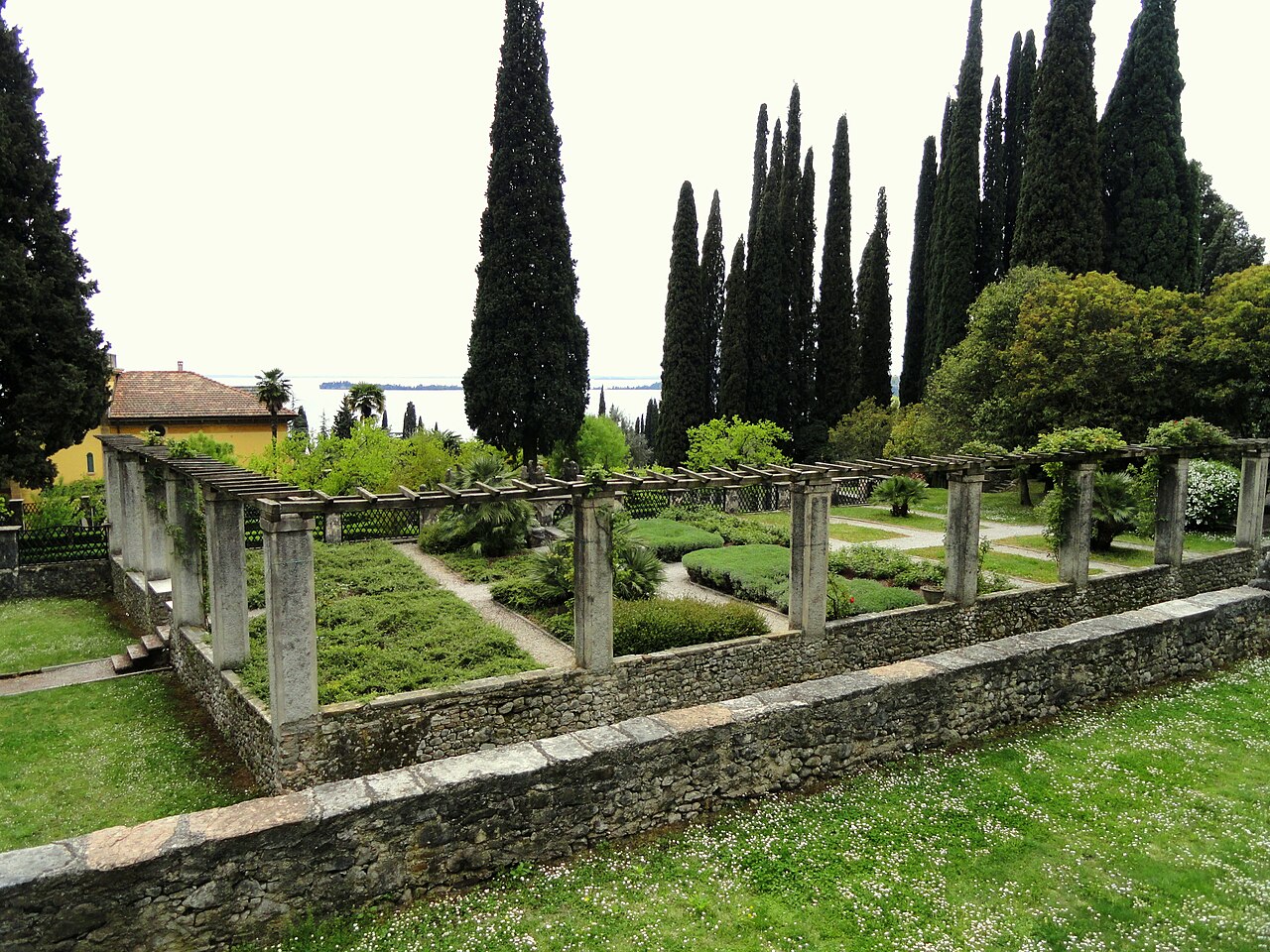
The Vittoriale degli Italiani is one of the strangest and most fascinating places on Lake Garda. It was the home of Gabriele D’Annunzio, the poet, playwright and soldier who became a national figure in the early twentieth century and later a controversial one for his links with the rise of fascism. In 1921 he settled in a villa at Gardone Riviera and over the next years transformed it, with the help of the architect Giancarlo Maroni, into a hillside complex of buildings, gardens, an open-air theatre and a mausoleum. The result is a theatrical, crowded and unforgettable place. The house, called the Prioria, is stuffed with objects, curtains, books and decorations, and its dim interiors reflect the owner’s taste for the dramatic. Outside, the gardens climb the hill past fountains, a theatre with lake views and a navy ship, the Puglia, set into the hillside as if it were sailing over the water. A museum displays aircraft and a motorboat associated with D’Annunzio’s wartime adventures.
What to see
The grounds are large, and you can walk the paths past the theatre, the mausoleum and the ship, then visit the museum and, if open, the house. The house may require a separate ticket or a guided visit, so check the current arrangements. Expect uneven paths and stairs, and give yourself several hours. Allow time to absorb the atmosphere, which is both fascinating and, for some, uncomfortable, given the history of the owner.
Context
D’Annunzio was a complex figure, a celebrated poet and a nationalist who led a daring wartime flight over Vienna and later seized the city of Fiume. The estate is a monument to his ego as well as to his creativity, and it is worth reading a little about him before visiting. The site has guides and information panels, and a guided tour can give a fuller understanding of the history and the symbolism.
Practical notes
The Vittoriale is open most days, usually with seasonal hours and some sections closing earlier in winter. Wear comfortable shoes for the hillside paths, and carry water in summer. It pairs naturally with the Hruska botanical garden in the same town, and with a stroll on the Gardone Riviera promenade. Check the website for current ticket types, opening dates and any limits on access to the house interior.
Take time to notice the smaller details as you walk. Many rooms in the house are deliberately dark, with heavy curtains and layers of objects, because D’Annunzio liked a dramatic atmosphere and believed that dim light suited contemplation. The estate includes an amphitheatre with a view of the lake, fountains, a cypress-lined avenue and a mausoleum where the poet is buried.
Inscriptions and symbols appear everywhere, and a guide can help you decode them. The mixture of art, ego and politics makes the visit thought-provoking, and visitors often leave with a lot to think about, and with a strong impression of how one person can build a world around himself.
Wear layers inside the house, which can feel cool and damp even in summer, and remember that photography rules may apply in some rooms. A guided visit is useful for the symbolism, and an audio guide may be available for those who prefer to go at their own pace.
What to expect
The experience
A self-guided visit to a large hillside estate with a house, theatre, gardens, a ship and a museum.
Best time
Mornings, outside the hottest summer days.
How long
Three to four hours.
Tips
Check ticket types and house access, wear comfortable shoes and bring water.
Quick picks
- Best for
- History and architecture lovers who like unusual places.
- Families
- Older children may enjoy the ship and the aircraft, but the paths are steep.
- Couples
- A quirky, atmospheric visit with lake views.
- Pair with
- The Hruska botanical garden and a walk along the Gardone Riviera promenade.
- Time needed
- Three to four hours.
Good questions
Who was D’Annunzio?+
He was an Italian poet, playwright and soldier who became a national celebrity and later a controversial figure because of his nationalism and links to fascism.
Can I see inside the house?+
Access to the house may need a separate ticket or a guided tour. Check the current arrangements.
Is it open all year?+
It has seasonal hours and some areas may close in winter. Check before you go.
Is it accessible?+
The site is hilly with stairs and uneven paths, so access is limited for some visitors.
How long do I need?+
Three to four hours gives time for the grounds, the museum and the house if open.