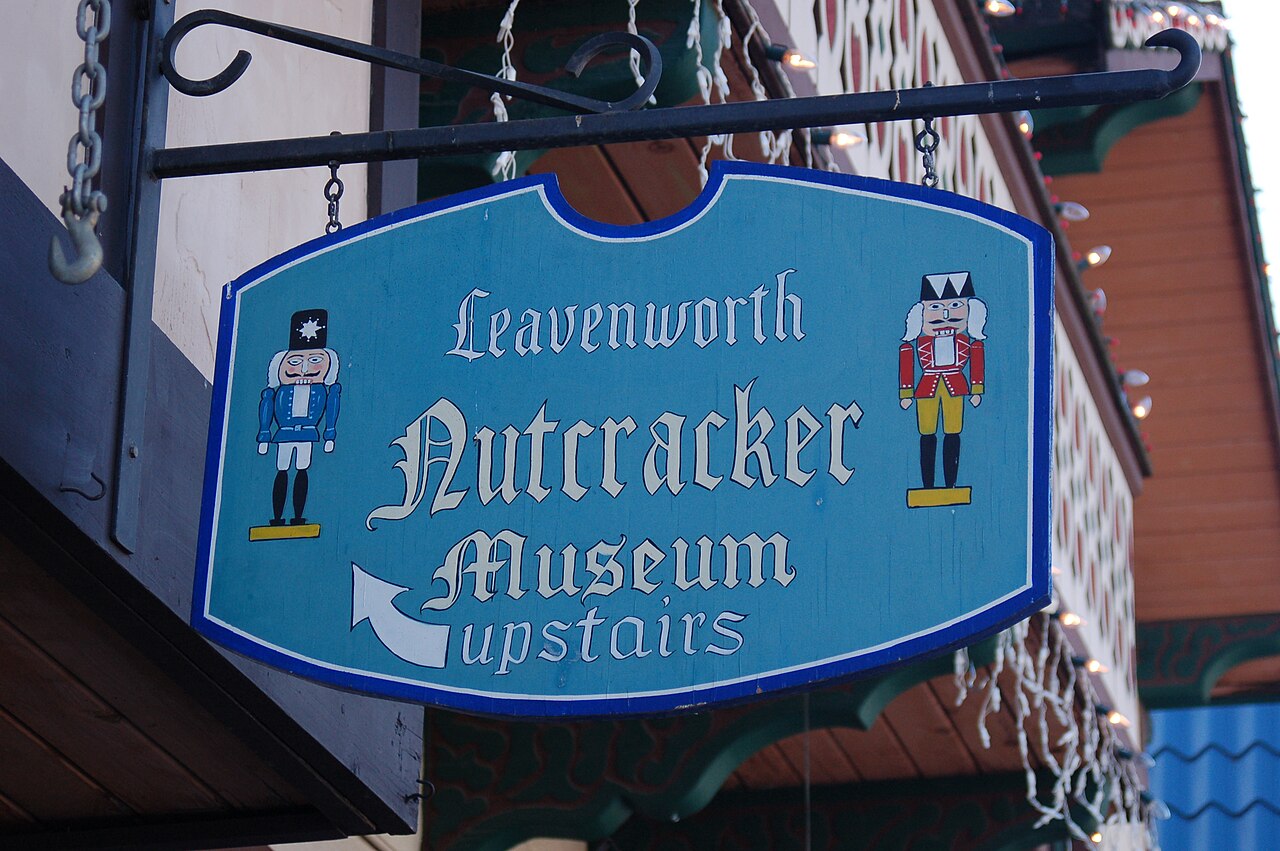
In a town built on a Bavarian theme, a museum devoted to nutcrackers makes perfect sense, and the Leavenworth Nutcracker Museum is one of the village's most distinctive stops. The collection holds thousands of nutcrackers, from simple, practical tools to elaborately carved figures, spanning several centuries and many countries. Displays show how the devices evolved, from early wooden and metal crackers to the soldiers, kings and characters associated with German holiday tradition. It is a small museum, easy to see in an hour, and the exhibits are compact enough that visitors of all ages can find something that holds their attention. Beyond the soldier figures, the museum explains the craft behind nutcrackers, the regions where they were made and the role they play in holiday traditions, including the story associated with the ballet. Staff and volunteers often add stories, and there is a gift shop for those who want to take a piece home. For families, it is a gentle activity that gets children looking closely at details, and for adults who enjoy folk art it is a delight. The museum sits close to the main street, so it is simple to include in a walking day, and it is a good refuge from rain, snow or midday heat.
Check opening days and hours before you go, since small museums have limited schedules that can vary by season, and admission is charged. Allow an hour, more if you read the descriptions carefully and browse the shop. Photography rules vary, so ask at the entrance. Because the rooms are compact, the museum can feel busy on weekends and festival days, so a weekday visit or an early start gives you more space to look.
The museum rewards curiosity. Ask staff about favourite pieces, from the oldest tools to the humorous and the oversized, and look for nutcrackers from different countries that show how the same idea has been interpreted in wood, metal and other materials. In the holiday season the collection feels especially at home, and you may find extra decorations and activities. Children who might otherwise be bored by museums tend to enjoy the variety and the number of figures, particularly if you turn it into a game of spotting the strangest or the biggest.
The visit pairs well with the historical walking tours, which tell the story of the town's makeover, and with a stop for pastry or coffee nearby. For a small price, you get a quirky and memorable stop that captures the character of the village better than most larger attractions.
Museums of this kind succeed on detail, so take your time with the cases. Look for the regional styles, the wartime and political caricature pieces, the unusual materials and the display explaining how a simple lever became a symbol. The staff and volunteers are often enthusiasts themselves, and a question about a favourite piece can lead to a surprising story. Together with the shops that sell carved figures nearby, the museum helps explain why the village's love of craft and tradition feels so rooted.
Admission supports a small, independently run museum, and visitors who linger and ask questions tend to leave with a deeper appreciation of folk craft. Consider timing your visit for a quiet moment in the afternoon, then reward yourself with a coffee and a pastry nearby.
What to expect
The experience
A small indoor museum with thousands of nutcrackers and a gift shop.
Best time
Any season; useful on wet or cold days.
How long
About an hour.
Tips
Check opening days and visit on a weekday if you can.
Quick picks
- Best for
- Folk-art fans and families with curious children.
- Families
- A gentle indoor stop.
- Couples
- A charming, quiet half hour.
- Pair with
- A walking tour or pastry stop.
- Time needed
- About an hour.
Good questions
How long does it take?+
About an hour for most visitors.
Is there an admission fee?+
Yes, a modest one; check current prices before you go.
Is it good for kids?+
Yes, the variety of figures keeps children interested.
Is it open year-round?+
Hours vary by season, so check before visiting.
Can I buy nutcrackers?+
Yes, there is a gift shop.