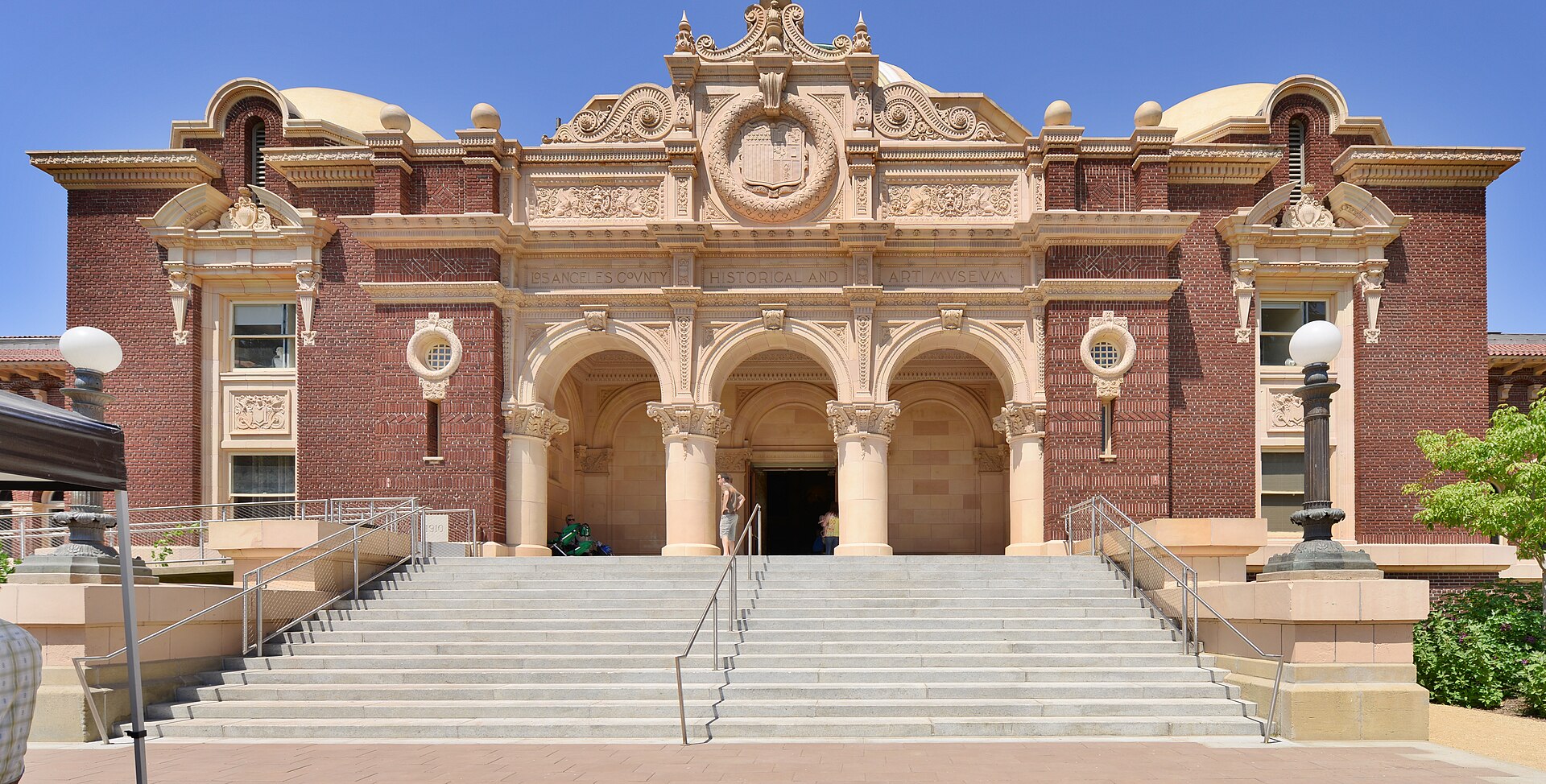
The Natural History Museum of Los Angeles County, in Exposition Park south of downtown, is the largest natural and cultural history museum in the western United States. Its highlights include a celebrated Dinosaur Hall with mounted skeletons (including a memorable trio of Tyrannosaurus rex at different ages), a stunning Gem and Mineral Hall, classic wildlife dioramas, an Age of Mammals gallery, and an indoor-outdoor Nature Gardens. It's a top family museum, and it sits in a park cluster alongside the California Science Center and other attractions.
Founded in 1913, the Natural History Museum of Los Angeles County is the largest museum of its kind in the western United States, housed in a grand historic building (with modern additions) in Exposition Park, just south of downtown LA near the University of Southern California. It covers the breadth of the natural and human world across extensive halls and gardens.
Star attractions include the Dinosaur Hall, with dozens of fossils and mounted skeletons — a highlight is a dramatic growth series of Tyrannosaurus rex specimens from juvenile to adult — and the dazzling Gem and Mineral Hall, with crystals, gold, and gemstones. Other galleries cover the Age of Mammals, African and North American mammal dioramas, the cultural history of the Americas, and a hands-on Discovery Center and insect zoo popular with kids. The indoor-outdoor Nature Gardens and the Nature Lab connect visitors with local Southern California wildlife.
It's a strong, engaging museum for families and the naturally curious, easily filling a half-day. Exposition Park around it holds the California Science Center (home to the Space Shuttle Endeavour, with free general admission), the California African American Museum, rose gardens, and major stadiums — so the area rewards a fuller visit. Special exhibitions may be ticketed separately. It's south of downtown and accessible by the Metro rail line.
What to expect
The experience
Self-paced. Dinosaur Hall, Gem and Mineral Hall, mammal dioramas, cultural galleries, a hands-on Discovery Center, and indoor-outdoor Nature Gardens. Special exhibitions may be ticketed separately.
Best time
Weekday mornings outside school-trip season are calmest. Allow time for the Nature Gardens if the weather's nice.
How long
2.5-3.5 hours.
Tips
The Dinosaur Hall and Gem and Mineral Hall are the must-sees; the Discovery Center and insect zoo are great for younger kids. It's in Exposition Park, so combine it with the California Science Center (free, home to the Space Shuttle Endeavour) nearby. Metro rail reaches the area, avoiding parking hassles.
Quick picks
- Best for
- Families and the naturally curious — dinosaurs, gems, and dioramas span all ages.
- Families
- A top family museum, with the dinosaur growth series, gem hall, and hands-on Discovery Center as reliable kid hits.
- Couples
- The gem hall and dioramas are surprisingly absorbing; a quieter weekday visit is pleasant.
- Pair with
- The California Science Center (free, with the Space Shuttle Endeavour) and the rest of Exposition Park.
- Time needed
- Half a day.
Good questions
What are the highlights?+
The Dinosaur Hall (including a striking growth series of T. rex specimens), the dazzling Gem and Mineral Hall, wildlife dioramas, the Age of Mammals gallery, a hands-on Discovery Center and insect zoo, and the indoor-outdoor Nature Gardens.
Is it good for kids?+
Very — it's one of LA's best family museums, with dinosaurs, gems, and hands-on areas that engage a wide age range.
Where is it and what's nearby?+
In Exposition Park, south of downtown near USC. The California Science Center (free, home to the Space Shuttle Endeavour), the California African American Museum, and rose gardens are all in the same park.
How do I get there?+
It's accessible by the Metro rail line, which avoids parking hassles, as well as by car (with on-site and nearby parking).
How long should I plan?+
2.5-3.5 hours for a good visit, more if you also explore Exposition Park's other attractions.