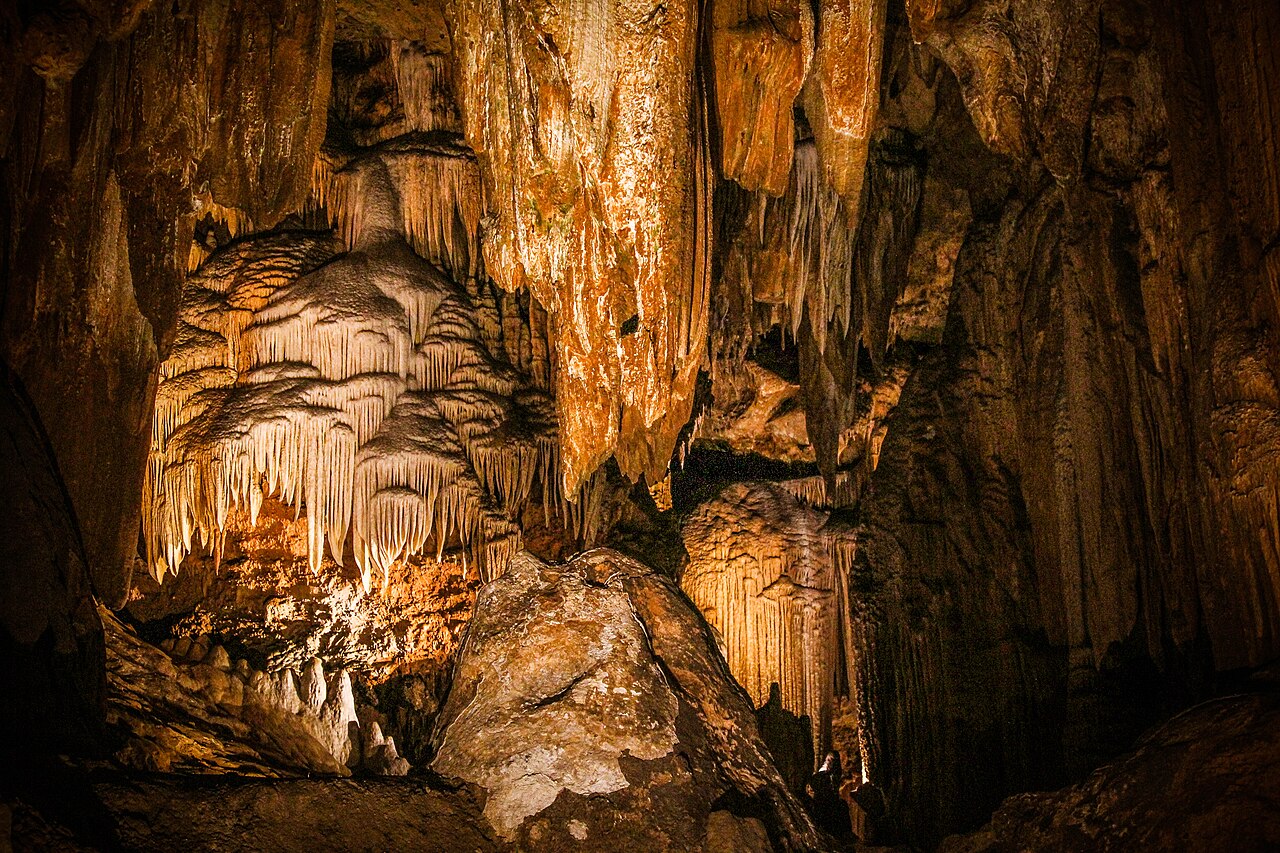
Luray is a four-season destination, but each season offers a different version of the trip. The caverns stay at a constant temperature in the low fifties year-round, which makes them a reliable anchor, while the mountains, the river and the weather shift dramatically. Understanding the calendar helps you decide when to come and what to expect.
Spring: waterfalls and wildflowers
From late March into May the hills turn green, the dogwoods and redbuds bloom and the waterfalls run strong after snowmelt and rain. Dark Hollow Falls and Whiteoak Canyon are at their most impressive, and the trails are quieter than in summer or fall. Weather can swing from warm to freezing within a day, so pack layers, and expect fog on the ridge. Spring is an excellent time for hikes and for photographers, and lodging is easier to find than in autumn.
Summer: green, warm and busy
From June to August the valley is hot and humid, and the ridge is a welcome ten degrees cooler. Summer is the season for the river, with kayaking and tubing at their best, and the caverns provide a cool break from the heat. Thunderstorms are common in the afternoon, so plan hikes for the morning and keep an eye on the sky. Weekends bring families, and the most popular trailheads and the Luray Caverns grounds are crowded at midday, so go early or late. Berries and wildflowers brighten the meadows, and bears become more visible.
Fall: the peak season
October is the most popular month by far, as the hardwood forests turn gold, orange and red, usually starting at the higher elevations and moving downhill through the month. Peak color varies each year with weather, so check conditions before you commit and keep your dates flexible if you can. Skyline Drive on a fall weekend can have long lines at the entrances, so enter early, avoid midday and consider weekdays. Lodging books far ahead and prices rise, but the scenery is the best of the year, and the cooler air makes hiking pleasant. Late September and early November are quieter alternatives with still-good color at lower elevations.
Winter: quiet and clear
From December to February, the crowds disappear and the bare trees open up long views across the valley. Snow and ice can close parts of Skyline Drive, sometimes for days, and some park facilities are closed, so check conditions before driving up. The caverns remain open and are especially pleasant when the weather is harsh outside, and the town's inns offer lower rates and fireplaces. Frozen waterfalls can be spectacular for prepared hikers, though trails are icy, and traction devices are wise. Winter suits travelers who value solitude and are comfortable with flexible plans.
Crowd strategy
To avoid the busiest times, visit on weekdays, arrive at the caverns when they open, and start ridge days at dawn. If you must go on a fall weekend, consider spending the day in the valley, exploring the river, Staunton or New Market, and save the ridge for a weekday. For the quietest experience of all, choose late April, early June or mid-November, when the landscape is lovely and the parking lots are manageable.
Practical notes
Weather in the mountains changes quickly, so check forecasts for both the valley and the ridge and carry layers. Fog can hide views even on a sunny day in town, and cell coverage is limited in the park, so download maps. Check the park's current conditions for road and trail closures, and confirm seasonal hours for lodges, restaurants and attractions. A flexible plan and a few indoor options, such as the caverns, ensure that no weather ruins the trip.
Month by month, briefly
March is changeable and quiet, with the first hints of green. April and May bring blossoms, waterfalls and mild days. June, July and August are warm, with river weather and afternoon storms. September is a calm shoulder month with clear light and fewer people. October is the headline, with color and crowds. November brings bare trees, long views and bargains. December through February is cold and quiet, with the caverns as the dependable draw. Pick the month that matches the kind of trip you want, not just the best weather.