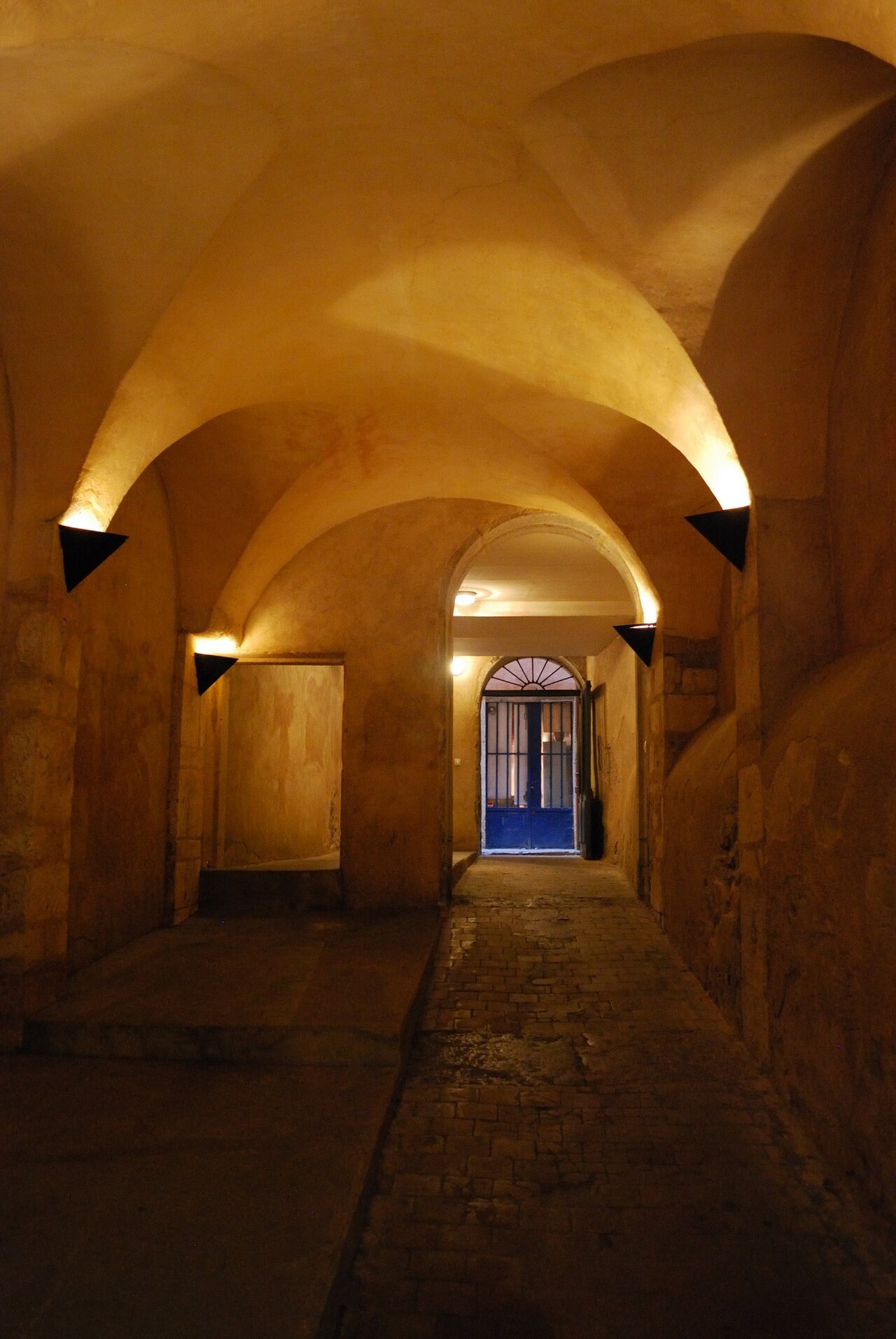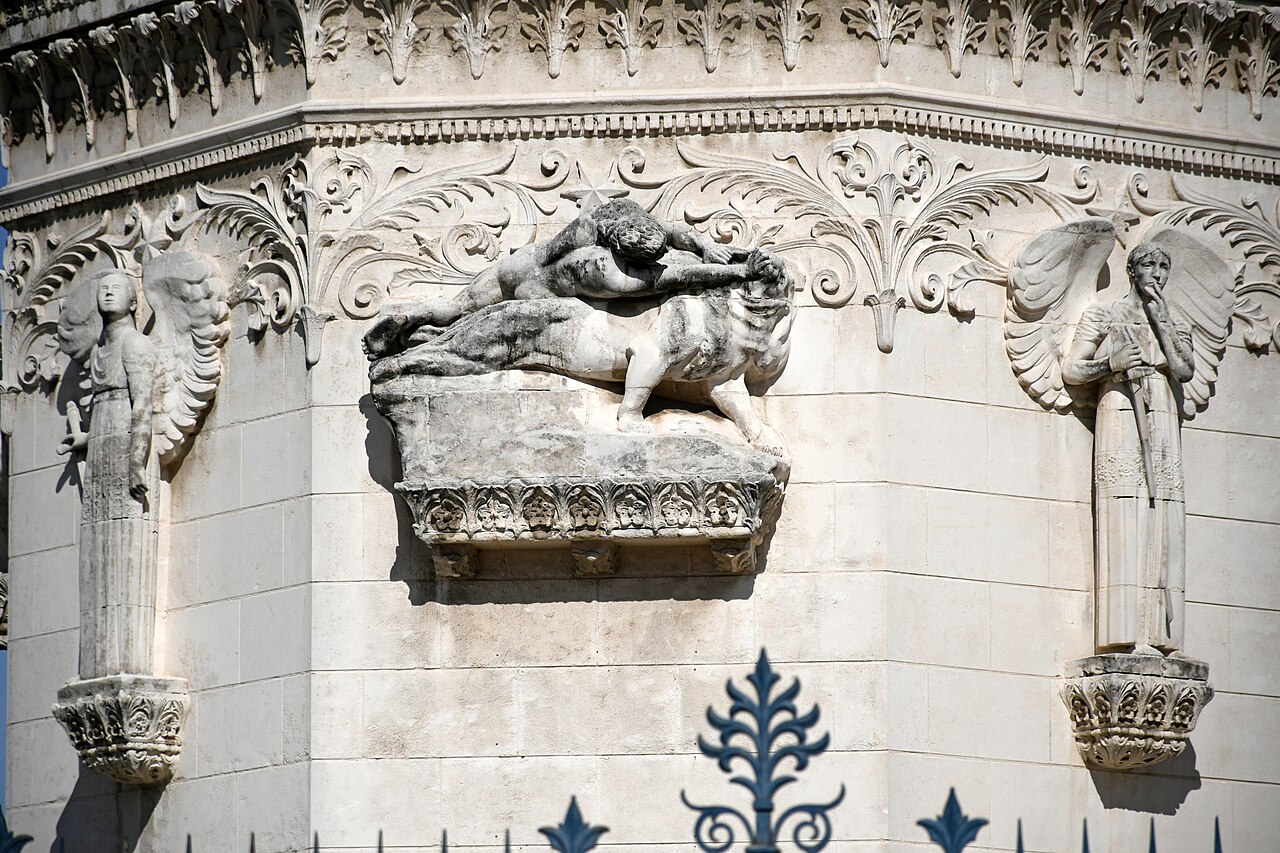
Fourvière is the hill where Lyon began as the Roman city of Lugdunum, and the basilica that crowns it is the city’s best-known silhouette, nicknamed the upturned elephant for its four stout towers. It was built in the late 19th century to honour the Virgin Mary, whom the people of Lyon credit with sparing the city from plague in 1643 and later from invasion, and its story is tied to the Fête des Lumières, which grew from the candles lit in thanks on 8 December 1852. The upper church is an explosion of colour, with gilded mosaics covering the walls, marble columns and stained glass, while the calmer crypt below is dedicated to Saint Joseph. Next door, the old chapel and a small museum of sacred art complete the visit. Outside, the esplanade has the panorama everyone comes for: the red roofs of Vieux Lyon, the Presqu’île between the rivers and, on clear days, the Alps. Entry to the basilica and crypt is free, and this page links to the official site.
How to visit: the simplest way up is the F2 funicular from Vieux-Lyon station on metro line D, which drops you near the basilica in a couple of minutes. Bus 55 also stops at Saint-Just, and on foot the climb through the Rosaire gardens takes about 25 minutes and is a lovely way down. The basilica is open every day from 7:00 to 20:00, until 21:00 on Sundays, and the crypt from 8:00 to 18:30. The museum opens Wednesday to Sunday, morning and afternoon. Individual visitors need no reservation; guided visits are booked through the official site, and the Lyon City Card includes an unusual guided tour of the basilica rooftops, booked by phone.
What to expect: this is a working pilgrimage church, so services take place throughout the day and visitors should keep voices low. An elevator from the main forecourt helps visitors with reduced mobility. Urgent work on the basilica’s towers is planned, so scaffolding may appear on part of the building.
Making the most of it: combine the basilica with the Roman theatres a few minutes downhill, then walk down through the gardens into Vieux Lyon. During the Fête des Lumières, from 5 to 8 December 2026, the basilica is lit by a projected artwork that stays on view from 26 to 31 December, and on 8 December a torchlight procession climbs here from the cathedral.
What to expect
The experience
A free visit to the mosaic-filled upper church and the crypt, followed by the panorama from the esplanade at the top of Fourvière hill.
Best time
Early morning for quiet and clear views, or late afternoon for the light over the red roofs below.
How long
About an hour for the basilica and view, two with the museum or the Roman theatres nearby.
Tips
Ride the funicular up and walk down through the Rosaire gardens to Vieux Lyon, and book the City Card rooftop tour ahead.
Quick picks
- Best for
- The definitive view of Lyon and one of the most lavish church interiors in France, free of charge.
- Families
- Children enjoy the funicular ride and the big view; the walk down through the gardens is easy going.
- Couples
- Watch the sun set from the esplanade, then wander down into the lanes of Vieux Lyon for dinner.
- Pair with
- The Roman theatres of Fourvière and the traboules of Vieux Lyon at the foot of the hill.
- Time needed
- One to two hours.
Good questions
Is it free to visit Fourvière Basilica?+
Yes, entry to the basilica and the crypt is free and needs no reservation. Only guided tours and the museum have separate arrangements.
How do I get up Fourvière hill?+
Take the F2 funicular from Vieux-Lyon station on metro line D, which takes a couple of minutes. You can also walk up through the Rosaire gardens in about 25 minutes.
What are the opening hours of the basilica?+
The basilica is open daily from 7:00 to 20:00, and until 21:00 on Sundays. The crypt opens from 8:00 to 18:30.
Can you go on the roof of Fourvière Basilica?+
Yes, guided rooftop tours run on set dates and must be booked ahead. The Lyon City Card includes one, subject to availability.
What happens at Fourvière during the Fête des Lumières?+
The basilica is lit by a projected artwork during the festival, from 5 to 8 December 2026, and again from 26 to 31 December. On 8 December a torchlight procession climbs from the cathedral to the basilica.