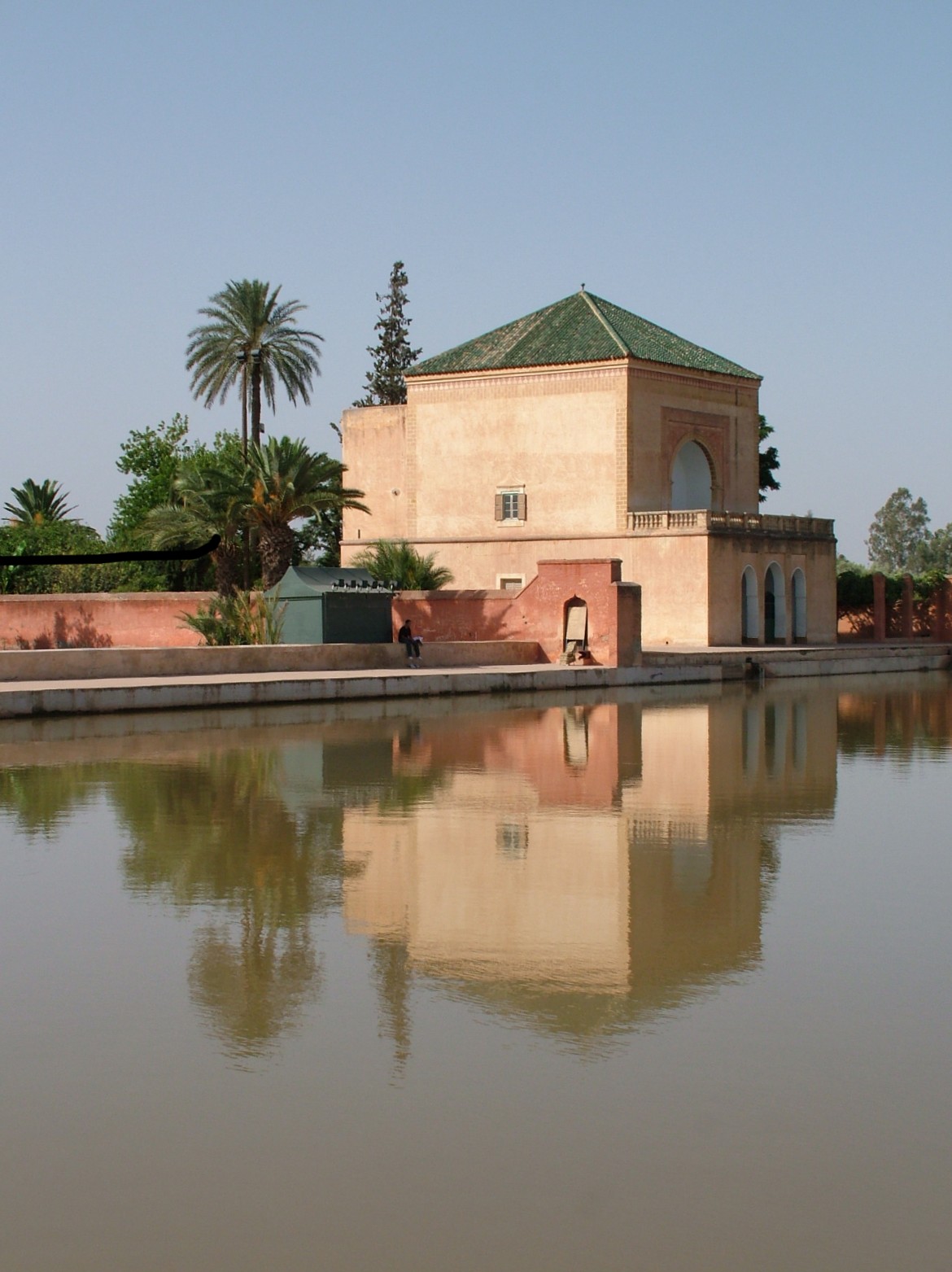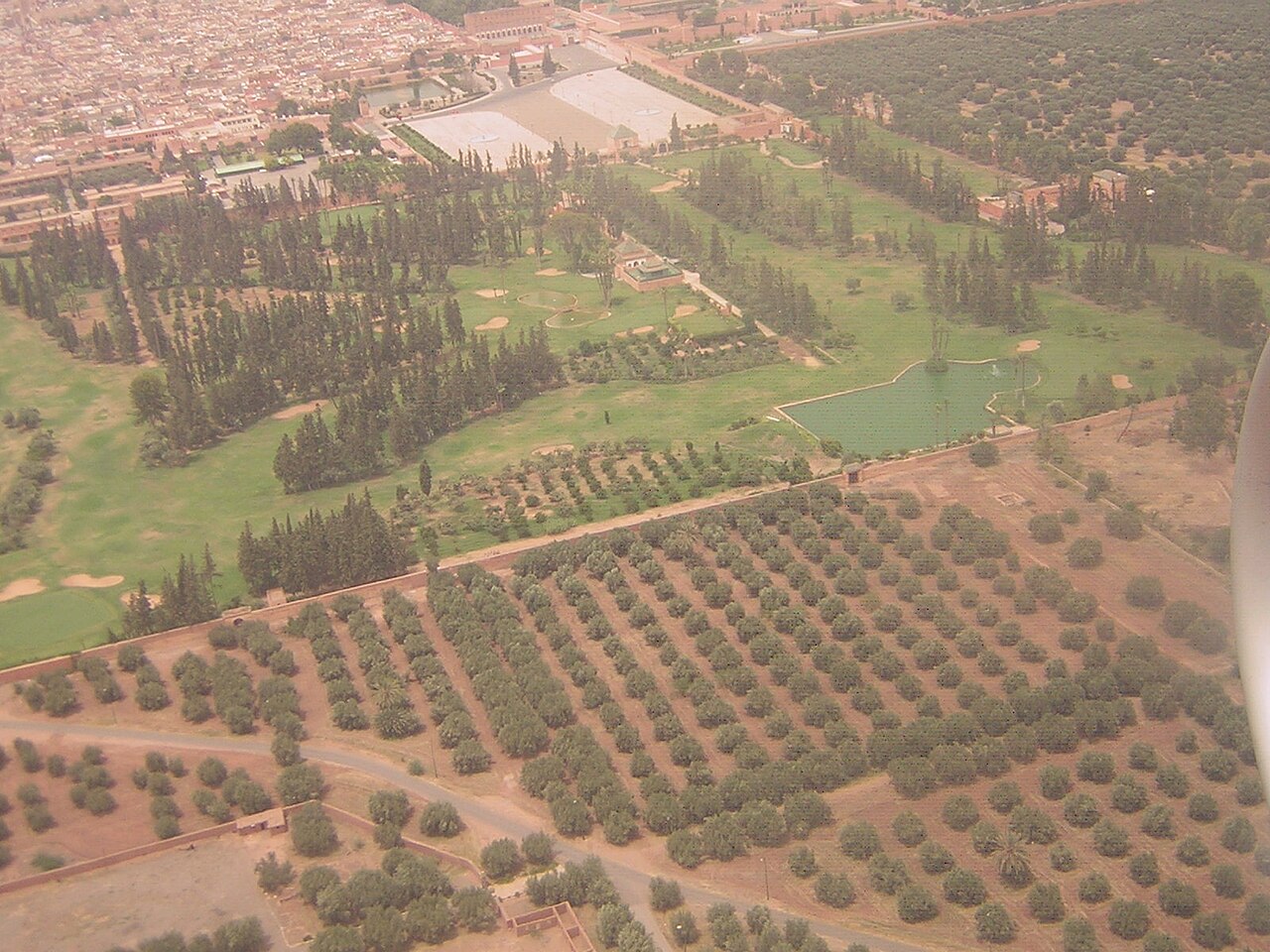
The Agdal is the great green lung of historic Marrakech and one of the oldest working gardens in the Islamic world. South of the Dar El Makhzen, the Royal Palace, and walled off from the city, it stretches over about 500 hectares of orchards, according to the Marrakech-Safi Regional Tourism Council: rows of olive, orange, lemon, pomegranate, fig and apricot trees separated by raised paths and channels. The garden dates back to the twelfth century and was restored and expanded by later dynasties, notably in the nineteenth century, and it remains a royal property. Its heart is a system of large basins that stored water brought from the High Atlas by khettaras and seguias, the underground and open irrigation channels, and regulated its flow through the orchards. The largest pond, Es Sala, is overlooked by the panoramic terrace of the Dar El Hana pavilion, with views across the water and trees to the mountains. Together with the Menara, the Agdal is part of the Medina of Marrakesh World Heritage Site, and conservation and restoration studies have been carried out in recent years. The visit is free, but the gardens open only on limited days and are closed when the king is in residence at the palace; the tourism council itself gives conflicting hours, so check locally before you go. When open, it is popular with joggers, families and couples, and it offers something rare in the city: long, quiet walks under fruit trees, with birdsong instead of motorbikes. It is not a manicured garden, and there are few facilities, but in spring blossom season it is lovely.
Checking opening: historically the Agdal has opened on Fridays and Sundays, but closures are common and can be announced at short notice. Ask your riad or hotel to check, or go past the entrance on the way to the Kasbah and see if the gates are open. The entrance is on the road along the ramparts south of the Kasbah, about fifteen minutes on foot from the Saadian Tombs or a short taxi ride from the Medina.
What to do: walk the main avenue to the big basin and climb to the Dar El Hana terrace for the view, then return through the orchards. Spring brings orange blossom and pomegranate flowers, autumn the harvest. Bring water, as there are no cafes inside, and a hat, because shade is patchy on the main paths. The ground is flat and suitable for strollers on the main tracks.
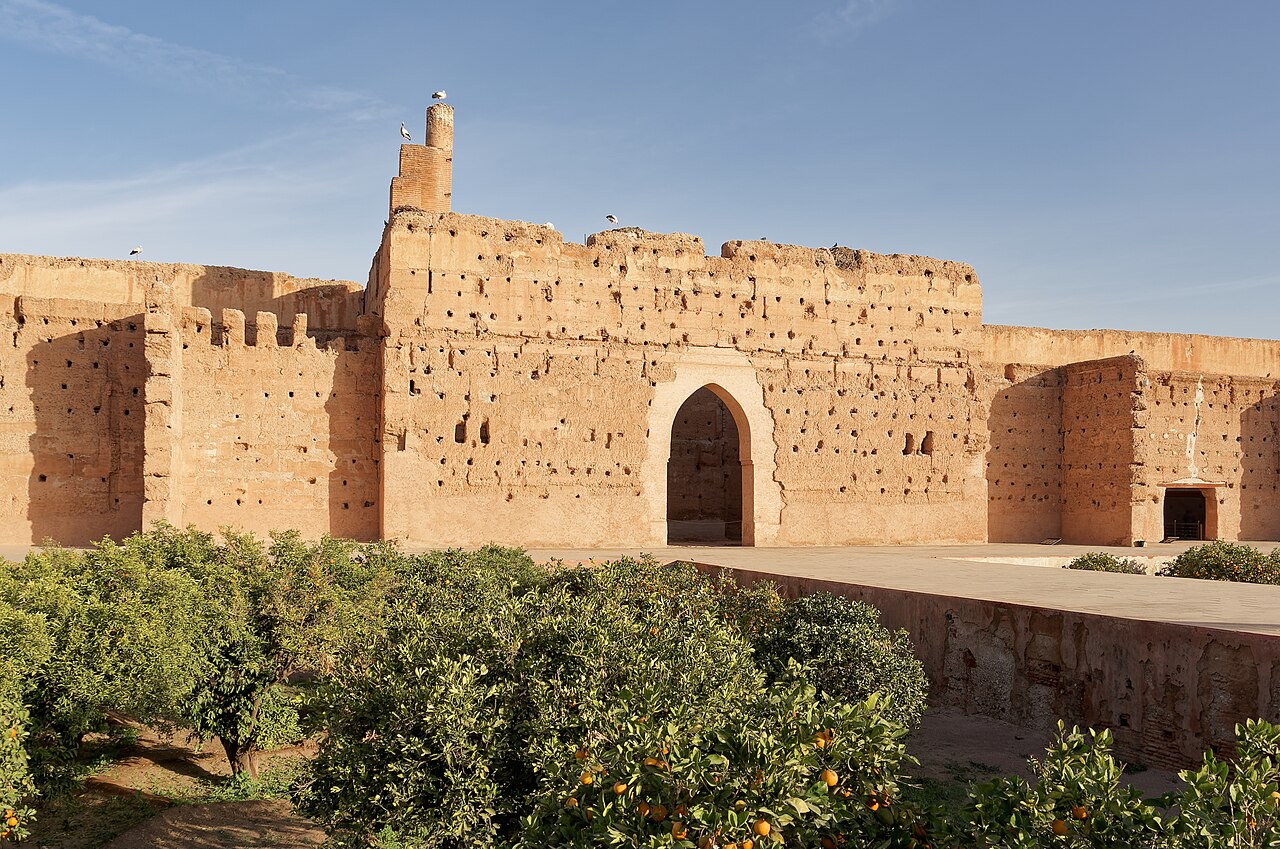
Pairing: combine the Agdal with a morning at the Saadian Tombs and El Badi Palace, both in the Kasbah nearby, or with the Menara for a gardens-themed afternoon. If the Agdal is closed, the Cyber Park and Le Jardin Secret are good alternatives for green space inside the city. Remember that the Agdal is a working royal estate, not a park designed for tourists: there are no signs, cafes or toilets, and guards may close paths without explanation, so treat a visit as a bonus rather than a fixed point in your itinerary.
What to expect
The experience
A free walk through vast walled royal orchards to great water basins and a pavilion terrace with Atlas views.
Best time
Spring for blossom; check opening days locally, as the gardens open only on limited days.
How long
One to two hours.
Tips
Confirm that the gates are open before making a special trip, bring water and a hat, and pair with the Kasbah sights.
Quick picks
- Best for
- Garden historians, walkers and anyone who wants quiet space.
- Families
- Flat tracks and space to run, though there are no facilities.
- Couples
- A peaceful orchard walk with mountain views on a spring morning.
- Pair with
- The Saadian Tombs, El Badi Palace and the Menara Gardens.
- Time needed
- One to two hours.
Good questions
When are the Agdal Gardens open?+
Only on limited days, traditionally Fridays and Sundays, and not when the king is in residence. Hours are irregular, so confirm locally before you go.
Is the Agdal free?+
Yes, entry is free when the gardens are open.
How big are the Agdal Gardens?+
About 500 hectares of orchards south of the Royal Palace, according to the regional tourism council.
What is there to see?+
Orchards of olives, citrus and pomegranates, the great basins, including the Es Sala pond, and the Dar El Hana terrace with Atlas views.
Agdal or Menara?+
The Menara is open daily and has the famous pavilion view; the Agdal is larger, quieter and more of an orchard walk, but opens only on limited days.