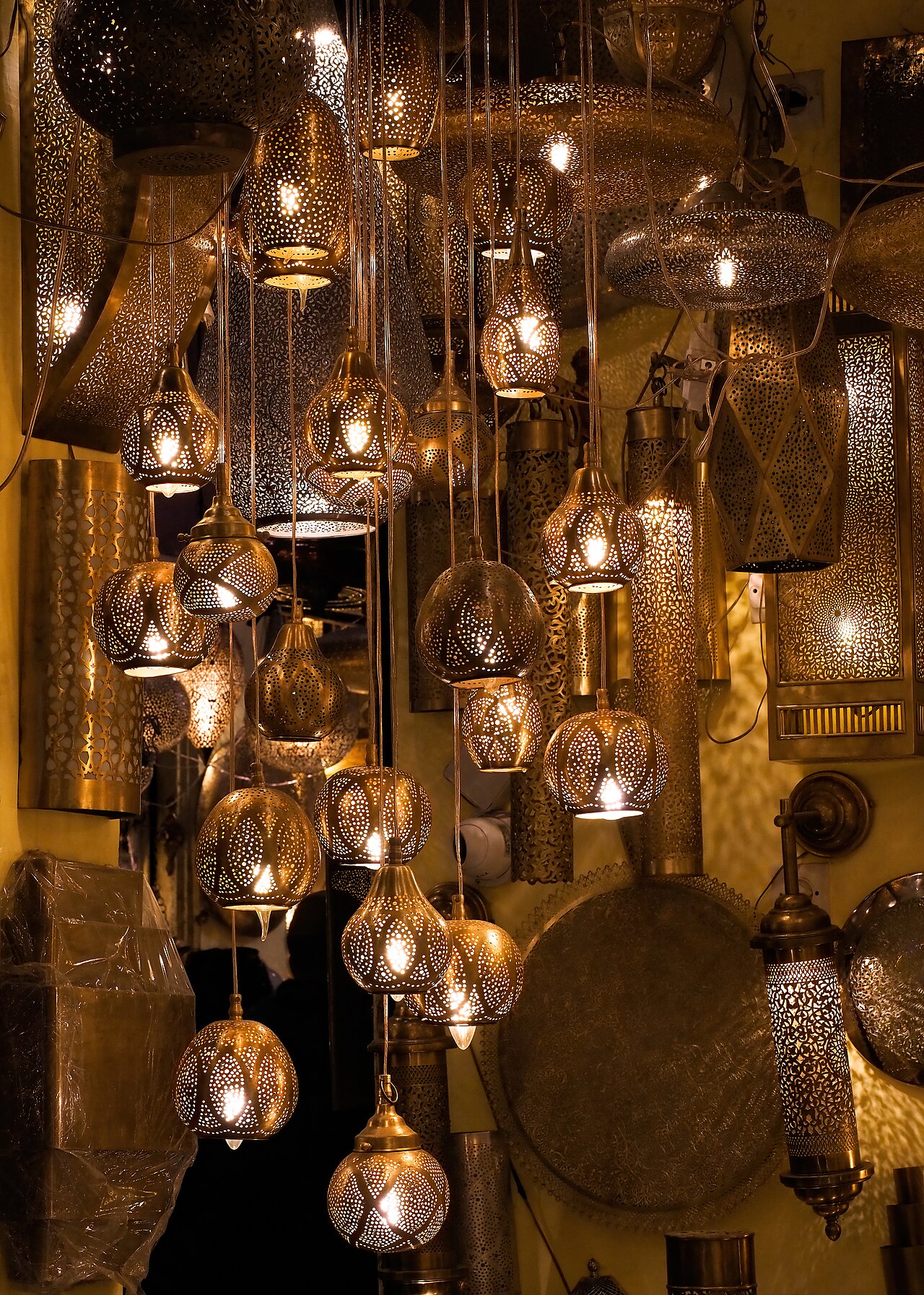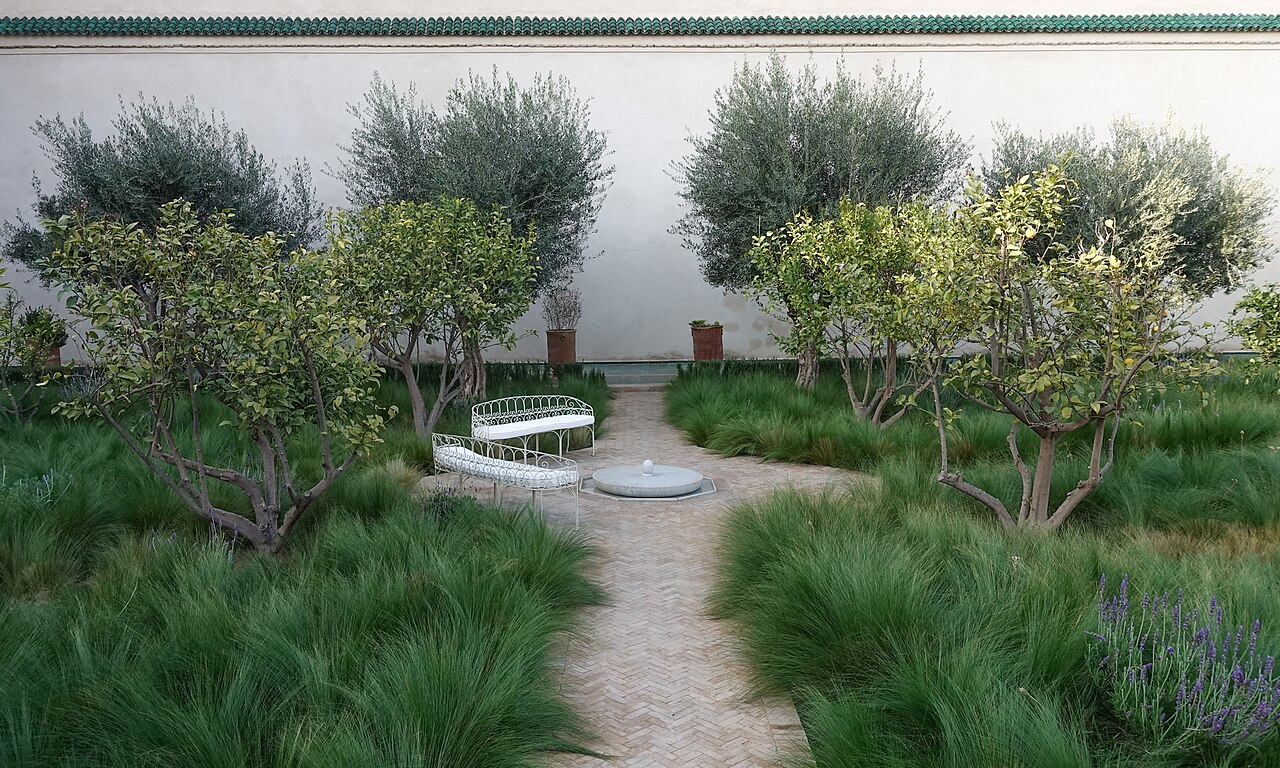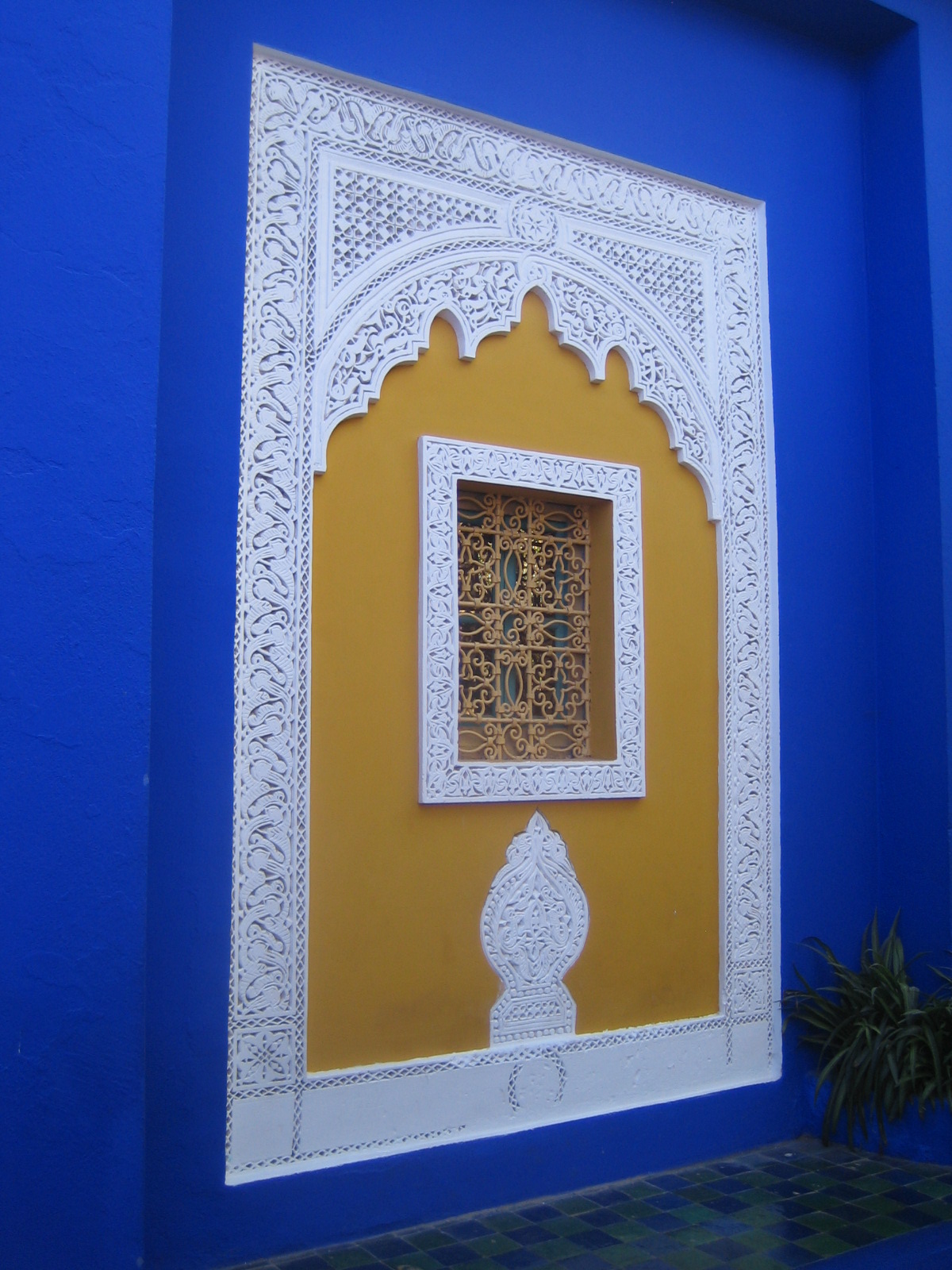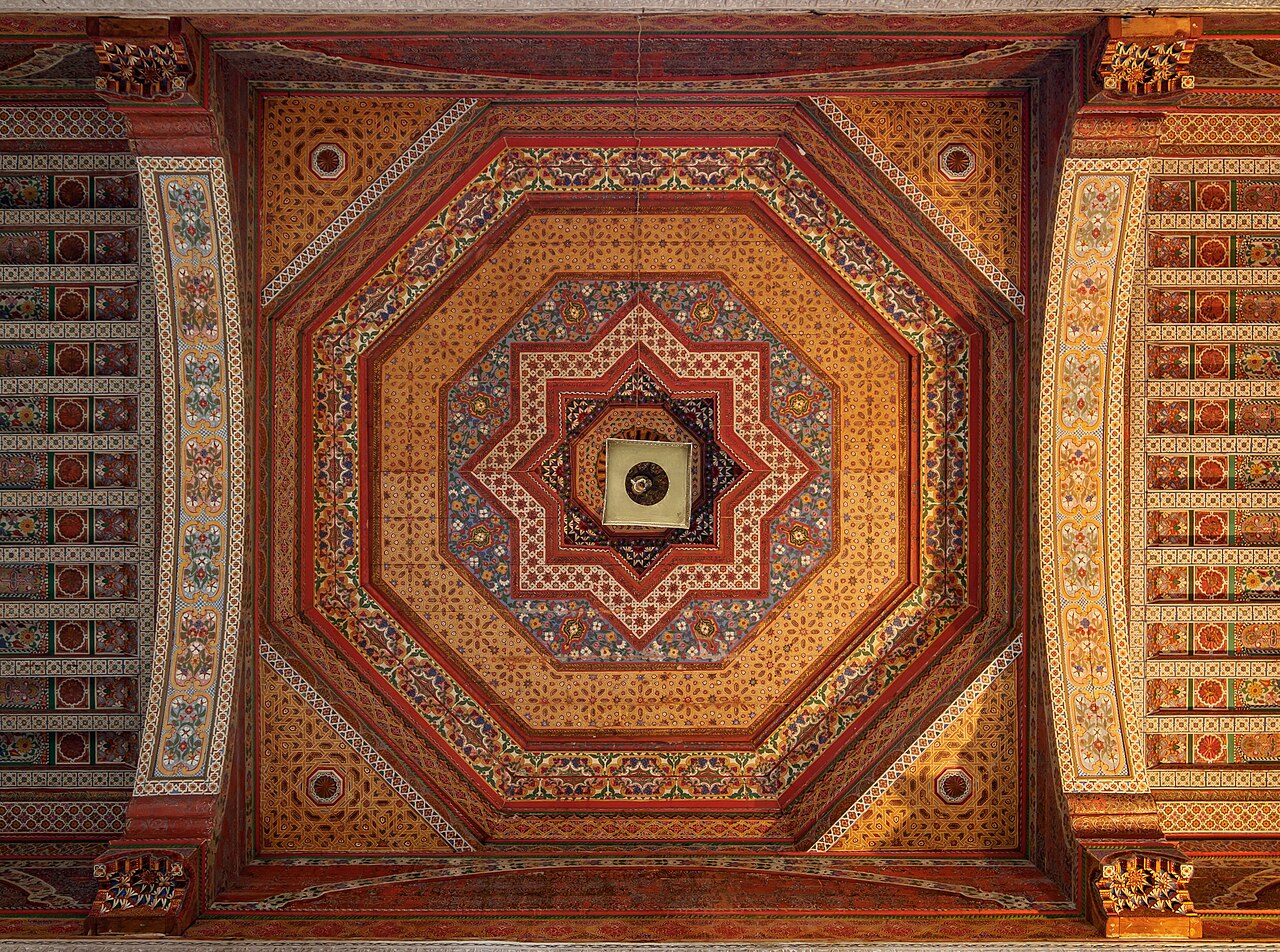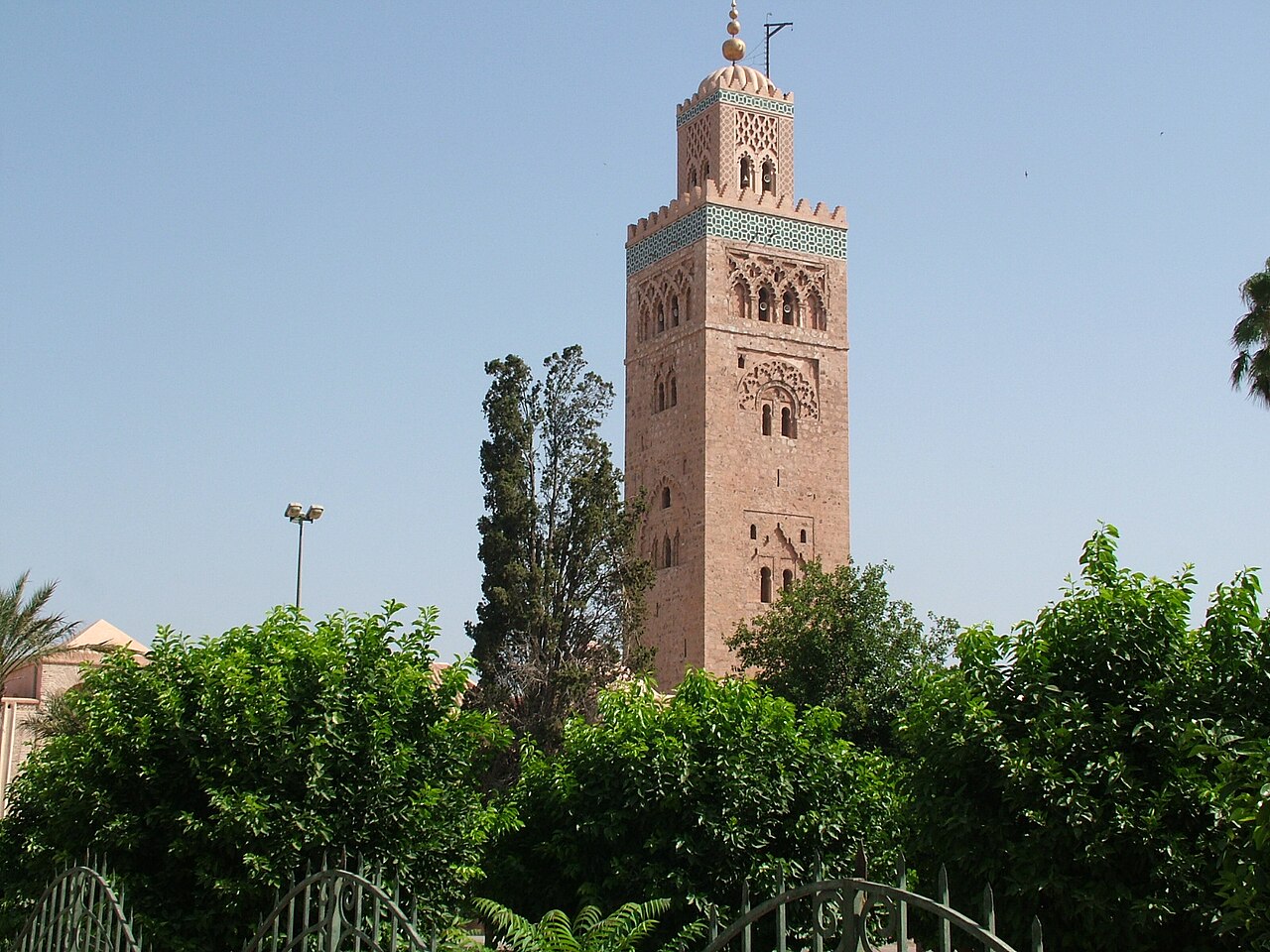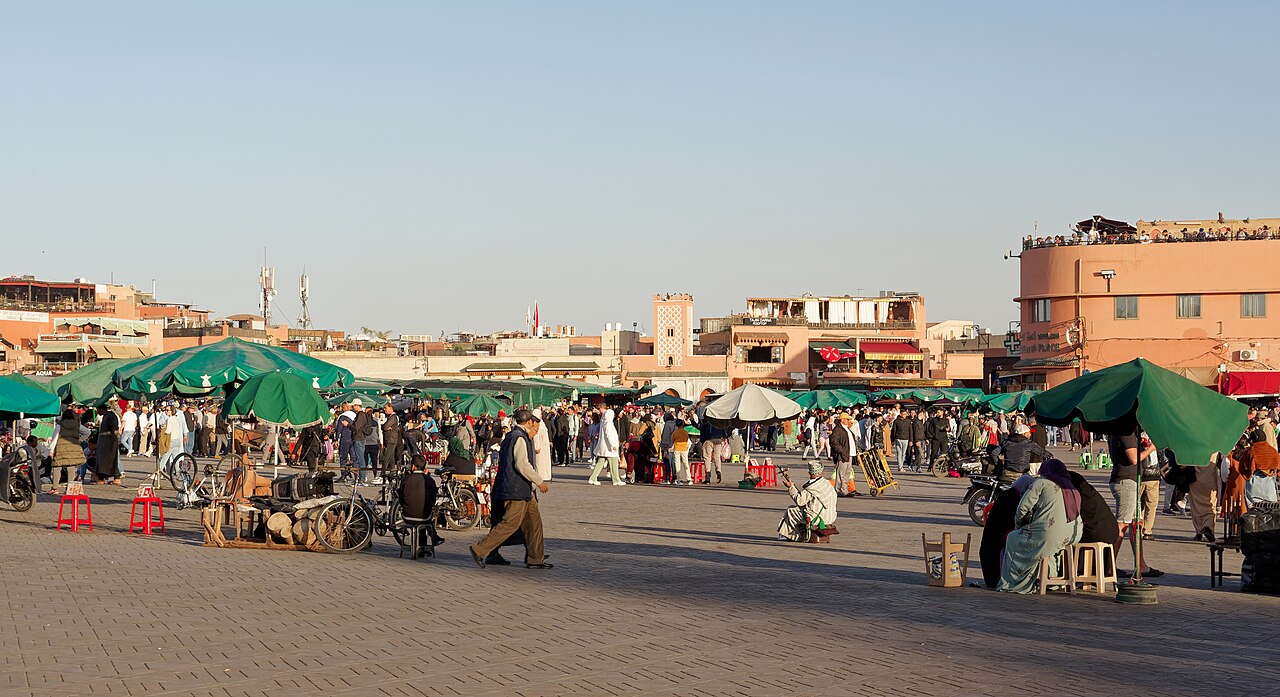
Mouassine is the part of the Medina where Marrakech feels most like a living city rather than a stage set, and it is the best place to understand how the old town was designed. The quarter grew up in the sixteenth century under the Saadian sultans, who built the Mouassine Mosque with its school, bathhouse and a monumental public fountain, so that the neighborhood had everything it needed around one square. The Mouassine Fountain, with its carved cedar canopy and arches, still stands beside the mosque, and Le Jardin Secret, which runs the official guide to the quarter, describes it as a key landmark of how water shaped the Medina's urban life. From the fountain, lanes lead past studio-boutiques where leather, wood and metal are worked, small art galleries, concept stores and riads turned into guesthouses. Two visits give the walk its depth. Le Jardin Secret, a restored Saadian-era palace complex with an Islamic garden and an exotic garden, has its own entry in this guide and a tower with views over the rooftops. The Mouassine Museum, in a Saadian-era reception house, preserves an upstairs salon, or douiria, with painted ceilings and carved stucco, and regularly hosts traditional music evenings; the Marrakech Music Museum nearby shares a ticket with the Maison de la Photographie. Walking the streets costs nothing, and the area is less pressured than the main souk spine. It sits between Jemaa el-Fna, the souks and Dar El Bacha, so it fits naturally into a half day of exploring. For first-timers it is the ideal place to slow down and look up at carved doorways, fountains and the small details of a historic neighborhood that still works.
A suggested route: begin at Le Jardin Secret early in the morning or in the late afternoon, when the light is best and crowds are smaller, and climb the tower for the view. Walk to the Mouassine Fountain and the mosque complex (the mosque itself is closed to non-Muslims), then browse the workshops and galleries in the surrounding lanes. Finish at the Mouassine Museum, ideally on an evening with a music performance, or continue north to Dar El Bacha and its coffee house.
Shopping well: Mouassine has some of the most interesting design shops in the Medina, with contemporary takes on leather, ceramics and textiles, often at fixed prices. Compare quality before you buy in the main souks, and remember that small workshops often make to order. The Souk Cherifia and its upstairs boutiques nearby are worth a look for young Moroccan designers.
Practical notes: lanes are narrow and motorbikes pass frequently, so keep to the side. People may offer to guide you to the tanneries or a closed shop, which is a common scam; decline politely and use a map app. The area is generally calm, but keep valuables secure. Many riads in Mouassine offer rooftop lunches, a good break before an afternoon in the souks.
What to expect
The experience
A self-guided neighborhood walk around a sixteenth-century fountain and mosque complex, craft workshops, galleries and small museums, with Le Jardin Secret as the anchor.
Best time
Morning or late afternoon for soft light and quieter lanes; evenings when the Mouassine Museum holds a music performance.
How long
Two to three hours including Le Jardin Secret.
Tips
Use a map app rather than volunteer guides, keep to the side for motorbikes, and look for fixed-price design shops before bargaining in the main souks.
Quick picks
- Best for
- First-timers who want to understand how a Medina neighborhood works, and design-minded shoppers.
- Families
- Manageable with children if you keep to the calmer lanes and include Le Jardin Secret.
- Couples
- A gentle wander of galleries, fountains and rooftop lunches.
- Pair with
- Le Jardin Secret, Dar El Bacha and the souks.
- Time needed
- Half a day with stops.
Good questions
Where is the Mouassine quarter?+
In the western Medina, between Jemaa el-Fna, the main souks and Dar El Bacha. Le Jardin Secret on Rue Mouassine is a good starting point.
How old is the Mouassine Fountain?+
It dates from the sixteenth century and is part of the Saadian-era Mouassine Mosque complex.
Can non-Muslims enter the Mouassine Mosque?+
No. As with most mosques in Morocco, it is closed to non-Muslims, but the fountain and surrounding lanes are open to all.
Is it free to visit Mouassine?+
Walking the quarter is free. Le Jardin Secret and the small museums charge modest entry fees.
What is the Mouassine Museum?+
A Saadian-era reception house with a painted upstairs salon that regularly hosts traditional music evenings.