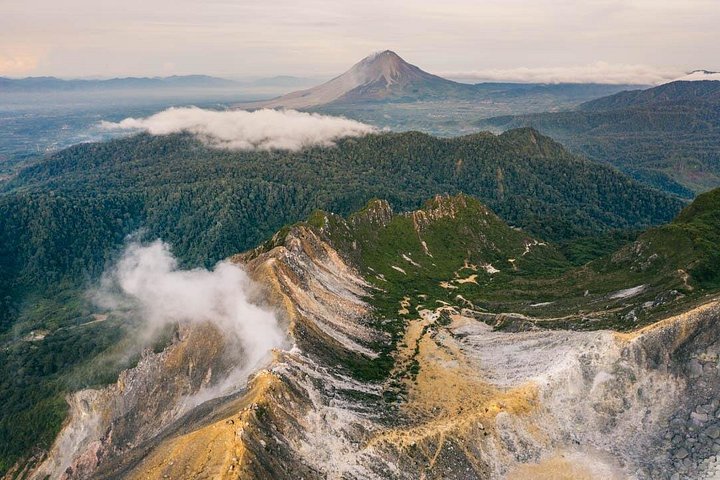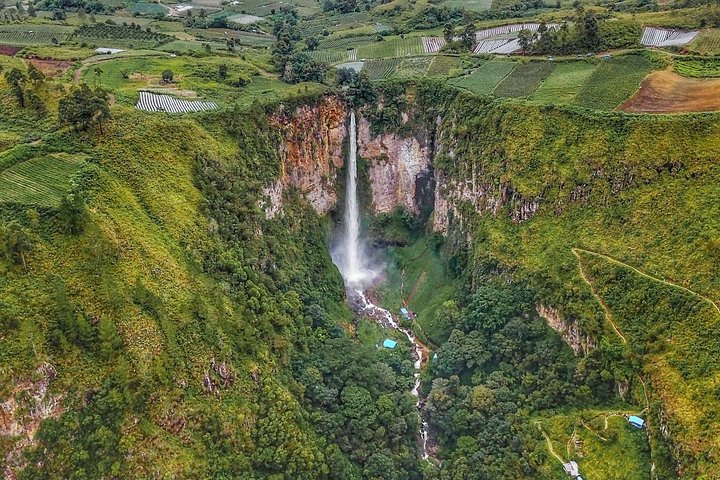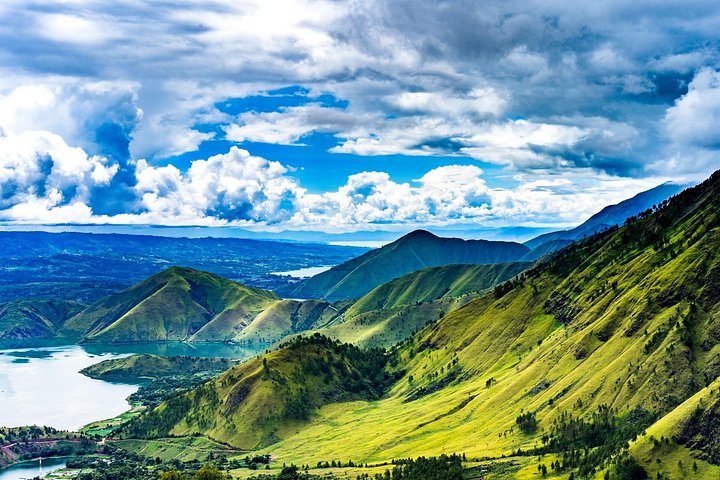
Pusuk Buhit is the mountain at the center of Toba Batak legend. According to tradition, the first Batak ancestor descended here, and the slopes around it hold villages, shrines and springs with spiritual meaning. It rises around 1,800 meters above sea level on the western side of Lake Toba, near Sianjur Mulamula, and a climb to its summit rewards you with some of the best views in North Sumatra. This private guided hike starts from Samosir Island and takes you through farms and forest to the upper slopes, where the lake spreads out far below in every direction. The hike is moderate to demanding, depending on route and weather. The lower section crosses cultivated land and pine, while the upper section is steeper and more open, with grass and scrub. Your guide will explain the legends of the mountain, point out the geography of the caldera and suggest when to stop for photographs. On a clear day you can see Samosir, the lake's far shore and the highlands beyond, which makes the climb feel like a lesson in volcanology as well as a physical challenge.
Cultural respect
Pusuk Buhit is a sacred place, so visitors are expected to behave modestly, follow the guide's advice and respect any ceremonial sites. Ask before photographing rituals or people, and avoid removing anything from shrines. A local guide helps with etiquette as well as navigation, and hiring one supports the community.
When to go
Start early, because mornings are clearer and cooler, and clouds often gather in the afternoon. Wet weather makes the trail slippery and hides the view, so check the forecast and be prepared to postpone. The hike is not technical, but it can be tiring in humidity, so bring enough water and snacks.
What to pack
Sturdy shoes with grip, a hat, sunscreen, a rain jacket, a warm layer for the summit and a small first aid kit. Mobile phone coverage can be patchy, so share your plan with someone. If you do not want to climb, the lakeside villages and viewpoints offer a gentler way to appreciate the mountain. Combine the hike with a Samosir island tour and a boat trip to make the most of a few days on the lake.
Combining hiking and culture
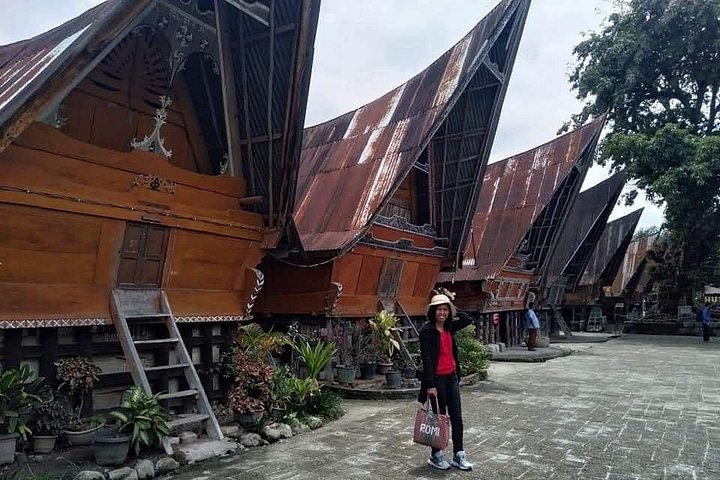
The area around the base of the mountain is full of Batak history, including the village of Sianjur Mulamula, which tradition names as the origin of the first Batak clan. A guide can arrange a short visit to springs, houses and shrines before or after the hike, which adds meaning to the climb.
Hiring a local guide, buying drinks in the village and staying in a homestay help ensure that tourism benefits the people who live on the slopes. If your schedule is tight, ask whether the guide can shorten the route and still reach a good viewpoint.
A realistic plan
Allow time for a slow breakfast, the transfer to the trailhead, the climb, a rest at the top and a gentle descent, then budget a relaxed evening. Do not schedule an early flight or an important transfer on the same day. Hikers who are tired and short of time often hurry on the way down, which is when slips happen. Bring a small headlamp as a precaution, tell your guesthouse when you expect to return and keep your phone charged in case you need to call.
What to expect
The experience
A private guided hike up Mount Pusuk Buhit from Samosir Island, with views over Lake Toba and stories of Batak origins.
Best time
Early mornings on clear, dry days.
How long
Several hours of hiking plus transfers.
Tips
Start early, wear grip shoes, bring water and respect sacred sites.
Quick picks
- Best for
- Hikers who want a high viewpoint over Lake Toba and a taste of Batak legend.
- Families
- Suitable for fit teenagers and adults; the climb is steep in places.
- Couples
- A rewarding shared effort with a big view at the top.
- Pair with
- The Samosir island tour and island-hopping boat.
- Time needed
- Half to full day.
Good questions
How high is Pusuk Buhit?+
It rises roughly 1,800 meters above sea level on the western rim of Lake Toba.
Why is it important?+
In Toba Batak tradition it is the sacred mountain where the first ancestor descended.
How hard is the hike?+
Moderate to demanding, with steep sections and humid conditions.
Do I need a guide?+
A guide is strongly recommended for navigation and cultural etiquette.
What if it rains?+
Trails become slippery and views disappear, so consider postponing.