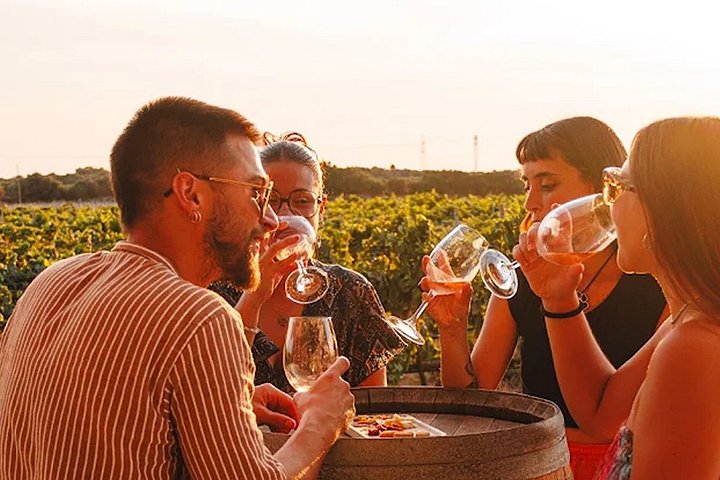
Wine has been made in Menorca for centuries, though the modern industry is small and boutique. The island's vineyards benefit from a maritime climate, limestone and clay soils and steady sea breezes, which give the grapes freshness. Producers grow a mix of international and local varieties, and the wines are mostly sold on the island, so a winery visit is often the only way to taste them. A winery tour follows the same pattern as in other regions but at a more intimate scale. A guide or owner walks you through the vineyard, explains the grapes and the challenges of growing them on an island with strong winds and limited water, and then shows you the cellar, tanks and barrels. Finally you taste a flight of wines, usually whites, rosés and reds, often accompanied by local cheese, olives or sobrassada. The flavours are distinct. Whites tend to be light and fresh, with mineral notes; rosés are bright and dry; and reds range from soft and fruity to structured, depending on the grape. They are not the loud wines of larger regions, but they pair beautifully with seafood and cheese, and they reflect their place.
Visits are typically offered in the morning or late afternoon and last around two hours. Many wineries are in the interior, among farmland and stone-walled fields, so a visit is also a chance to see parts of the island away from the coast. The settings are often lovely, with old farmhouses, terraces and views across the vines.
Because quantities are small, availability can be limited. Book ahead, especially in summer, and check whether the tour is in English and what the tasting includes. Some wineries offer lunch or a longer experience, and some host events or concerts in the evening. If you plan to drive, remember that tasting adds up, and consider designating a driver or choosing a tour with transport.
To make the most of the tasting, ask about the grape varieties and which wines pair with local dishes. A good guide will explain how island conditions shape the vines: wind stunts growth, salt air affects ripening, and old stone walls provide shelter. You might also learn about the history of viticulture on the island, which declined during the phylloxera crisis in the nineteenth century and is now being revived.
Pair the visit with a cheese farm, a gin tasting in Mahon, or a visit to a talayotic site to build a day around local culture. A rural lunch in a village makes a natural end. If your interest in wine is serious, ask the winery about their other labels, and consider buying a few bottles, as many are not exported.
For non-drinkers, vineyards are still pleasant places to wander, and many offer grape juice or other drinks. Families are often welcome, though the programme is aimed at adults.
In short, a winery visit is a relaxed, flavourful way to experience Menorca's countryside, and a good rainy-day or hot-afternoon alternative to the beach. Ask whether the tasting includes any wines made from local varieties; these are often the most interesting bottles, with flavours you will not find elsewhere in Spain. A glass of cold white wine with a plate of grilled fish by the sea afterwards makes the lesson stick.
What to expect
The experience
A guided walk through vineyard and cellar followed by a tasting of the island's wines with local snacks.
Best time
Morning or late afternoon, when it is cooler.
How long
About two hours.
Tips
Book ahead in summer. Check the language and what is included. Do not drive after a full tasting.
Quick picks
- Best for
- Wine lovers and curious travellers who want to taste something local.
- Families
- Possible with children but aimed at adults.
- Couples
- Late afternoon light on the vines is lovely.
- Pair with
- A cheese farm and a rural lunch.
- Time needed
- Two to three hours.
Good questions
Does Menorca make good wine?+
It produces small quantities of fresh, characterful wines, mostly sold locally.
Which grapes grow here?+
A mix of international and local varieties, depending on the producer.
Do I need a car?+
Most wineries are rural, so yes, or a tour with transport.
Are tastings suitable for non-drinkers?+
You can still enjoy the setting, and many places offer grape juice.
Can I buy bottles?+
Usually yes, and many wines are not exported.