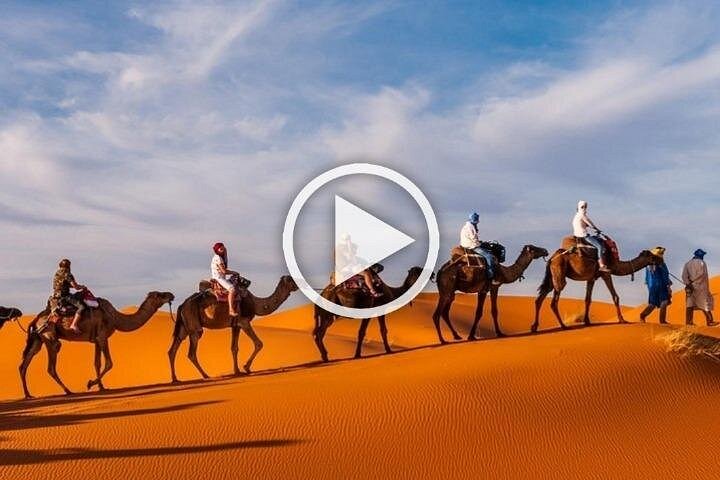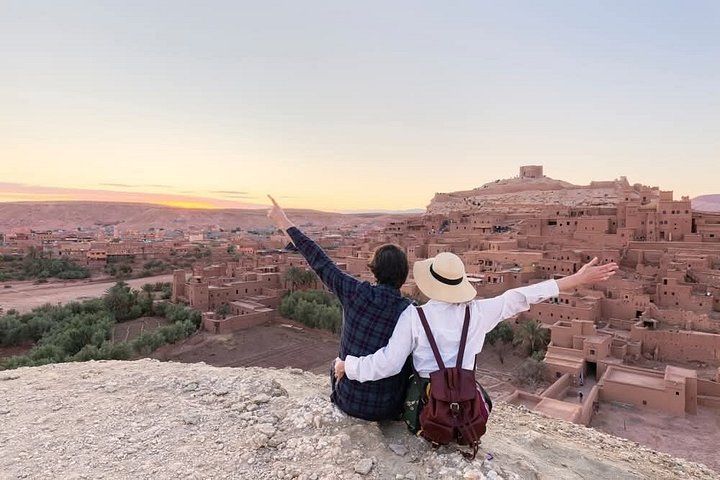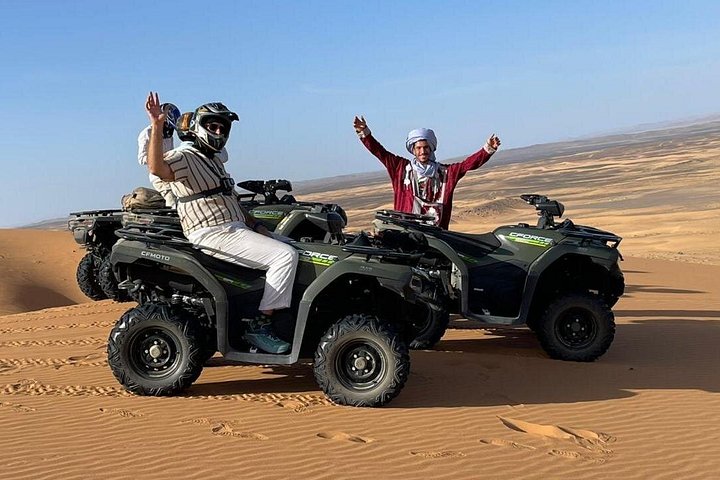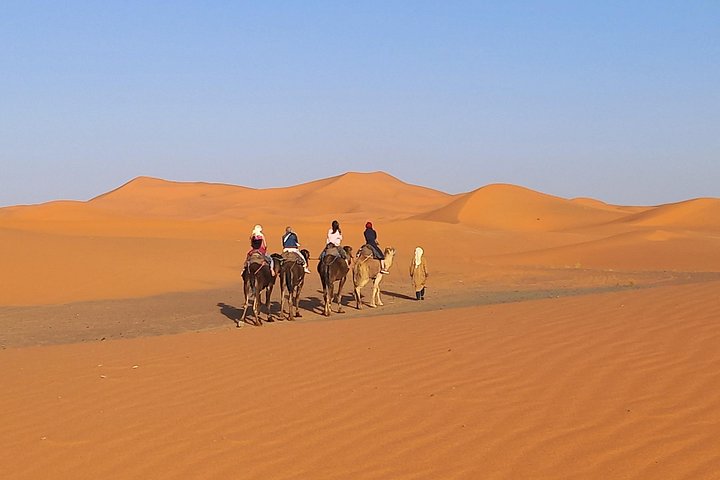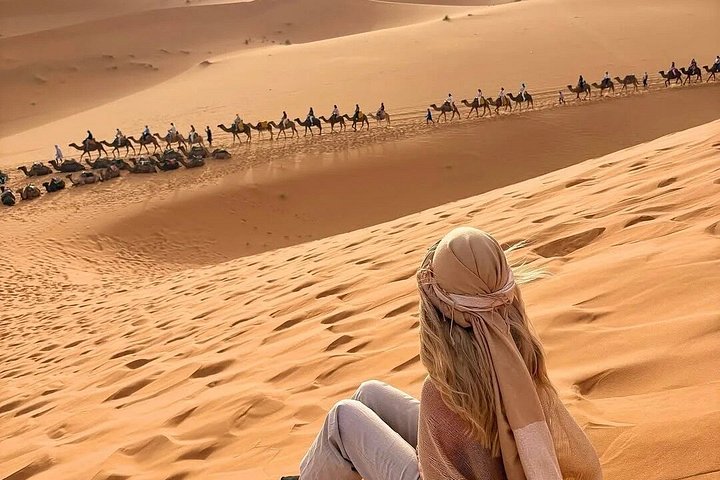
This three-day journey is the most popular way to reach the Sahara from Marrakech. The first day crosses the Tizi n Tichka pass in the High Atlas and stops at the fortified village of Ait Ben Haddou, a UNESCO World Heritage ksar, before continuing through the Draa valley or the Dades region. The second day follows the Dades or Todra gorges to Merzouga, where you ride camels into the dunes for sunset and a night in a desert camp. The third day begins with a sunrise dune climb and a long return drive to Marrakech. It is a lot of driving, but also a procession of dramatic landscapes that no flight can match.
Plan realistically. The distance from Marrakech to Merzouga is roughly 560 kilometres, and mountain roads are slow, so expect eight to ten hours in a minibus or 4x4 on the longest days. Stops are frequent, with lunch breaks, photo points and short walks at sites such as Ait Ben Haddou, the palm oases of Skoura or the Todra Gorge. Vehicles vary from shared minibuses to private 4x4s, and group sizes range from a handful to a dozen, so check which you are getting.
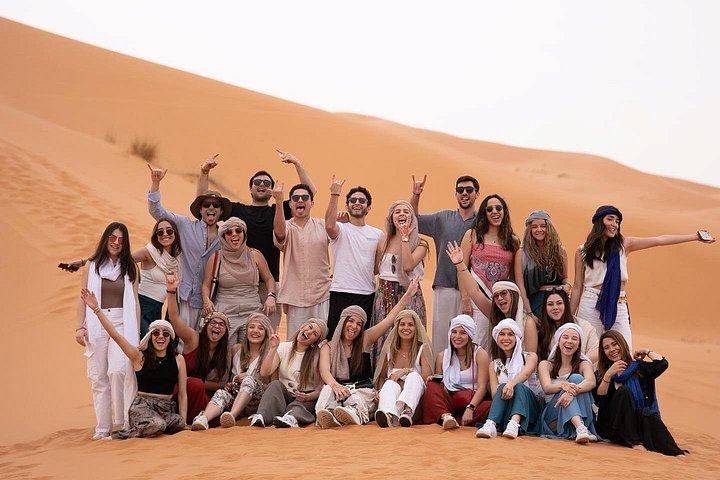
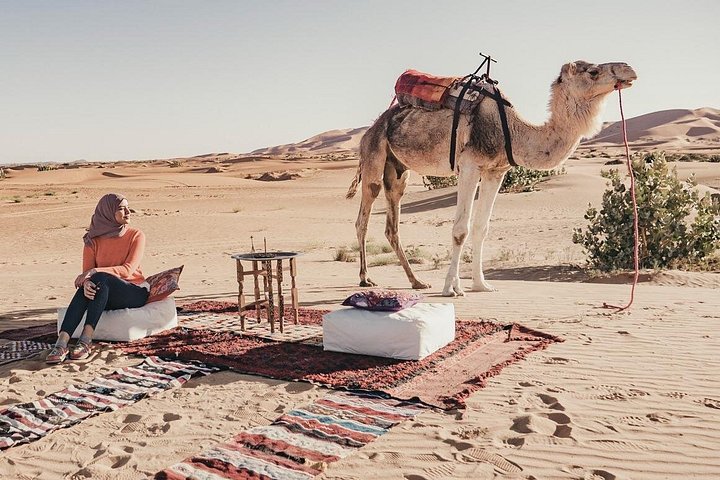
Accommodation is generally a hotel or kasbah on the first night and a desert camp on the second. Standards depend on the price, so look at what the package includes: private or shared tents, bathroom access, dinner and breakfast. Dinner at the camp is usually a tagine with music and a campfire. Bring a small overnight bag, because your large luggage typically stays in the vehicle.
This trip suits first-time visitors with a limited schedule who still want to see the Sahara. If you are prone to car sickness, mountain roads can be challenging, so sit near the front and carry remedies. Travellers who prefer a slower pace should consider a four-day version or a private itinerary that adds time in the gorges.
Winter brings snow on the Tizi n Tichka and cold desert nights, while summer brings heat above forty degrees in the south. Spring and autumn are the most comfortable seasons. Tips for your driver and guide are customary at the end of the trip.
Compare operators before you choose. Look at the group size, the vehicle type, the level of the hotel and the camp and whether lunches and dinners are included. A small group in a comfortable 4x4 is more pleasant than a crowded minibus on winding roads. Read recent comments for punctuality and honesty about stops. Ask what happens if the High Atlas pass is closed by snow, and whether the operator offers a refund or alternative route. Finally, leave a flexible day in Marrakech before your flight home in case of delays.
Think about stops and what to skip. Ait Ben Haddou rewards a proper walk through the ksar, so choose a tour that allows at least an hour there. The Todra Gorge is magnificent in the morning light, and the Dades valley offers views of rocky formations. If you prefer fewer hours in the vehicle, consider a four-day tour or a private driver. Pack a small cooler bag for fruit and water, and download music or podcasts for the longest stretches of road.
What to expect
The experience
A three-day guided road trip from Marrakech over the High Atlas to Merzouga with a camel trek and desert camp.
Best time
March to May and September to November for comfortable weather.
How long
Three days and two nights.
Tips
Pack a small overnight bag, a warm layer and motion sickness remedies.
Quick picks
- Best for
- First-time visitors with a short schedule.
- Families
- Fine for older children, though the driving is long.
- Couples
- Choose a private camp tent for more privacy.
- Pair with
- A Marrakech city stay before and after.
- Time needed
- Three days.
Good questions
How long is the drive to Merzouga?+
About nine to ten hours of driving on the longest day, with stops.
Where do I sleep?+
A hotel or kasbah on the first night and a desert camp on the second.
Is it too rushed?+
It is full but popular. A four-day version is more relaxed.
What should I pack?+
A small overnight bag, a warm layer and sun protection.
Can I do it in winter?+
Yes, but the High Atlas can be snowy and desert nights are very cold.