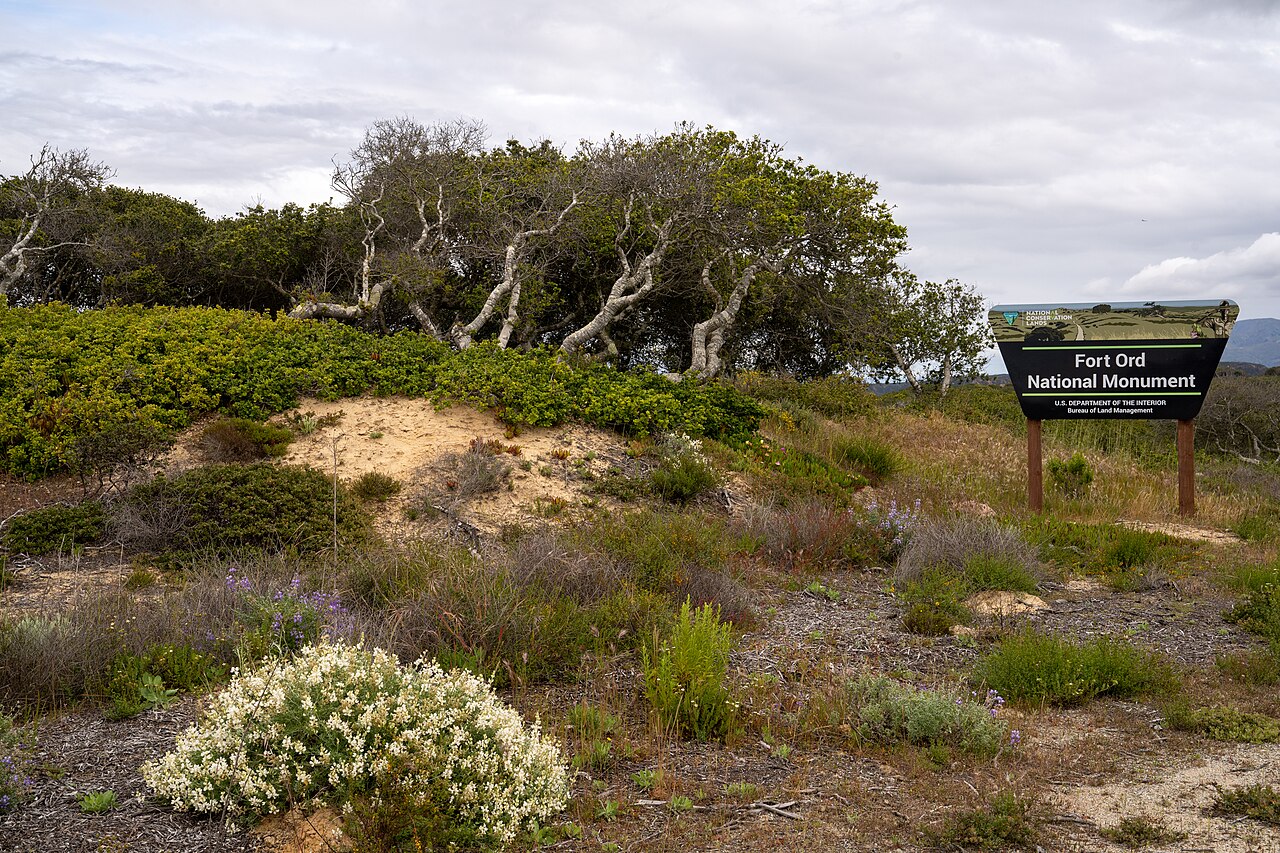
Fort Ord National Monument is the peninsula's largest free playground: thousands of acres of oak woodland, grassy hills and chaparral on land that served as a U.S. Army base until the mid-1990s and is now public, managed by the Bureau of Land Management. It is one of the Central Coast's best places for mountain biking, hiking and horseback riding, with a network of trails above Seaside and Marina and views over Monterey Bay from the ridges. It is a local favorite more than a tourist stop, which is exactly its appeal, and entry is free. The one rule that matters: stay on the marked trails.
Fort Ord opened in 1917 and became a major training base for army infantry for most of the twentieth century. It closed in 1994, and much of the former base was gradually transferred to public ownership. In 2012 President Obama designated a large part of the land as Fort Ord National Monument, protecting a mosaic of oak savanna, maritime chaparral and grassland habitat that shelters rare plants and animals and is home to deer, bobcats and a wide range of birds.
Visitors come for the trails, which include dozens of miles of routes for hikers, mountain bikers and horseback riders in a mostly open landscape. The terrain ranges from easy fire roads to steeper singletrack, with ridge views over Monterey Bay and the Salinas Valley and spring wildflower displays when the hills turn green. Unlike a developed park, it is largely undeveloped, with few services, so come prepared with water, a map or trail app and sun protection.
The land was once used for military training, so the monument asks visitors to stay on designated trails and roads because of the possibility of hazards left over from that use; treat that rule seriously, and follow the signs and the current guidance.
Practicals
Several trailheads are reached from Highway 68 and from the Seaside and Marina side, a 10 to 20 minute drive from Monterey. Trail conditions change with weather and season; poison oak grows beside many paths, and ticks are common in grassy areas, so wear long pants in the wetter months and check yourself afterwards. Dogs are generally welcome under the monument's rules, so confirm the current ones before you go.
Summers are warm and dry inland. Fit: mountain bikers, trail runners, hikers, dog walkers, horse riders and travelers who want a free, uncrowded outdoor morning away from the coast crowds. It pairs well with the beaches and dunes of Marina and a late lunch in Monterey.
What to expect
The experience
Free public land with a network of hiking, mountain-biking and equestrian trails across oak woodland and chaparral, with ridge views over Monterey Bay.
Best time
Spring for green hills and wildflowers; early mornings in summer, when inland heat builds. Choose dry days for the trails.
How long
Two to four hours for a hike or ride; longer for bigger loops.
Tips
Stay on marked trails and roads at all times. Carry water and a trail map, watch for poison oak and ticks, and check current rules for dogs and bikes before you go.
Quick picks
- Best for
- Free, uncrowded trail time for hikers and mountain bikers.
- Families
- Good for easy fire-road hikes with older kids; stay on trails and watch for poison oak.
- Couples
- A quiet morning hike with bay views, followed by lunch in Monterey.
- Pair with
- Marina State Beach and the dunes, or lunch back in downtown Monterey.
- Time needed
- A morning.
Good questions
Is Fort Ord National Monument free?+
Yes. It is public land managed by the Bureau of Land Management, with no entrance fee.
Why must I stay on the trails?+
The land was a military training area, and the monument asks visitors to use only designated trails and roads because of possible leftover hazards. It also protects fragile habitat.
Can I mountain bike or ride horses?+
Yes. The monument has trails for hikers, mountain bikers and horseback riders, but check the current rules for each trail before you go.
Are there services at the trailheads?+
Few. Bring your own water, food and a map or trail app, and expect basic facilities at most.
What should I watch for?+
Poison oak beside the trails, ticks in grassy areas and summer heat. Long pants and sun protection help.