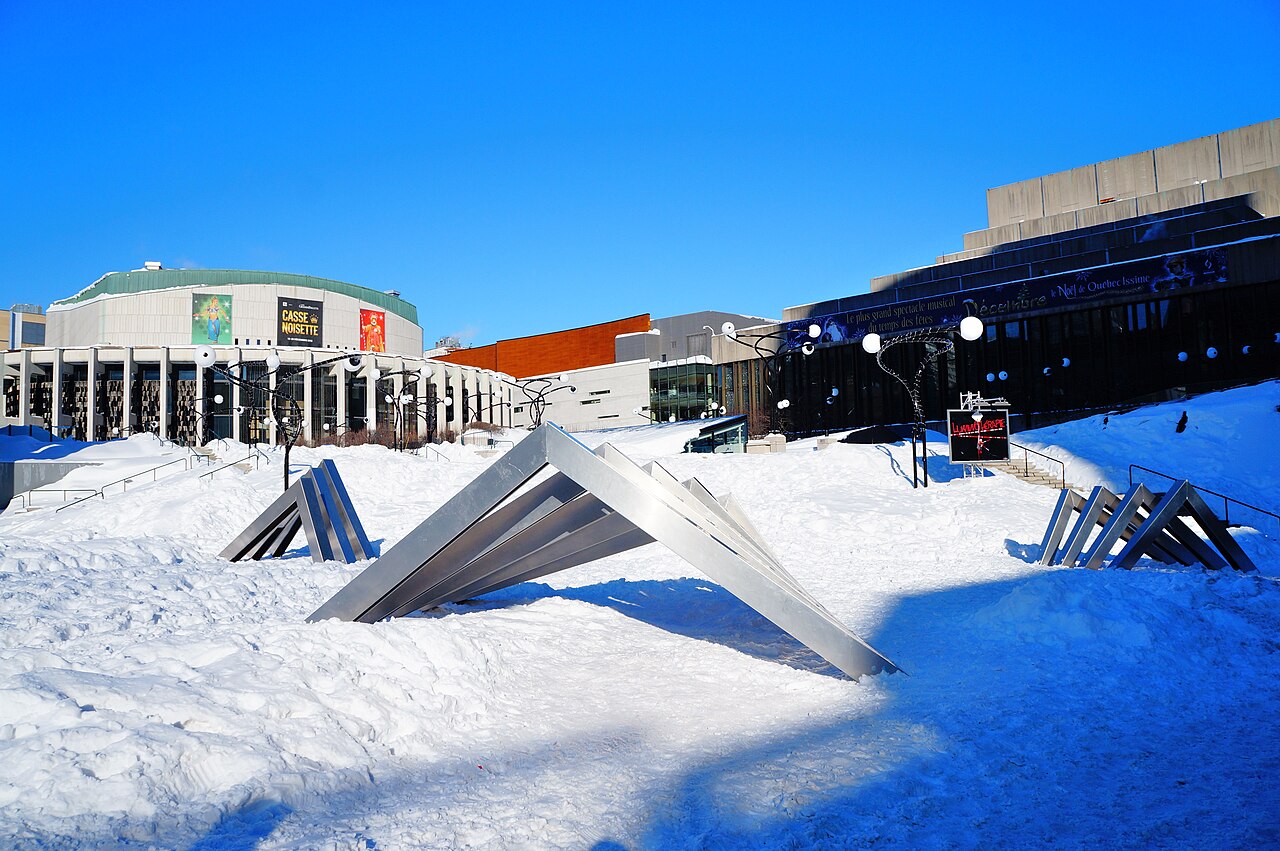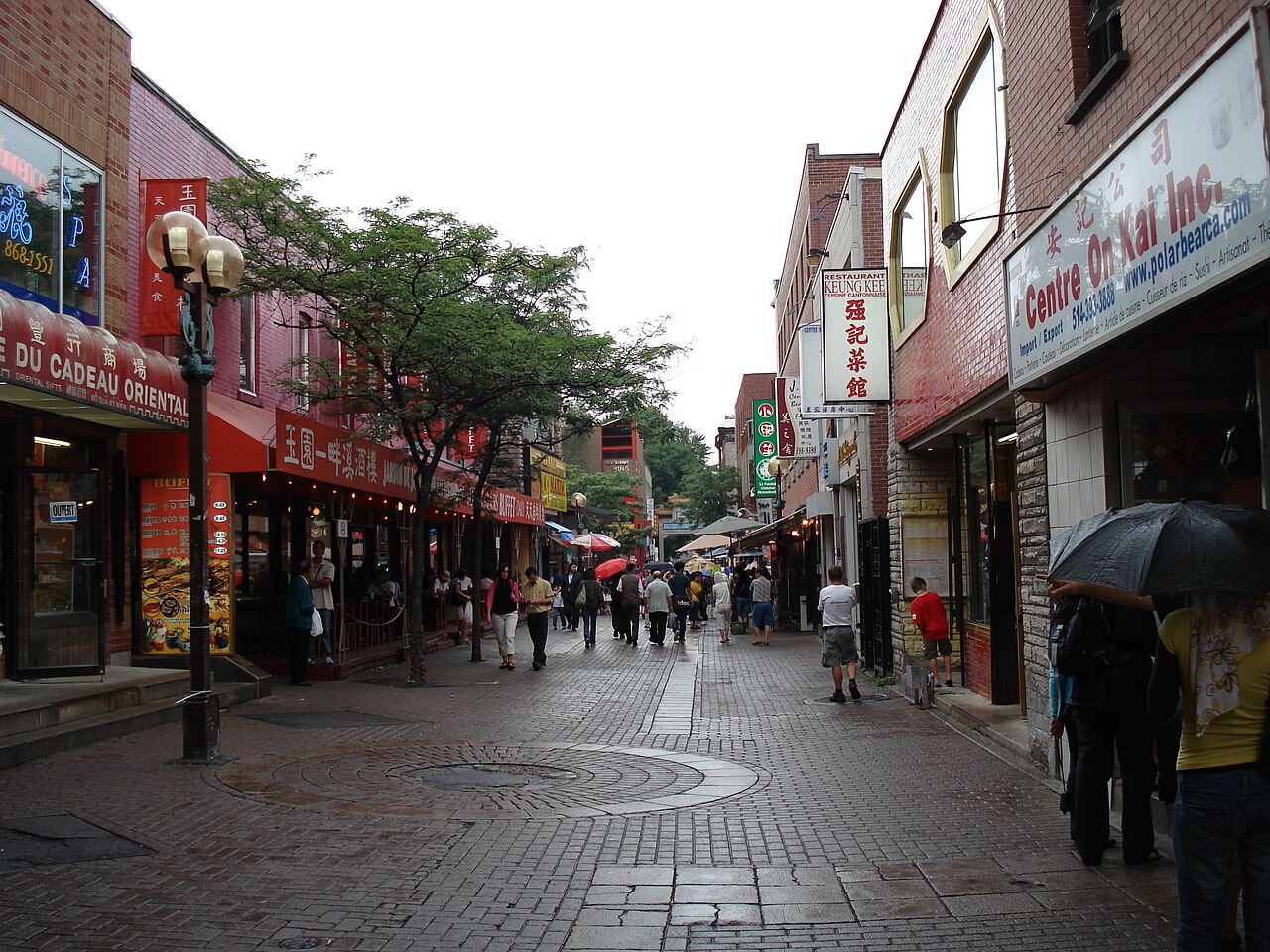
Montreal's Chinatown is small but full of character, and it is the easiest place in the city centre to eat well and cheaply. It covers roughly one square block of streets bounded by Boulevard Rene-Levesque, Rue Viger, Rue Jeanne-Mance and Rue Saint-Dominique, wedged between Old Montreal, the Palais des congres and the Quartier des Spectacles, and its heart is the pedestrian stretch of Rue De la Gauchetiere. The district took shape in the early 1890s, when Chinese shops and laundries clustered along De la Gauchetiere, and over more than a century it has survived expropriations and redevelopment that shrank it considerably; in recent years governments have moved to recognise and protect its heritage. Large ornate paifang gates mark its four corners, more than in any other Chinatown in Canada, and they make a striking frame for photographs, especially at night when the lanterns are lit. The real draw is the food: dim sum halls busy at weekend lunchtimes, Szechuan restaurants, hand-pulled noodle shops where you can watch the cooks stretch the dough, Hong Kong-style cafes serving milk tea and pineapple buns, Vietnamese pho counters and bakeries selling egg tarts and buns at low prices. Grocery shops sell teas, sauces and snacks, and herbal shops and small boutiques fill the side streets. There is no admission and no schedule; you simply walk in. Summer brings street festivals and a lively evening scene, and the neighbourhood marks the Lunar New Year and Mid-Autumn Festival with lanterns and celebrations.
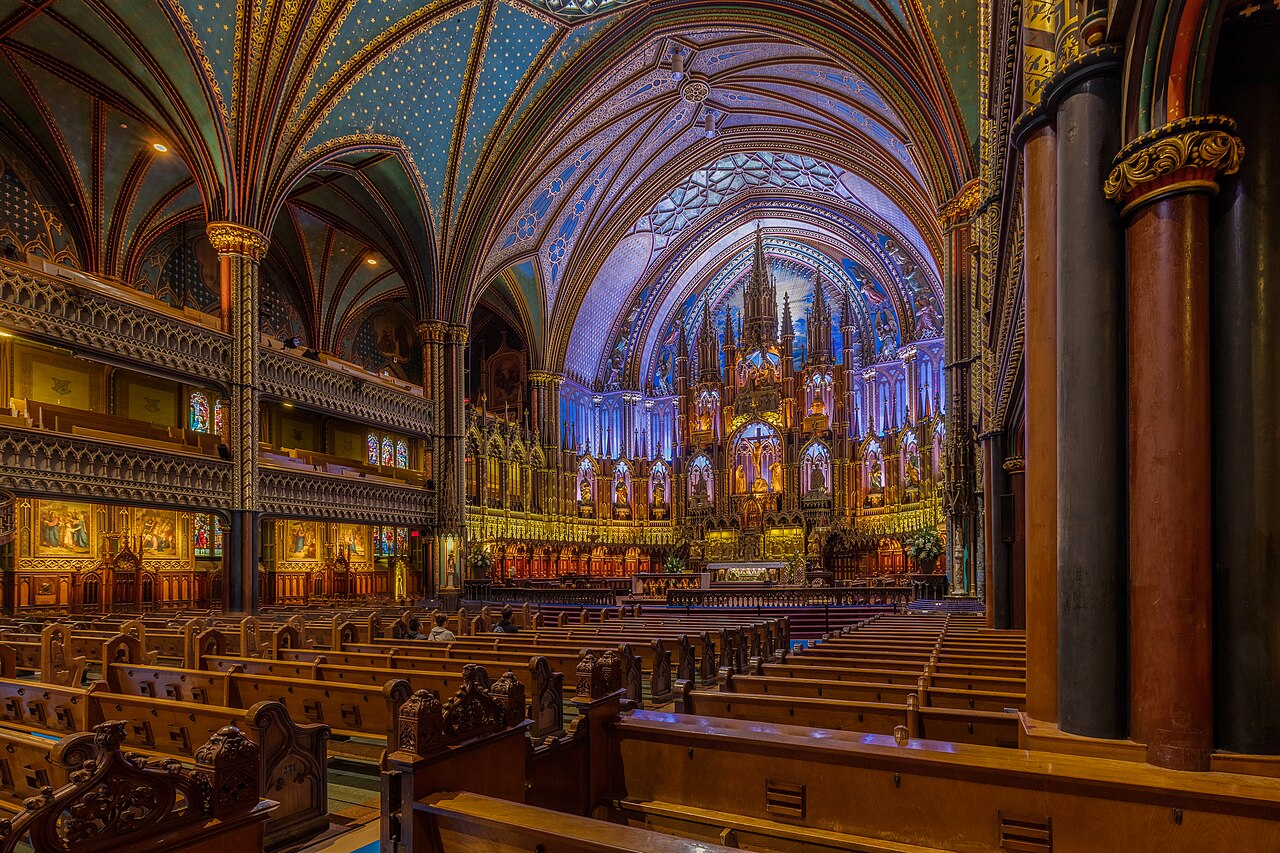
Why go: Chinatown is one of the oldest surviving immigrant neighbourhoods in Montreal and an essential part of the city's multicultural story. For visitors, it offers an inexpensive and delicious break between sights, since it is only a few minutes from Notre-Dame Basilica, the Old Montreal streets and the Place des Arts venues. Dim sum at a busy weekend lunch, with carts or order sheets and big round tables, is a classic Montreal experience shared by local families.
How to visit well: come hungry, and plan to graze. Start with dim sum or noodles, then walk along De la Gauchetiere and the side streets for bakery treats and bubble tea. Weekend late mornings are the busiest and liveliest time for dim sum; weekdays are calmer. In the evening, the gates and lanterns are at their most photogenic. Many small restaurants are cash-friendly and quick, so it is a good spot for a fast lunch on a busy sightseeing day. Be respectful of the residents and businesses: this is a working neighbourhood, not a theme park.
Practicals: Place-d'Armes metro station on the orange line is a short walk south of the district, and Place-des-Arts and Saint-Laurent stations are a short walk north. Chinatown connects easily with Old Montreal, the Museum of Illusions on Rue Saint-Antoine and the Quartier des Spectacles. It is busy during summer festivals, when many visitors eat here before outdoor shows. Most restaurants are open daily for lunch and dinner, and bakeries open early, making Chinatown a good place for breakfast or a mid-afternoon snack too.
What to expect
The experience
A compact, walkable Chinatown with ornate gates, a pedestrian main street, restaurants, bakeries, groceries and small shops.
Best time
Weekend late mornings for dim sum; evenings for the lantern-lit gates; Lunar New Year for celebrations.
How long
One to two hours, including a meal.
Tips
Come hungry and graze. Try dim sum, hand-pulled noodles and a Hong Kong-style bakery. Visit the gates at night for photos. Metro Place-d'Armes.
Quick picks
- Best for
- Food lovers and budget travellers looking for a delicious, inexpensive meal.
- Families
- Dim sum and bakery treats are a hit with children, and the area is compact and easy to explore.
- Couples
- A noodle dinner before a show in the Quartier des Spectacles.
- Pair with
- Notre-Dame Basilica and the Quartier des Spectacles.
- Time needed
- One to two hours.
Good questions
Where is Montreal's Chinatown?+
Between Old Montreal and the Quartier des Spectacles, roughly bounded by Boulevard Rene-Levesque, Rue Viger, Rue Jeanne-Mance and Rue Saint-Dominique, with pedestrian De la Gauchetiere at its centre.
What should I eat?+
Dim sum, Szechuan dishes, hand-pulled noodles, Hong Kong-style cafe food such as milk tea and pineapple buns, Vietnamese pho and bakery treats like egg tarts.
How old is it?+
The neighbourhood took shape in the early 1890s, when Chinese shops and laundries gathered along De la Gauchetiere Street, making it one of Montreal's oldest immigrant districts.
How many gates are there?+
Ornate paifang gates mark all four corners of Chinatown, more than in any other Chinatown in Canada according to Tourisme Montreal.
How do I get there?+
Take the orange metro line to Place-d'Armes and walk a few minutes north, or come from Place-des-Arts or Saint-Laurent stations to the north.