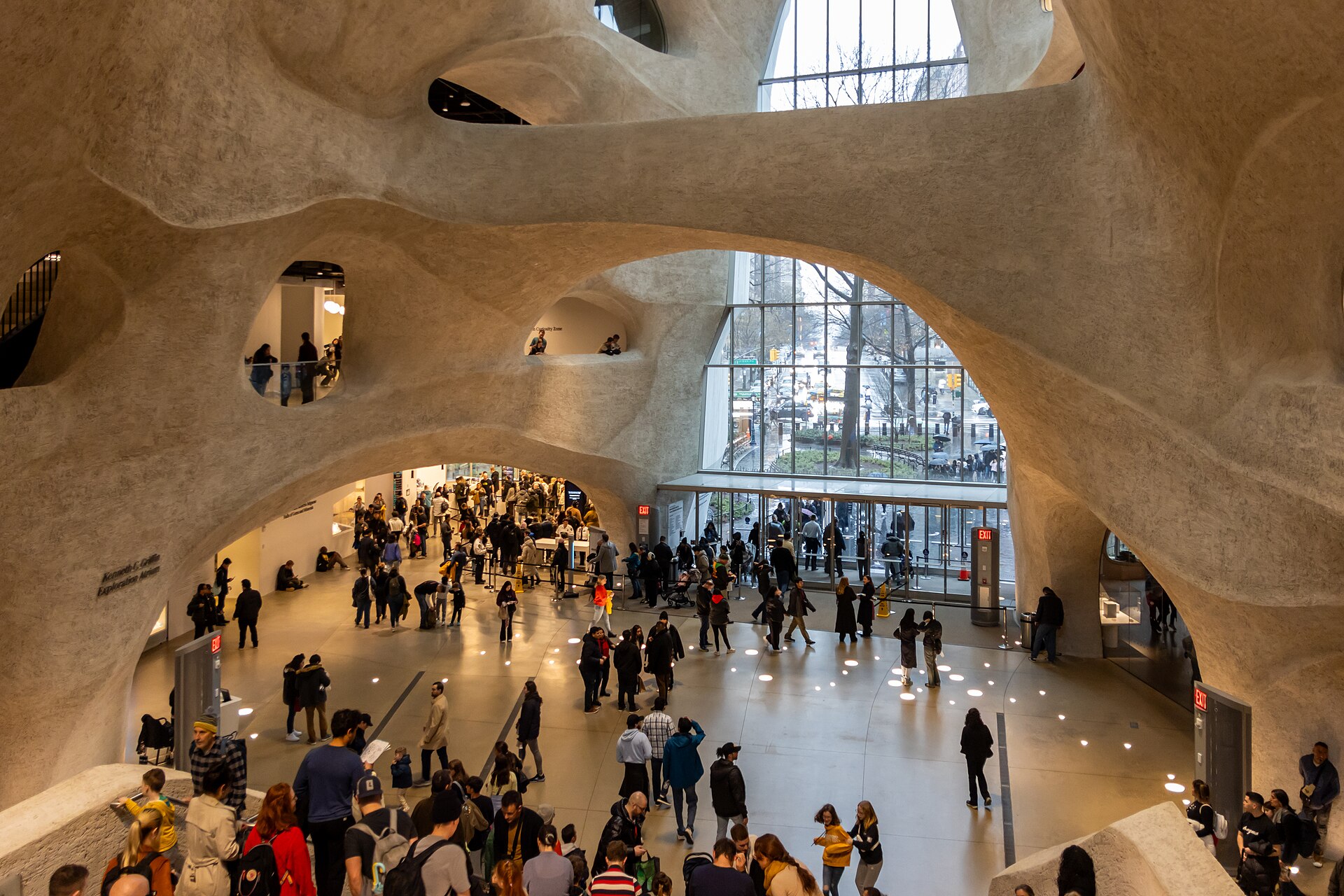
The American Museum of Natural History fills five city blocks on the Upper West Side with 28 interconnected buildings, four halls of dinosaur fossils, an enormous diorama collection (the African and North American mammal halls are among the most famous in any museum), the Rose Center for Earth and Space with its Hayden Planetarium, and the new Gilder Center for Science (opened 2023). One of NYC's strongest experiences for families.
The American Museum of Natural History opened in 1869 and has grown into one of the world's largest natural history museums — 28 interconnected buildings filling five city blocks on the Upper West Side. The collection of 34 million specimens and artifacts spans every continent and every era of natural history, but the experience is anchored by a handful of unmissable installations.
The dinosaur halls (4th floor) are the museum's defining experience — the T-Rex skeleton in the Hall of Saurischian Dinosaurs is one of the most-photographed objects in any NYC museum. The blue whale model in the Hall of Ocean Life is enormous and surprisingly affecting up close. The diorama halls (African Mammals, North American Mammals, North American Birds) feature meticulous taxidermy displays of remarkable craft — they look exactly like they did decades ago, which is part of the point.
The Rose Center for Earth and Space (the giant glass cube on the museum's north end) contains the Hayden Planetarium and rotating space shows. The new Gilder Center for Science (opened 2023) is a Jeanne Gang-designed structure with the Invisible Worlds immersive science installation, an insectarium, and a butterfly vivarium.
Pay-what-you-wish for New York State residents; standard admission for out-of-state visitors. The museum is closed Thanksgiving and Christmas; otherwise open every day. Plan a half-day minimum; full days are common.
What to expect
The experience
Self-paced. Free museum map at entry. Several "highlights" tours run free with admission.
Best time
Weekday mornings, especially during school terms. Weekends are family-busy. Get there at opening to beat school groups.
How long
Half-day minimum. Many visitors stay the full day.
Tips
The dinosaur halls and the blue whale are the must-sees. Combo tickets for the planetarium space show are worth it. Skip the food court — the surrounding Upper West Side has many better lunch options.
Quick picks
- Best for
- Families with kids age 6 and up. Anyone interested in natural history.
- Families
- One of the best family museums in NYC. Strollers welcome. Kids' tickets are discounted.
- Couples
- The diorama halls are quietly atmospheric; the planetarium space show is a date-night option.
- Pair with
- Central Park is across the street. The Upper West Side has some of NYC's best restaurants for post-museum lunch.
- Time needed
- Half-day minimum.
Good questions
What are the must-see exhibits?+
The dinosaur halls (4th floor T-Rex), the blue whale in the Hall of Ocean Life, the African Mammals diorama hall, and the new Gilder Center. Add the Hayden Planetarium space show if you have time.
Are tickets included for the Rose Center planetarium?+
General admission gets you into the Rose Center exhibits. The space shows in the Hayden Planetarium are a paid upgrade — usually worth it.
Is the museum kid-friendly?+
Among the best in NYC for families. The dinosaurs, the planetarium, and the dioramas are kid magnets. Younger kids tire after a few hours; plan breaks.
Is the Gilder Center worth visiting?+
Yes — opened 2023, designed by Jeanne Gang, with the Invisible Worlds immersive installation and a butterfly vivarium. Different feel from the rest of the museum.
Is the Hayden Planetarium included?+
Space shows and special exhibitions are often sold as add-ons to general admission, so check the ticket options when booking.