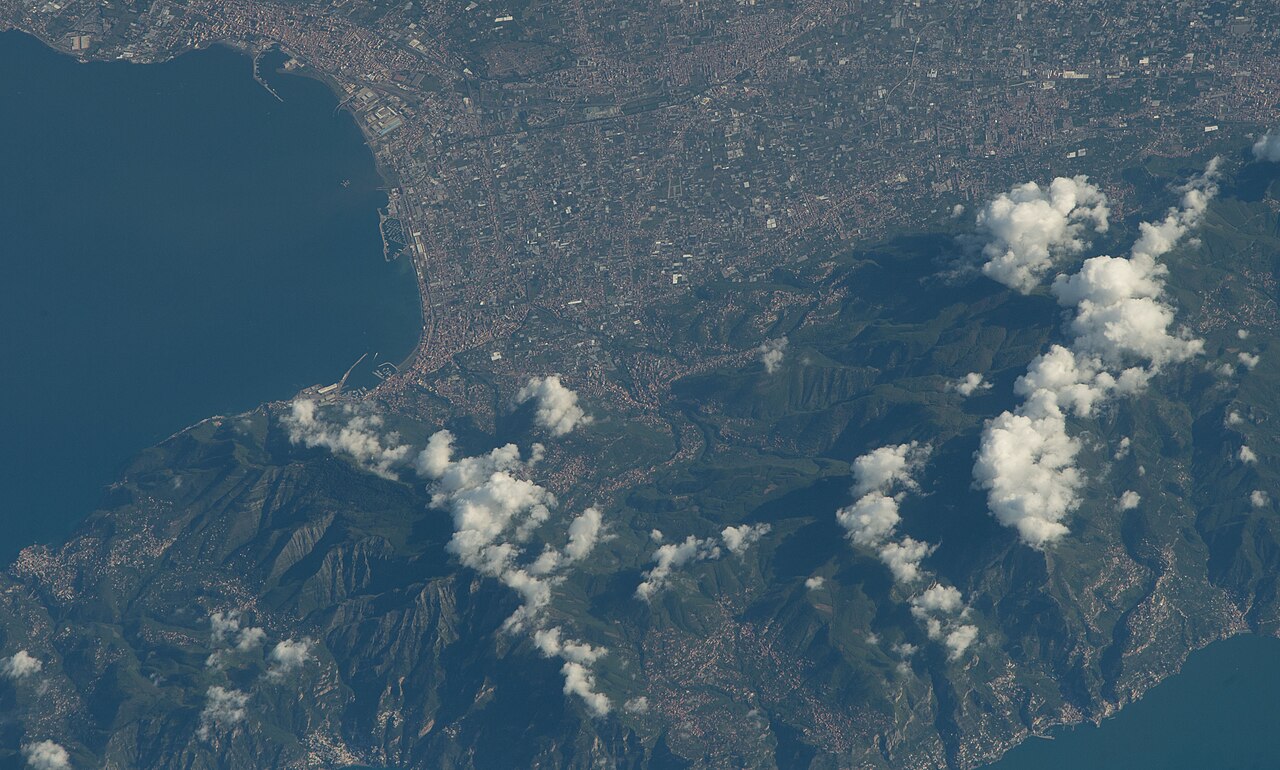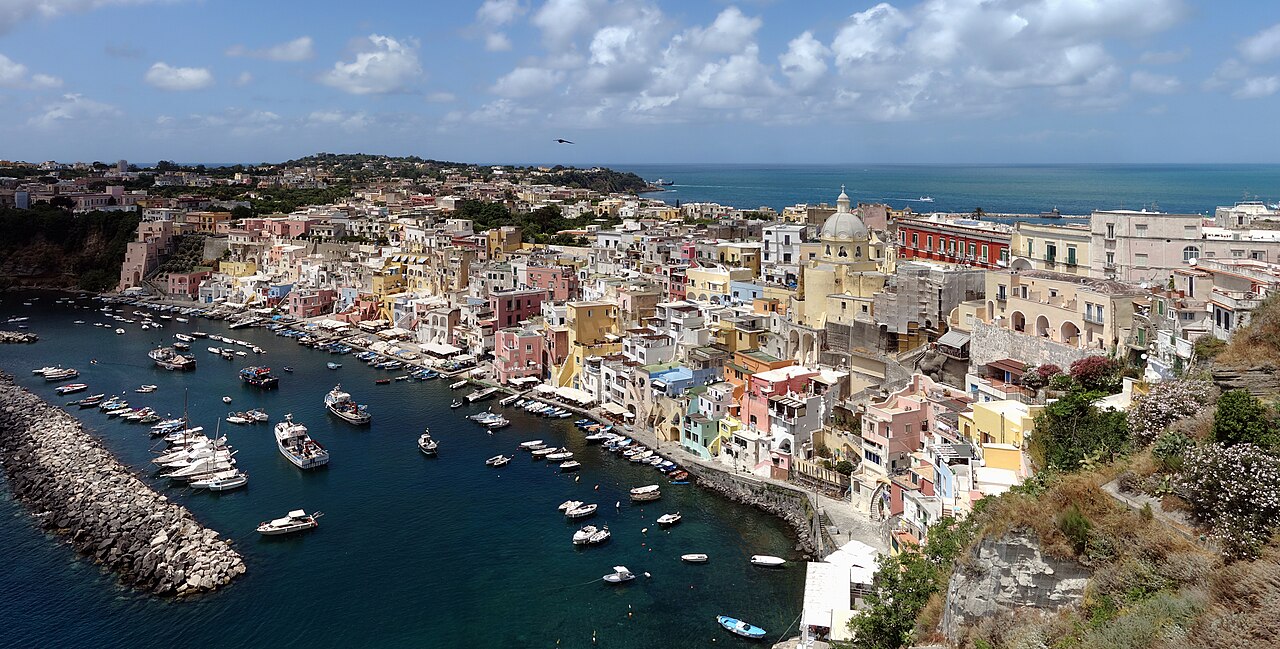
Sorrento is the practical heart of the region and, conveniently, also a lovely town. It sits on a terrace of tuff cliffs above the sea at the start of the Sorrento peninsula, facing Vesuvius and Naples across the bay, with Capri just beyond the point. Most visitors pass through for ferries and buses, but it rewards a slow wander. Start at Piazza Tasso, the busy main square, built over a deep ravine. Just behind it, look down into the Vallone dei Mulini, a gorge where the ruins of an old mill sit wrapped in ferns, a reminder of the gullies that once defended the town. From there, the old town's grid of narrow lanes, which follows the plan of the Roman town, runs toward the sea, full of shops selling limoncello, ceramics and the inlaid woodwork, intarsia, for which Sorrento is known. Look for the Sedil Dominova, a frescoed fifteenth-century loggia where local nobles met, the cathedral with its inlaid choir stalls, and the cloister of San Francesco, a quiet courtyard of interlaced arches and bougainvillea. Next door, the Villa Comunale garden ends at a terrace with one of the best sunset views on the bay; a lift and steps lead down to Marina Piccola, the ferry port. On the other side of town, a path through an old gate drops down to Marina Grande, the fishing village, with a small sandy beach, boats pulled up on the shore and seafood restaurants on wooden piers. For swimming nearby, the Bagni della Regina Giovanna is a natural rock pool linked to Roman ruins. Fit: first-timers using Sorrento as a base, families, couples and foodies with a taste for lemons.
Why base yourself here: Sorrento is the region's best transport hub. The Circumvesuviana railway runs to Pompeii, Herculaneum and Naples; buses run along the Amalfi Coast; ferries cross to Capri all year and to Naples and, seasonally, the Amalfi Coast. It has a wide range of hotels at every price, flat walking in the centre, and enough life in the evening without the steep stairs of Positano.
How to do it well: walk the old town in the morning before the day-trip crowds, visit the cloister when it is quiet, and plan to be at the Villa Comunale terrace for sunset. Have lunch or dinner in Marina Grande, where the fish is the point. Try a limoncello tasting, but buy from producers who show you the lemons. In summer, the beach clubs at Marina Piccola and Marina Grande are small and busy; for a swim with fewer people, walk to the Bagni della Regina Giovanna or take a bus to Marina di Puolo.
Practicals: the old town, Piazza Tasso and the gardens are free to explore; the cathedral and cloister are free to enter. Sorrento is an hour or so from Naples by Circumvesuviana train or faster by ferry. Many hotels and restaurants close or reduce hours from November to March, but the town remains lively at Christmas, with lights and nativity scenes.
What to expect
The experience
A free self-guided wander through the old town lanes, squares, cloister and gardens, down to the fishing village of Marina Grande and the ferry port.
Best time
Mornings for the lanes, sunset at the Villa Comunale terrace. April to October for the full town; quieter but lively at Christmas.
How long
Half a day, or a relaxed full day with a swim.
Tips
Look into the Vallone dei Mulini behind Piazza Tasso. Eat seafood in Marina Grande. Swim at the Bagni della Regina Giovanna. Check winter opening of restaurants.
Quick picks
- Best for
- A pretty, practical base for Pompeii, Capri and the coast.
- Families
- Flat centre, gelato, beaches and easy trains.
- Couples
- Sunset at the Villa Comunale, then dinner by the boats in Marina Grande.
- Pair with
- Pompeii by train, Capri by ferry, Positano by bus.
- Time needed
- Half a day in town; several days as a base.
Good questions
Is Sorrento worth visiting or just a base?+
Both. The old town, Vallone dei Mulini, San Francesco cloister, Villa Comunale sunset terrace and Marina Grande fill a lovely half day, and the town is the region's best transport hub.
How do I get from Naples to Sorrento?+
Take the Circumvesuviana train, about an hour or so with stops at Pompeii and Herculaneum, or a faster ferry from the port of Naples.
Does Sorrento have a beach?+
Small ones. Marina Grande and Marina Piccola have little beaches and bathing platforms; the Bagni della Regina Giovanna rock pool and Marina di Puolo are nearby alternatives.
What is Marina Grande?+
Sorrento's old fishing village below the town, with a small sandy beach, boats on the shore and seafood restaurants on wooden piers, reached on foot through an old gate.
Is Sorrento open in winter?+
Yes, people live there all year and transport runs, but many hotels and restaurants close or reduce hours from November to March.