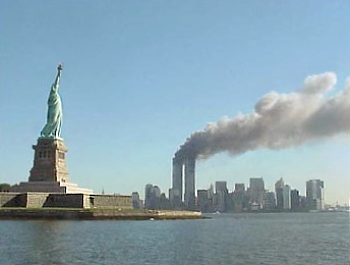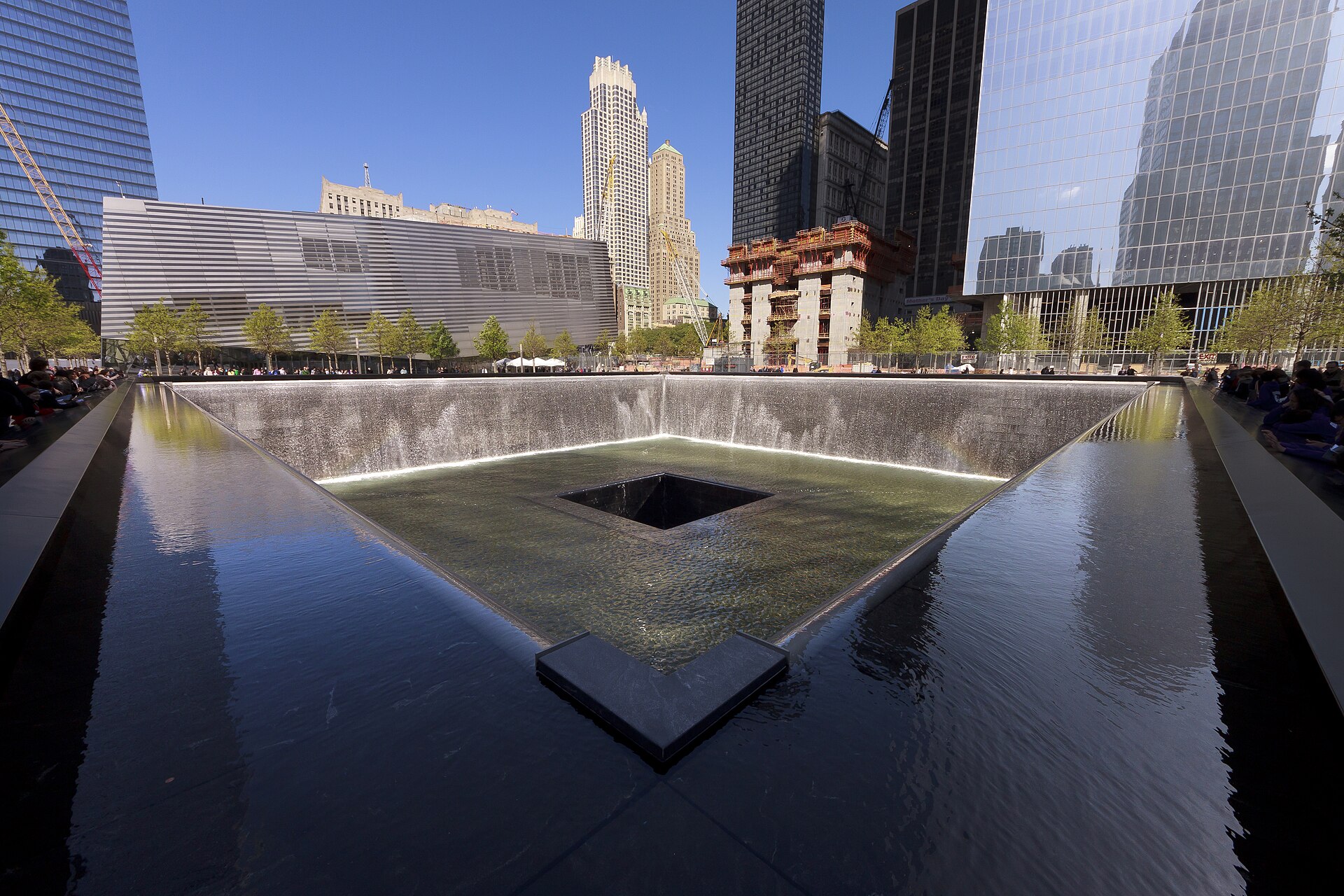
The 9/11 Memorial occupies the footprints of the original Twin Towers — two massive square reflecting pools with cascading waterfalls and the names of every victim inscribed around their perimeters. The underground museum sits next to and below the pools, telling the story of September 11, 2001, the aftermath, and the rebuilding. Plan for at least 3 hours; many visitors stay longer.
The 9/11 Memorial — Reflecting Absence, designed by Michael Arad and Peter Walker — occupies the exact footprints of the destroyed North and South Towers. Two recessed square pools with 30-foot waterfalls cascading down all four sides surround a deeper central void where the water disappears beyond view. Bronze parapets inscribed with the names of every person killed on September 11, 2001, plus the six victims of the 1993 WTC bombing, encircle each pool.
The underground museum opened in May 2014, sitting adjacent to and below the pools at the level of the original tower foundations. The space contains preserved structural remnants of the original towers (including the "Last Column" — the final piece of steel removed from the site), recovered artifacts (fire trucks, personal effects, recovered identification), recorded oral histories, video footage of the day, and rooms for quiet reflection.
The experience is intentionally heavy. Most visitors leave shaken. Plan for at least three hours; expect to need decompression time afterward. Some galleries (particularly the In Memoriam exhibit, with photographs and names of every victim) are emotionally intense; some visitors choose to skip parts. The museum is appropriate for older children and teenagers; younger kids may not handle the content well.
The memorial pools themselves (outdoor) are free and accessible without museum admission. The museum requires a ticket and a timed entry.
What to expect
The experience
Timed-entry ticket for the museum; the outdoor memorial pools are free and walk-up. Self-paced through both. Audio guide available and recommended.
Best time
Morning is the quietest. Avoid the lunch-hour rush. Avoid scheduling another emotionally-heavy site on the same day.
How long
3-4 hours for the museum. Pools can be done in 30 minutes.
Tips
Bring tissues. Plan a low-key activity for after — most visitors don't want a busy restaurant or another museum afterward. The museum's café is fine; the surrounding Financial District has many quiet options. Photography is allowed in some exhibits, not in others — signage is clear.
Quick picks
- Best for
- Everyone visiting NYC, with the caveat that the experience is emotionally heavy. First-time visitors should make time.
- Families
- Older kids and teens generally process it well; some elementary-age children find it overwhelming. The In Memoriam room (with victim photographs) is the heaviest space and can be skipped.
- Couples
- Best treated as one of the day's only activities, not paired with a high-energy evening.
- Pair with
- Pair with One World Observatory or with the Statue of Liberty ferry (both at the same building/area). All three together is a heavy day; pick two.
- Time needed
- Half day minimum.
Good questions
Are the outdoor memorial pools free?+
Yes — the outdoor 9/11 Memorial is free and walk-up. The underground museum requires a timed ticket.
How long should I plan?+
3-4 hours for the museum. Plan a low-key afternoon afterward; most visitors are emotionally drained.
Is the museum appropriate for kids?+
Older children and teens generally — younger children may not be able to process the content. Parents should preview the In Memoriam exhibit (with victim photographs) before deciding whether to bring younger kids in.
Should I pair this with One World Observatory?+
They're at the same complex. Many visitors do both. It's a heavy day. If you're tight on time, the museum is the more essential of the two.
Is the outdoor memorial free?+
Yes, the memorial plaza with its two reflecting pools is free to visit; the museum below requires a ticket.