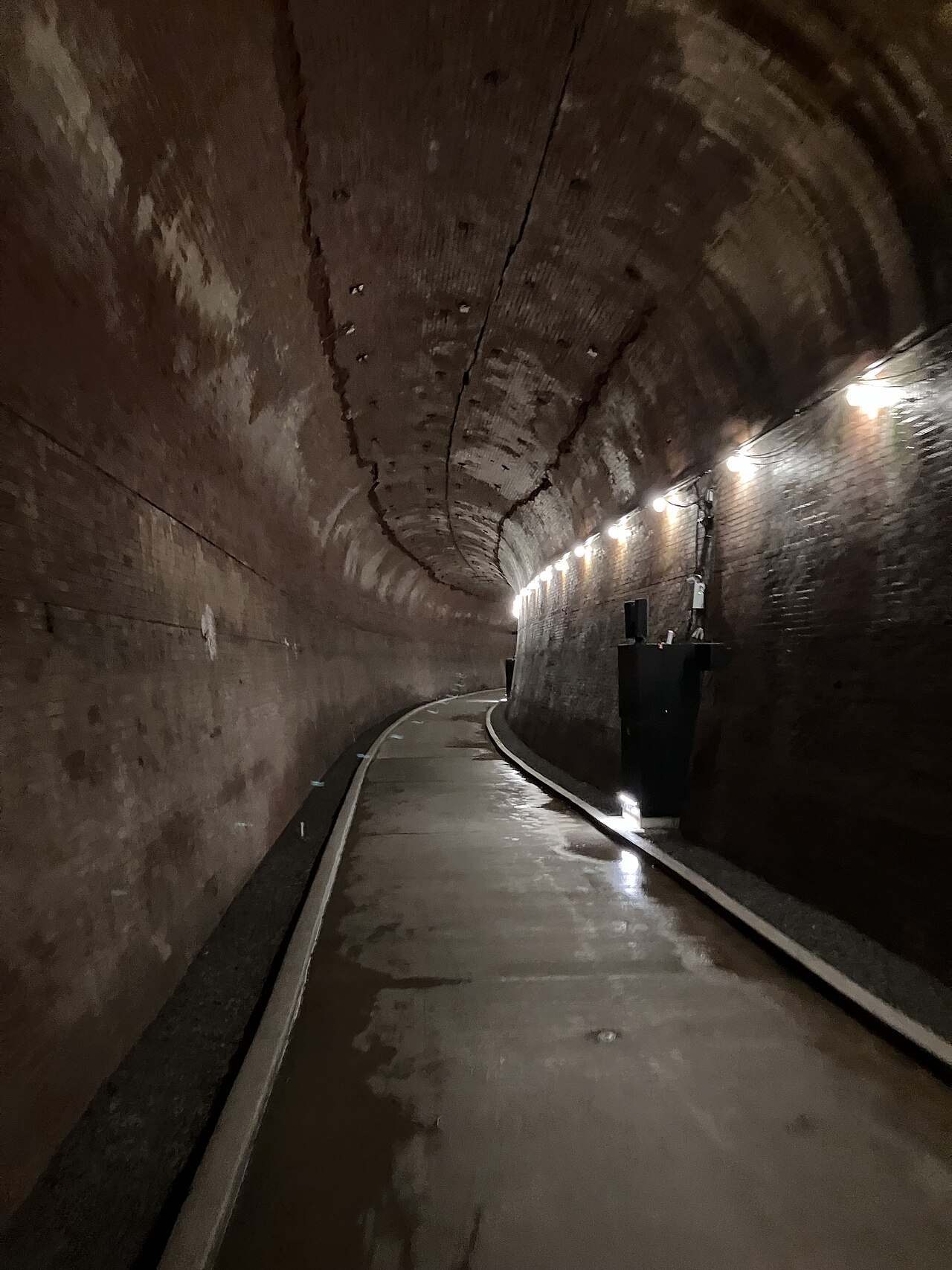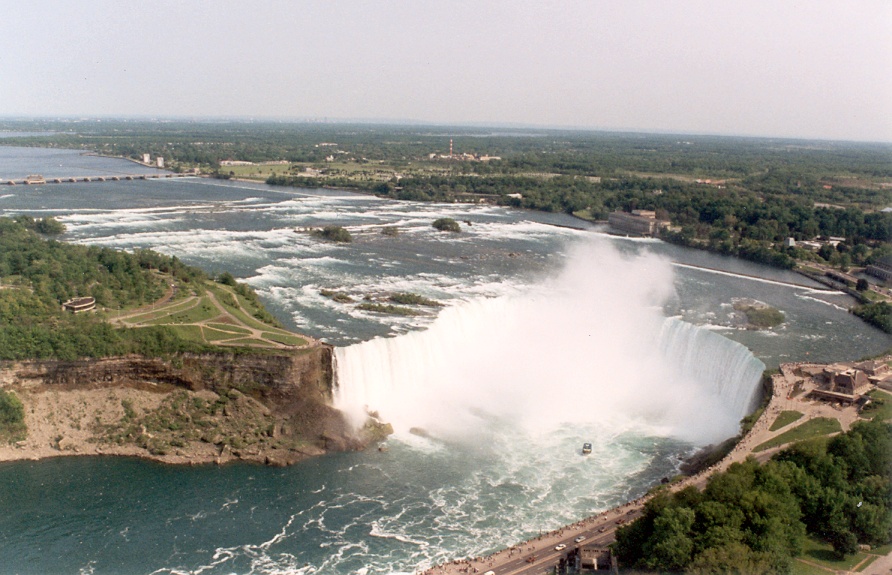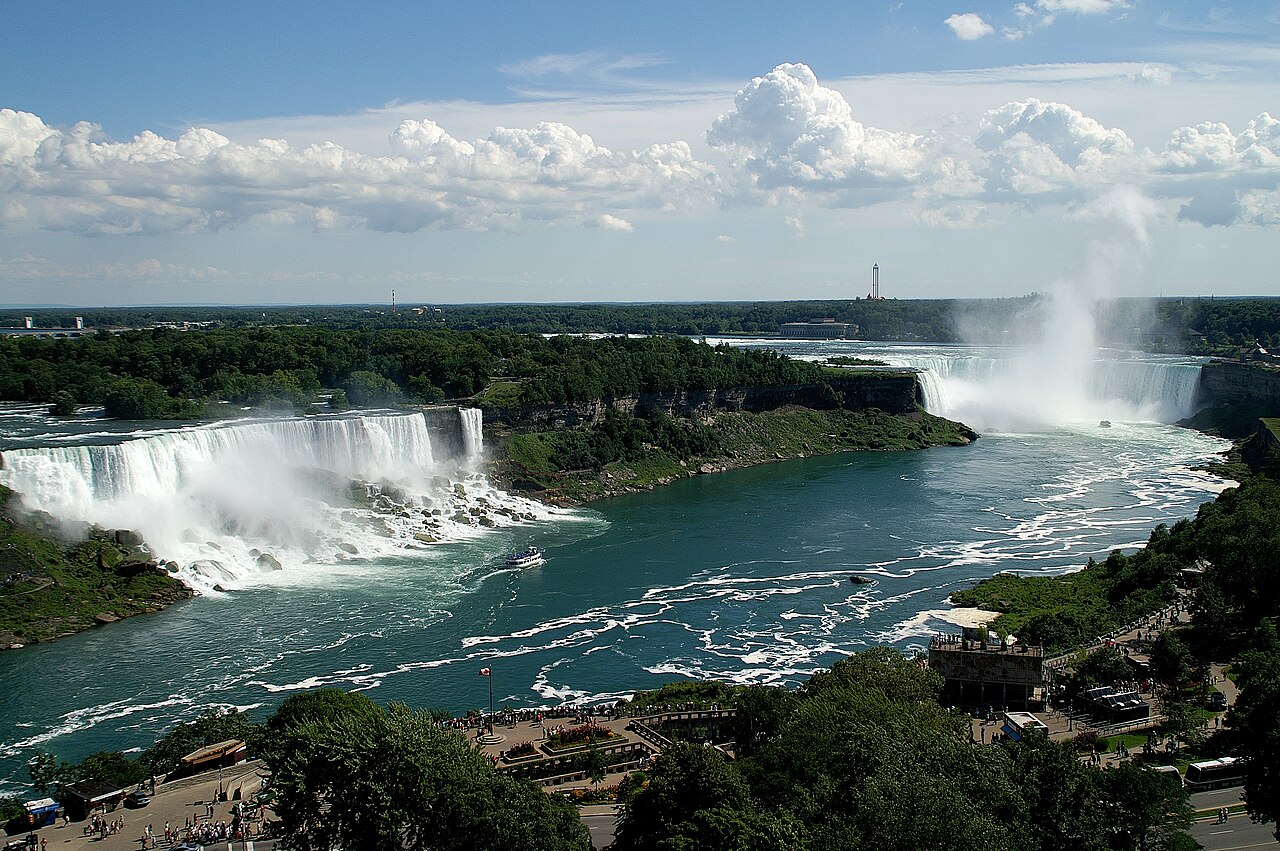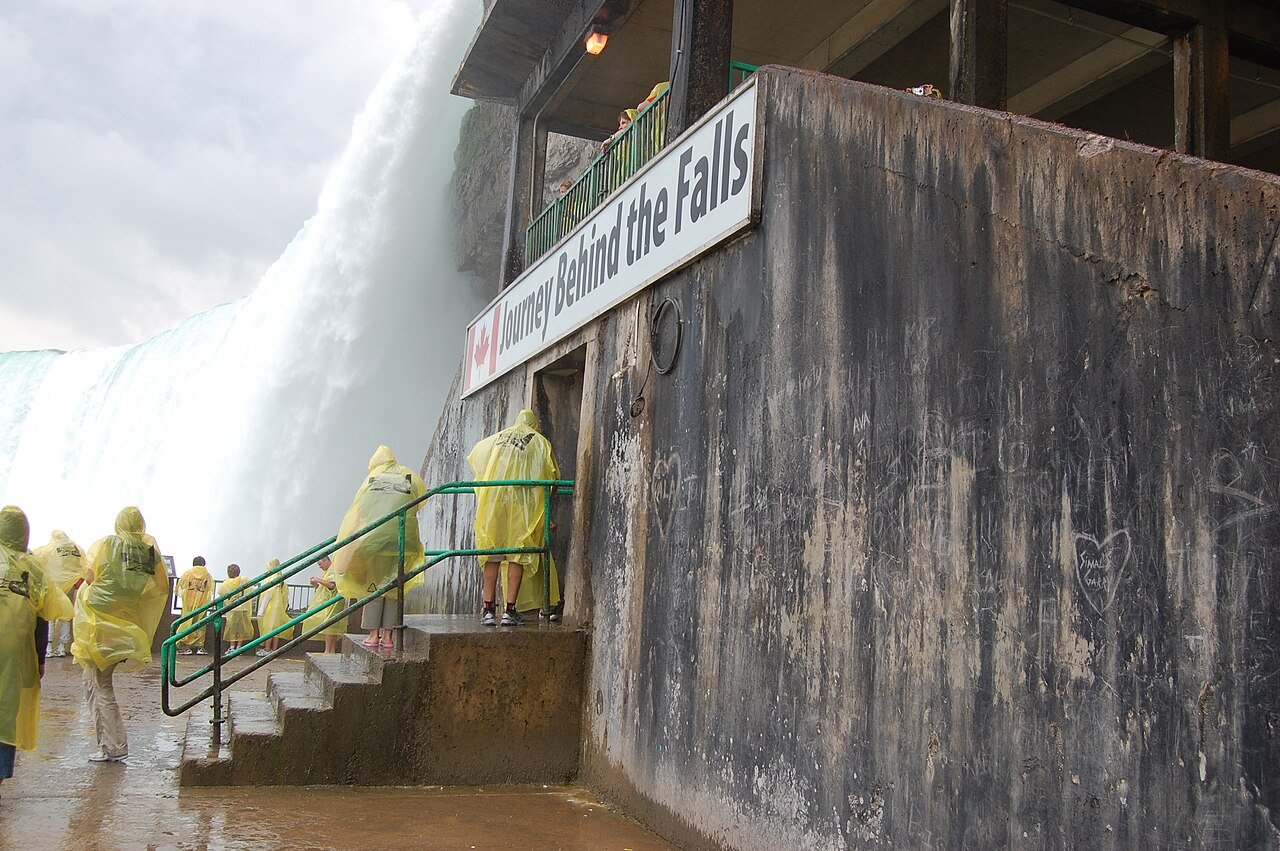
Journey Behind the Falls is the Canadian side's essential paid attraction and, from November to April, its best one. The entrance is at Table Rock, the visitor complex on the brink of the Horseshoe Falls, and the experience is simple: an elevator carries you about 150 feet down through the bedrock, and tunnels bored more than a century ago lead to two portals, the Cataract Portal and the Great Falls Portal, where you look out from inside the rock at the back of the Horseshoe Falls itself. What you see is not a view so much as a wall: a solid, white, roaring sheet of water a few feet away, more felt than seen, with the sound coming through the floor. A separate passage leads to the lower observation deck at the foot of the falls, where you stand beside the cataract as it hits the river; in summer this is the soaking finale, with ponchos supplied. The attraction is open every day of the year, and that is its winter superpower. When the boats stop in autumn, this and the tunnel at the Niagara Parks Power Station are the Canadian side's ways down to the water. In icy conditions the lower observation deck closes for safety, but the portals stay open and the tunnels are sheltered, so the core experience survives the cold. Winter brings lower prices and much shorter waits, and the self-guided visit takes about forty-five minutes. Off-season hours run roughly from 10am into the early evening, with last admission thirty minutes before closing. The ticket we link is the straightforward entry ticket; it is non-refundable, and in summer the timed entry slots can sell out, so book ahead. Bundles that pair it with the Power Station tunnel or the Butterfly Conservatory are also sold if you want a full Niagara Parks day.
People have been going behind the Horseshoe Falls for a very long time. In the nineteenth century guides led visitors down slippery paths from Table Rock into the gap between the water and the cliff, wrapped in oilskins, in what must have been a genuinely dangerous outing. The tunnels that make the modern visit safe were cut through the rock in the late nineteenth century, and the attraction has been extended and modernized many times since, as the falls themselves have shifted: the Horseshoe has eroded upstream over the centuries, and the portals no longer sit where they once did relative to the curtain of water. Niagara Parks, the Ontario agency that has managed the Canadian shoreline since 1885, runs the attraction today.
How to visit: Table Rock Centre stands at the edge of the Horseshoe Falls on the Niagara Parkway, a short walk from the Fallsview hotels down the hill or from the Incline Railway. Buy your timed ticket in advance in summer. Inside, the elevator descends to the tunnel level; follow the passages to the portals first, then to the observation deck. Ponchos are provided in the warm months. Floors in the tunnels can be wet, so wear sensible shoes. In winter, dress warmly, because the tunnels are cold and the observation deck, when open, is icy and windblown. Allow forty-five minutes to an hour. Photographs through the portals rarely capture it, so put the phone away for a minute and just listen.
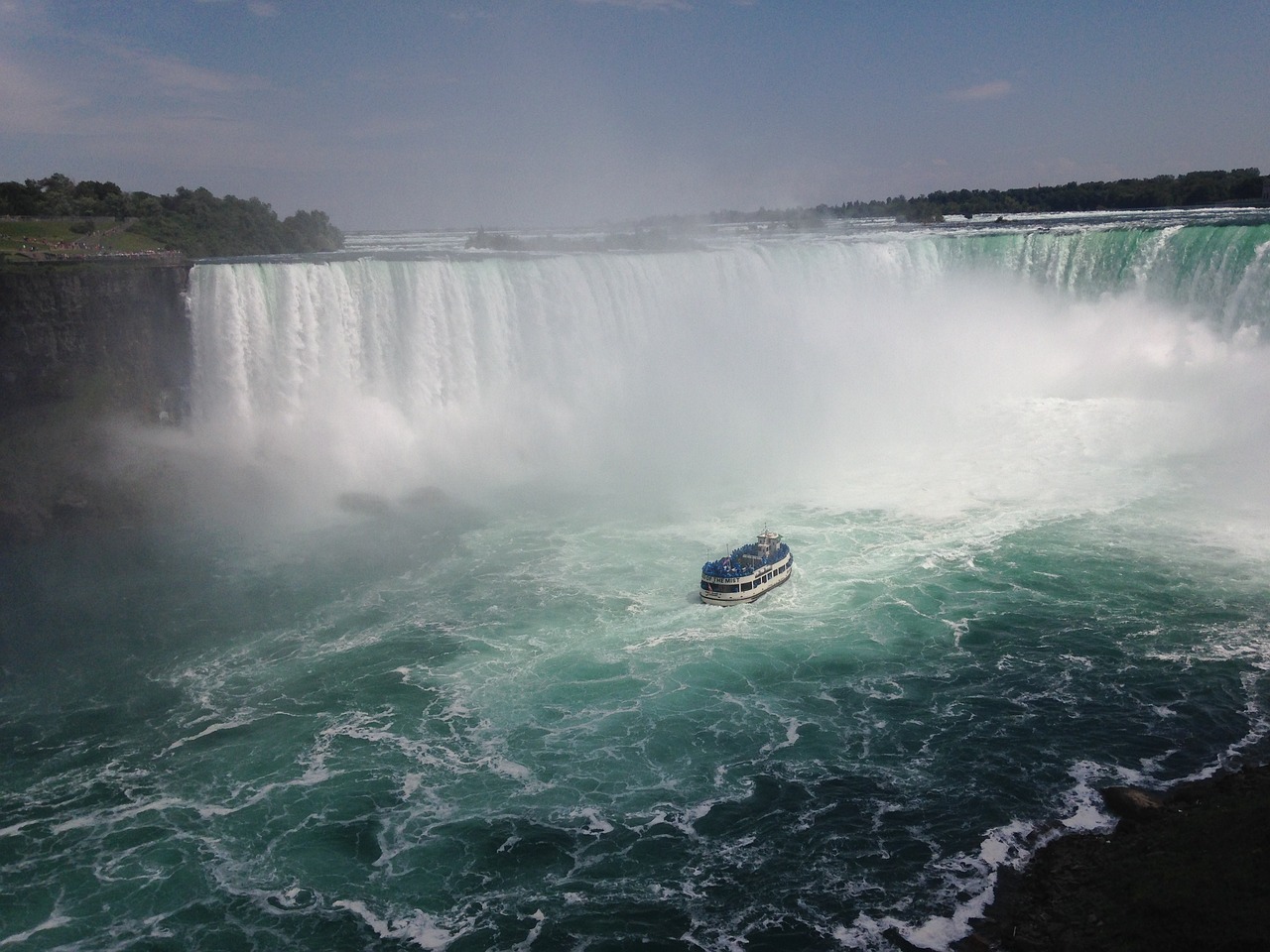
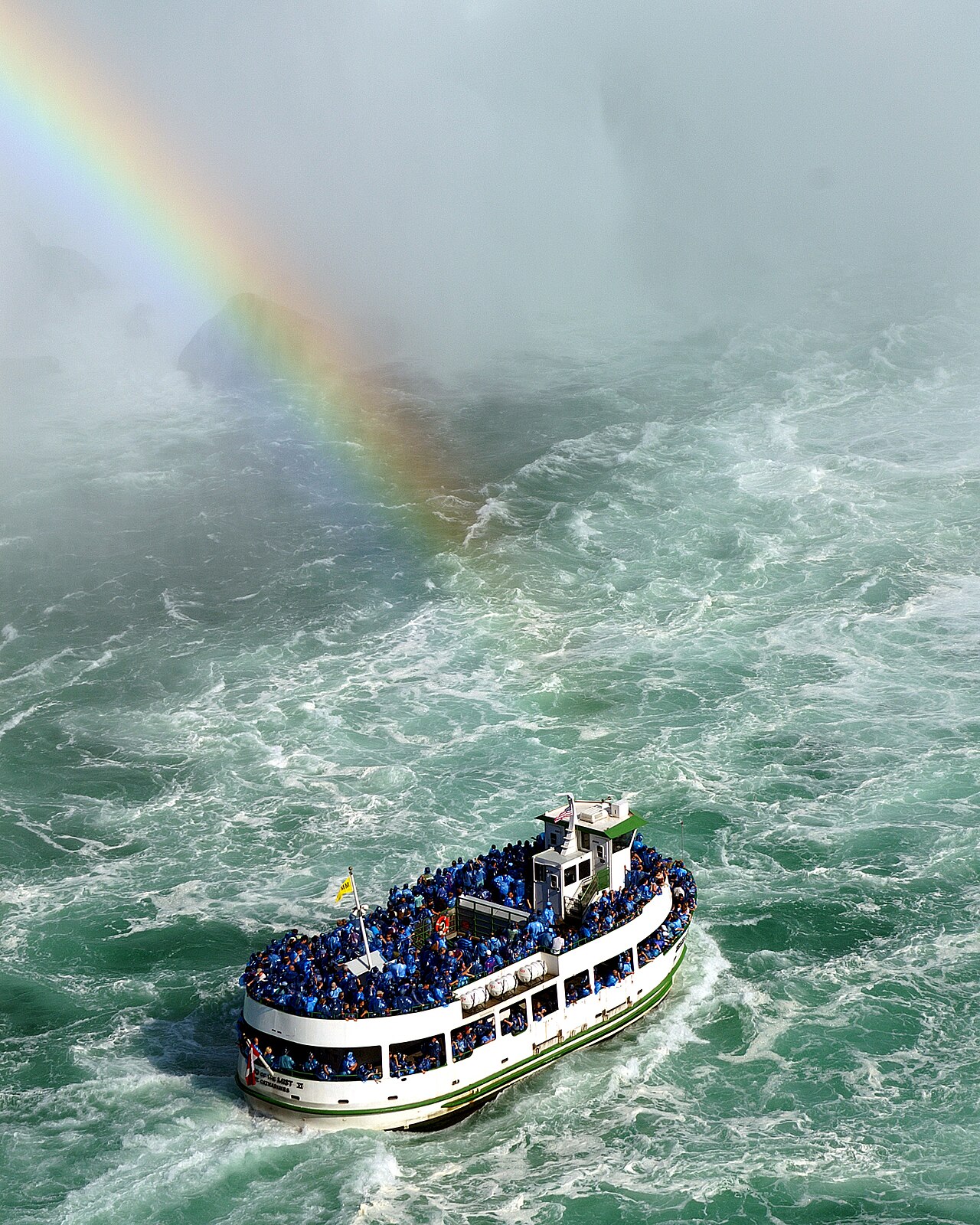
Where it fits: on a first visit to the Canadian side, do Journey Behind the Falls on the same morning as the walk along the brink from Table Rock to the American Falls viewpoint, then cross to the Niagara Parks Power Station next door for the tunnel to the river and the history of the hydro age. In summer, the boat cruise and this attraction together give you the falls from the front and from behind, which is why the two are sold as a package. In winter, it is the headline experience, and the frozen spray at Table Rock outside is one of the great sights of the season. It is less intense than the American side's Cave of the Winds, more atmospheric, and a little claustrophobic, so very nervous visitors should know the tunnels are narrow in places and busy at peak times.
What to expect
The experience
A self-guided visit: elevator down through the rock at Table Rock, tunnels to two portals behind the Horseshoe Falls, and a lower observation deck at the foot of the falls when conditions allow.
Best time
Weekday mornings for the fewest people. Winter brings lower prices and short waits, though the lower deck closes in icy weather.
How long
About forty-five minutes to an hour.
Tips
Book timed entry ahead in summer; the linked ticket is non-refundable. Wear shoes with grip — tunnel floors are wet. Dress warmly in winter. Combine with the Power Station next door for a full morning.
Quick picks
- Best for
- Anyone on the Canadian side, and the number-one paid experience for a winter visit.
- Families
- Short, sheltered and memorable; children enjoy the tunnels and the roar, though the deck can be intense for toddlers.
- Couples
- A quiet winter morning in the portals, then hot drinks at Table Rock overlooking the frozen falls.
- Pair with
- The Niagara Parks Power Station and its tunnel, the brink walk along the Niagara Parkway, and the Skylon Tower.
- Time needed
- An hour.
Good questions
Is Journey Behind the Falls open in winter?+
Yes, it is open year-round. In icy conditions the lower observation deck closes for safety, but the tunnels and the two portals behind the falls remain open.
How far down do you go?+
An elevator takes you about 150 feet down through the rock, where tunnels lead to the portals and the observation deck at the base of the Horseshoe Falls.
Will I get wet?+
On the lower observation deck in warm months, yes — ponchos are supplied. The tunnels themselves are damp but sheltered.
Can you see through the falls from the portals?+
No. You look out at the back of the falling water from inside the rock; it is a wall of white water and noise rather than a view through.
Do I need to book ahead?+
In summer, yes — timed entry can sell out. Off-season, waits are short, but booking still saves time. The linked entry ticket is non-refundable.