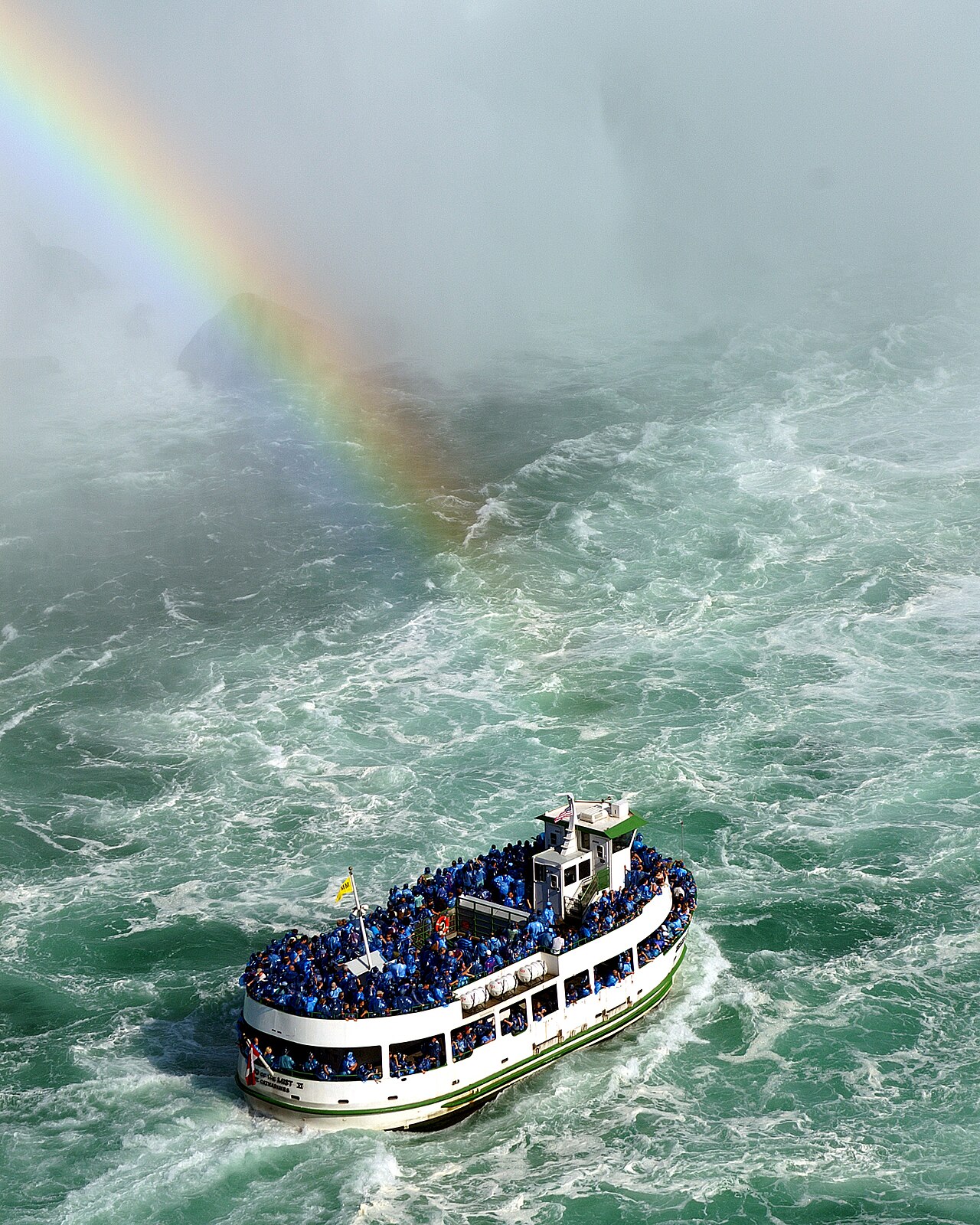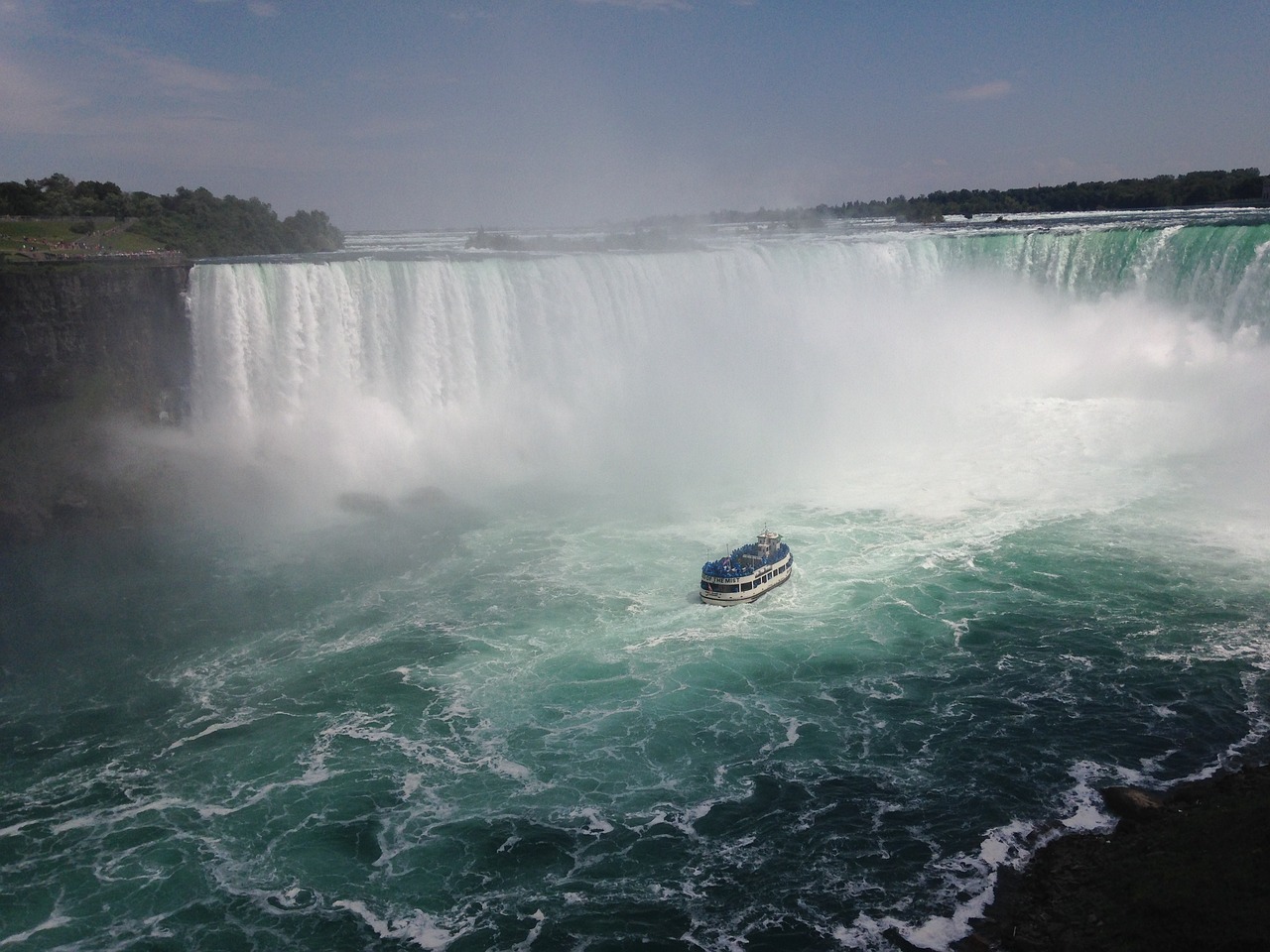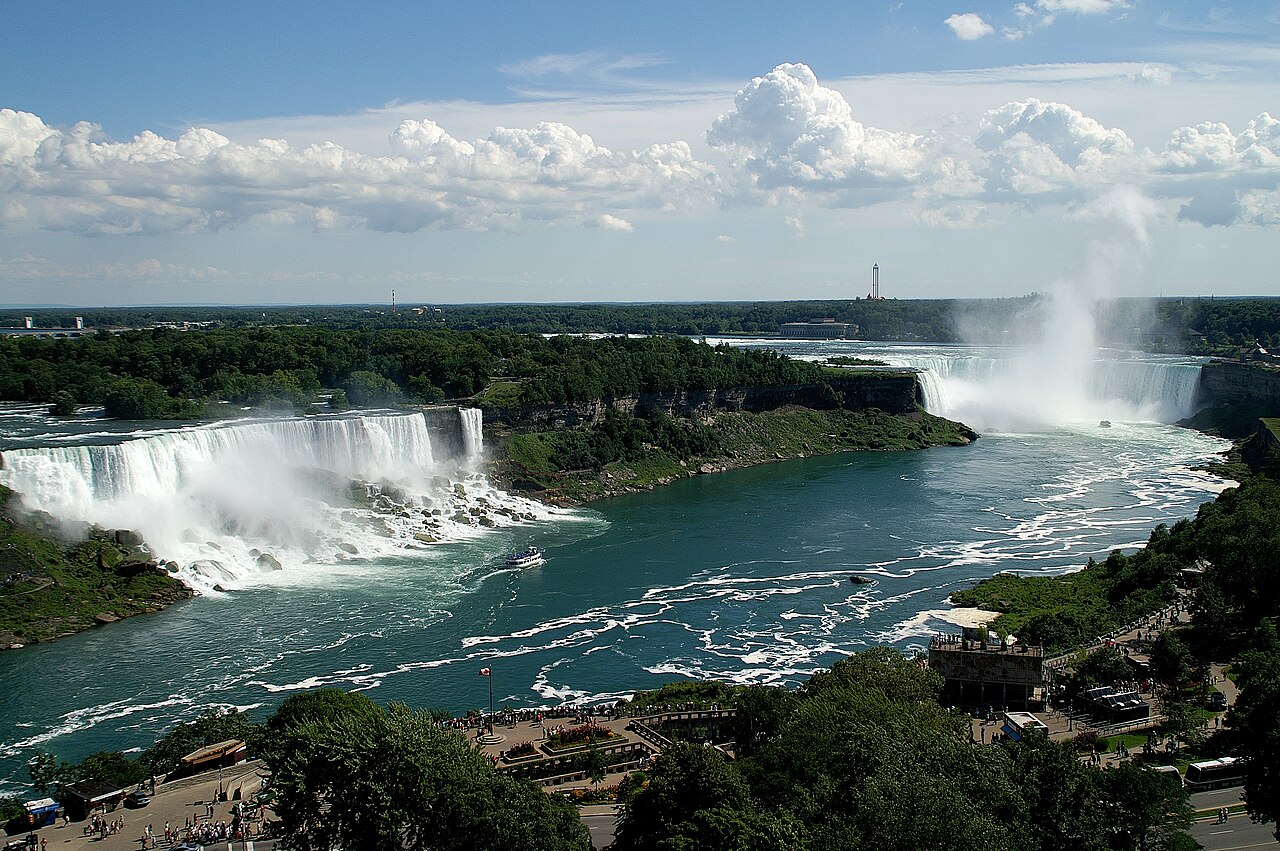
Niagara Falls State Park is where the American side wins the argument. The Canadian shore has the postcard panorama, but this park, created in 1885 as the Niagara Reservation and the oldest state park in the United States, puts you on top of the falls rather than across from them: at Prospect Point you stand at the railing where the American Falls tips over the edge, on Luna Island you are marooned between the American Falls and the slender Bridal Veil Falls, and at Terrapin Point on the far end of Goat Island the Horseshoe Falls thunders past close enough to soak the overlook. The landscape is deliberate. Frederick Law Olmsted and Calvert Vaux, the designers of Central Park, were commissioned to shape the reservation, and their idea still governs it: no hotels, no billboards, just paths, groves and overlooks that let the river do the talking. The park is free to enter and open every day of the year, and more than nine million people a year walk into it. Goat Island is the heart of the visit, a wooded island splitting the river between the two main falls, with footbridges out to the Three Sisters Islands, where the upper rapids pour over ledges a few feet from the path and the sense of the river's speed is almost frightening. The park also anchors the American-side paid attractions: the Maid of the Mist dock below Prospect Point and the Cave of the Winds on Goat Island are both inside its boundaries, along with the Aquarium of Niagara nearby. In the off-season, the park is at its most atmospheric, with mist freezing onto the trees and railings and the crowds thinned to photographers and locals. Parking runs about ten dollars a day in the lots nearest the falls, and the whole loop is easy walking, though icy in deep winter. If you only have a few hours on the New York side, spend them here, on foot, and save the boat for later.
The history is the reason the American side feels so different from the Canadian one. By the mid-nineteenth century the shoreline around the falls had been carved into private mills, fences and tourist traps that charged visitors to peek at the water through holes in boards. A campaign led by Olmsted, the artist Frederic Church and others turned that scandal into the Free Niagara movement, and in 1885 New York bought back the land around the falls, including Goat Island, and opened it to the public on July 15 of that year. The reservation became the template for state parks across the country, and the Olmsted and Vaux plan, with its winding paths, native woodland and emphasis on views rather than buildings, survives in the island landscape you walk today. Ontario followed with its own Queen Victoria Niagara Falls Park on the other bank in 1888, which is why both shores are public land rather than private frontage.
How to see it well: start at Prospect Point near the visitor center and walk the rail along the brink of the American Falls, then cross the bridge to Goat Island. Take the short detour down to Luna Island for the view between the American Falls and Bridal Veil Falls, continue to the Cave of the Winds building if you are booking the decks, then walk to Terrapin Point for the Horseshoe Falls at close range. Loop back via the Three Sisters Islands footbridges, the quietest and most underrated spot in the park, where the rapids above the falls race past at arm's length. Allow two to three hours for the full circuit without stopping for attractions. The park is open every day and is free to walk into; you pay only for parking and for individual attractions such as the Maid of the Mist and Cave of the Winds.
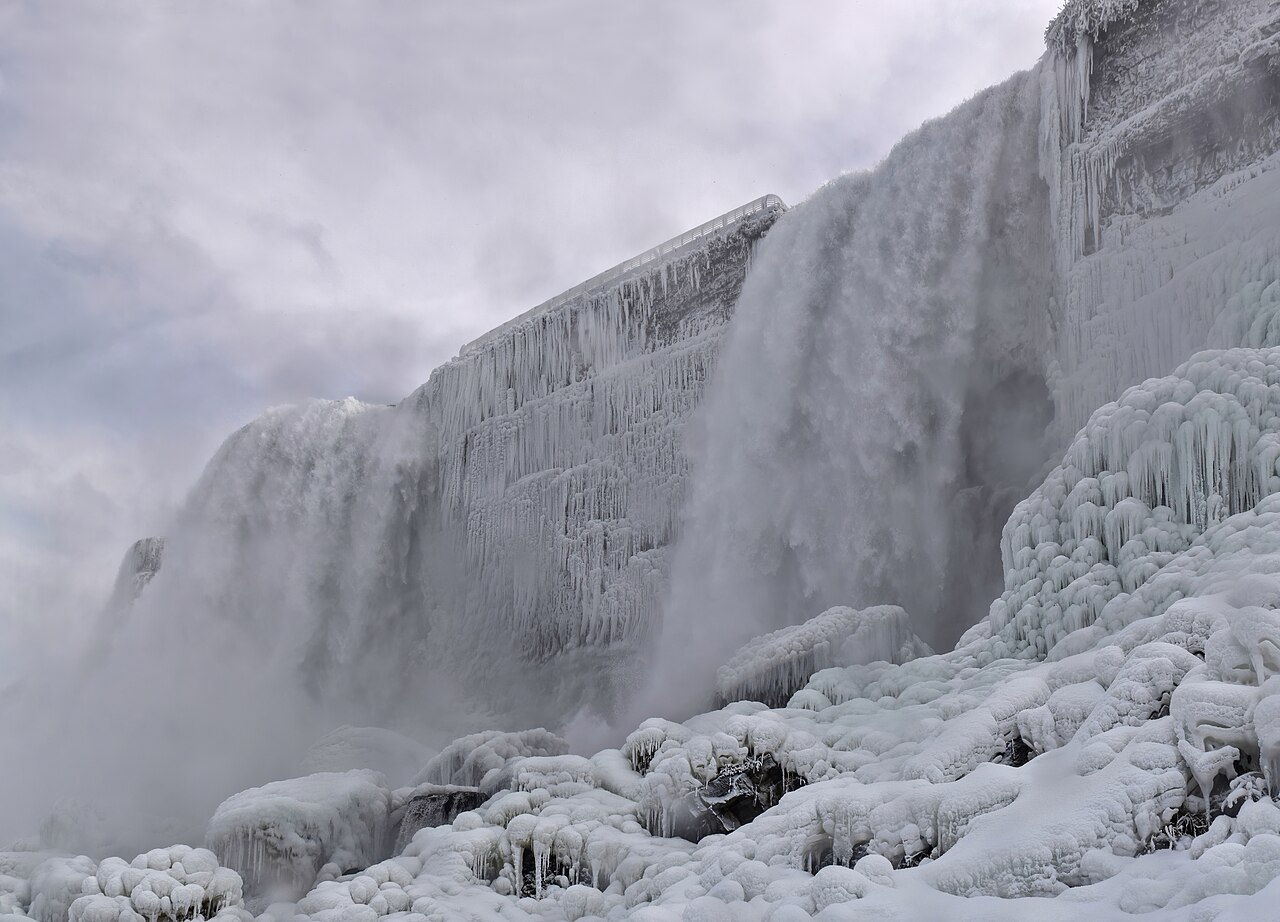
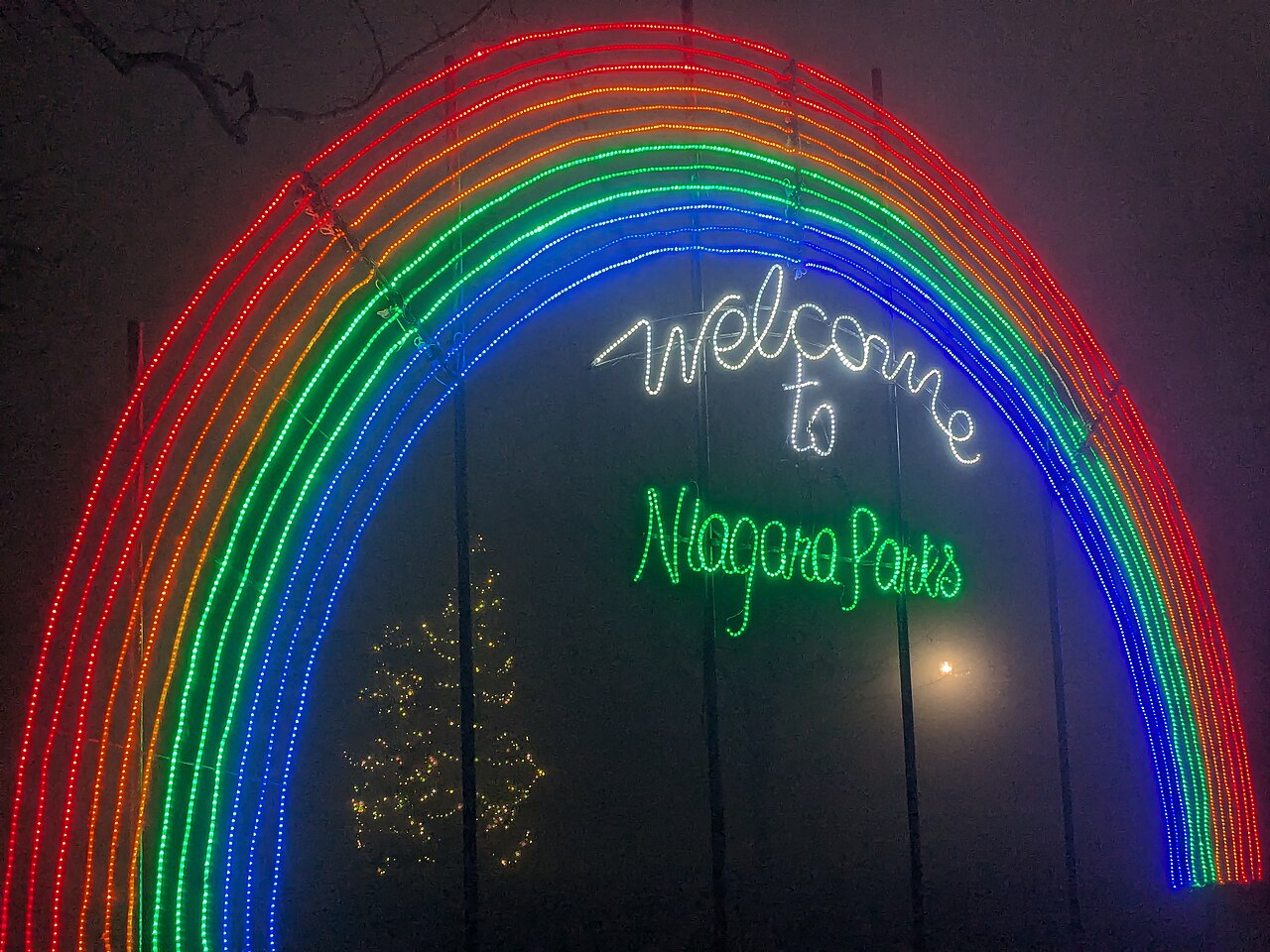
Seasons matter. In summer the paths are busy, the Maid of the Mist runs constantly and the evenings bring illumination and, on many nights, fireworks seen across the gorge. In November the boat closes for the year, the crowds drop sharply and the light turns low and golden on the mist. In deep winter, ice builds up along the rocks and trees in great white formations, some paths may be closed for safety, and you need proper boots and gloves, but the sight of the frozen gorge with the river still roaring through it is one of the great winter scenes in North America. Facilities and seasonal attractions change through the year, so check what is open before you go. Whatever the season, come back after dark at least once: the falls are lit in color every night of the year, and from Goat Island you watch the light play on the water with half the crowd of the Canadian side.
What to expect
The experience
A free, self-guided walk through the Olmsted-designed park — Prospect Point, Luna Island, Terrapin Point and the Three Sisters Islands — with paid attractions such as the Maid of the Mist and Cave of the Winds inside its boundaries.
Best time
Early morning for empty overlooks and soft light; after dark for the nightly illumination. November and winter bring frozen mist and thin crowds; summer brings the boats and fireworks.
How long
Two to three hours for the full Goat Island loop; half a day with the paid attractions.
Tips
Park in the lots nearest the falls for about ten dollars a day, or walk in from downtown. Do not skip the Three Sisters Islands. Wear grippy footwear in cold months, when spray freezes on the paths. A rain jacket helps at Terrapin Point in any season.
Quick picks
- Best for
- Everyone — this is the closest you can stand to the falls anywhere, and it costs nothing.
- Families
- Flat, mostly paved loops with plenty of railings and space to run; the Cave of the Winds and the aquarium nearby round out a family day.
- Couples
- Sunset at Terrapin Point and a night walk under the illuminated falls with half the crowd of the Canadian side.
- Pair with
- The Cave of the Winds on Goat Island, the Maid of the Mist below Prospect Point, and a walk across the Rainbow Bridge to the Canadian shore.
- Time needed
- Half a day to do it properly; a quick loop takes ninety minutes.
Good questions
Is Niagara Falls State Park free?+
Yes. The park is free to walk into every day of the year. You pay for parking in the official lots, which runs about ten dollars a day in the off-season, and for individual attractions such as the Maid of the Mist and Cave of the Winds.
Is the American side worth visiting if I am staying in Canada?+
Yes. The Canadian side has the wide panorama, but the New York park puts you on top of the falls, at the brink of the American Falls and beside the Horseshoe at Terrapin Point. You can walk across the Rainbow Bridge with the right travel documents.
What is Goat Island?+
The wooded island that splits the Niagara River between the American Falls and the Horseshoe Falls. It holds Terrapin Point, the Cave of the Winds, the path to Luna Island and the footbridges to the Three Sisters Islands, and it is reachable on foot or by car.
Is the park open in winter?+
Yes, every day. Some paths can close in icy conditions and seasonal attractions shut, but winter brings spectacular ice formations and far fewer visitors. Dress warmly and wear boots with good grip.
Who designed the park?+
Frederick Law Olmsted and Calvert Vaux, the designers of Central Park, were commissioned to shape the reservation when it was created in 1885. Their plan favored natural paths and views over buildings, which is why the park still feels so uncluttered.