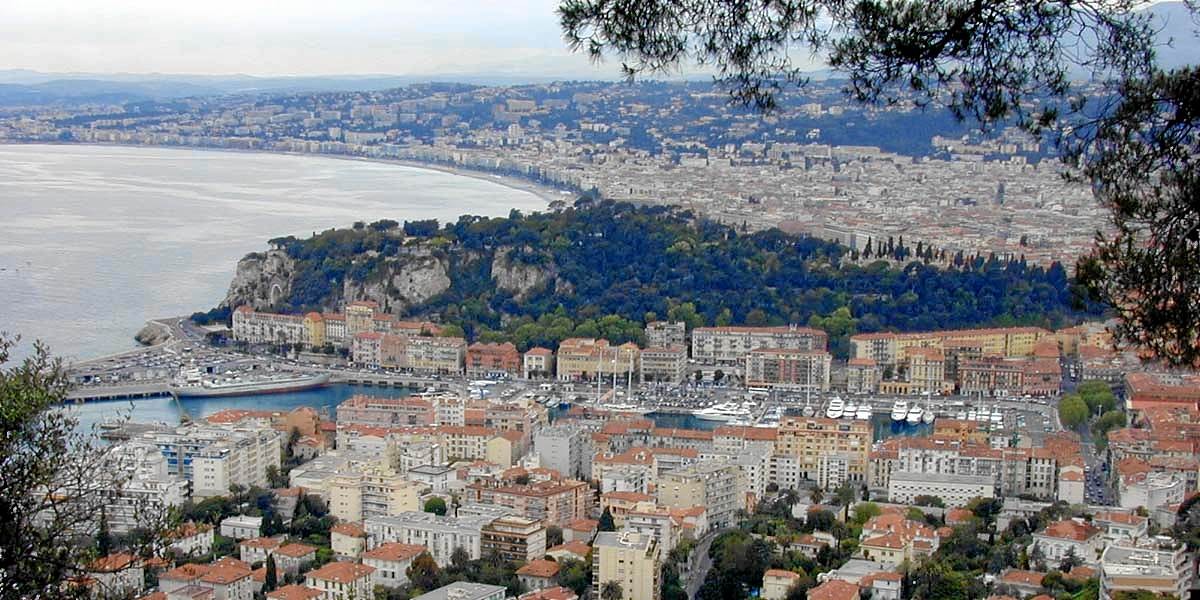
On the far side of Castle Hill from the Promenade, the Port of Nice is the city's most lived-in and least touristy quarter, and in recent years it has become the place to eat and drink. The harbour was dug in the second half of the eighteenth century by the Dukes of Savoy out of the marshy ground at Lympia, where a spring rose, and the deep rectangular basin is still framed by the elegant ochre and red façades of that era. At its head, the Place de l'Île-de-Beauté forms a grand arcaded crescent around the neoclassical church of Notre-Dame-du-Port, a scene that looks more like Genoa or Turin than the Riviera. Down on the water, the traditional pointus, little wooden fishing boats painted in bright colours, are moored along their own pontoon, giving the Lympia basin its postcard look, while big ferries to Corsica and yachts fill the outer harbour. Walk the quays and you pass ship chandlers, fishmongers and cafés where dockworkers have their morning coffee. Behind the port, the streets of the Quartier du Port, especially rue Bonaparte, rue Catherine Ségurane and the surrounding blocks, mix antique and second-hand dealers with natural-wine bars, bakeries, small restaurants and brunch spots that draw a young local crowd. At the southern end, the Rauba Capeu point, where the wind is said to steal your hat, curves round past the war memorial carved into the cliff to the Quai des États-Unis. The whole area is free to explore, open all year and reached by the tram from the city centre or on foot over or round Castle Hill.
A good route: start at Rauba Capeu at the eastern end of the Promenade and walk round the point to the port, with the waves on one side and the cliffs of Castle Hill on the other. Follow the western quay, past the pointus and the ferry terminal, to the Place de l'Île-de-Beauté, then turn into the grid of streets behind it for the antique shops and bars. Continue along the eastern quay toward the lighthouse jetty for views back over the city and the hill. In about two hours you will have seen the quarter; add lunch or an evening out to make it a half-day.
Eating and drinking: the port quarter has many of Nice's most talked-about neighbourhood bistros, wine bars and bakeries, more relaxed and better value than the old town's tourist strip. Fish restaurants line the quays, and in the mornings you can still find fishermen selling part of the catch near the boats. Evenings are lively at weekends, particularly in the streets just north of the port, and the area is a good choice for an aperitif after sunset on Castle Hill.
Practical notes: the port is open and free all year. The tram from the city centre stops at the port, which makes it easy to arrive or leave without walking back over the hill. Boat trips along the coast and some ferries to Corsica leave from the quays. Combine the quarter with Castle Hill (the stairs and paths on the port side are gentler) and with the wooded Mont Boron hill above, for a day on the eastern side of Nice that most visitors miss.
What to expect
The experience
A free self-guided walk around a working harbour and its neighbourhood of Italianate squares, antique shops, bars and bistros.
Best time
Morning for the fishing boats and quiet quays; early evening for an aperitif and dinner.
How long
Two hours to walk; half a day with a meal.
Tips
Walk round Rauba Capeu from the Promenade to arrive, and take the tram back. Reserve dinner at weekends: the best neighbourhood places fill up.
Quick picks
- Best for
- Eating and drinking with locals rather than tourists.
- Families
- Boats and ferries to watch, and Castle Hill's playgrounds close by.
- Couples
- Sunset on the hill, then wine and dinner in the port quarter.
- Pair with
- Castle Hill and Mont Boron.
- Time needed
- Two hours to half a day.
Good questions
How do I get to the Port of Nice?+
Walk from the old town round the Rauba Capeu point or over Castle Hill in fifteen to twenty minutes, or take the tram, which stops at the port.
What is there to do at Port Lympia?+
Stroll the quays and see the colourful pointus fishing boats, visit the Place de l'Île-de-Beauté, browse antique shops and eat in the neighbourhood's bistros and wine bars.
Is the port quarter good for restaurants?+
Yes, it has become one of the best areas in Nice for neighbourhood bistros, wine bars and bakeries, generally better value than the old town's busiest streets.
Do ferries to Corsica leave from Nice port?+
Yes, ferries to Corsica use the port, along with some coastal boat trips.
Is it safe in the evening?+
It is a lively, residential area popular with locals in the evening; normal city precautions apply.