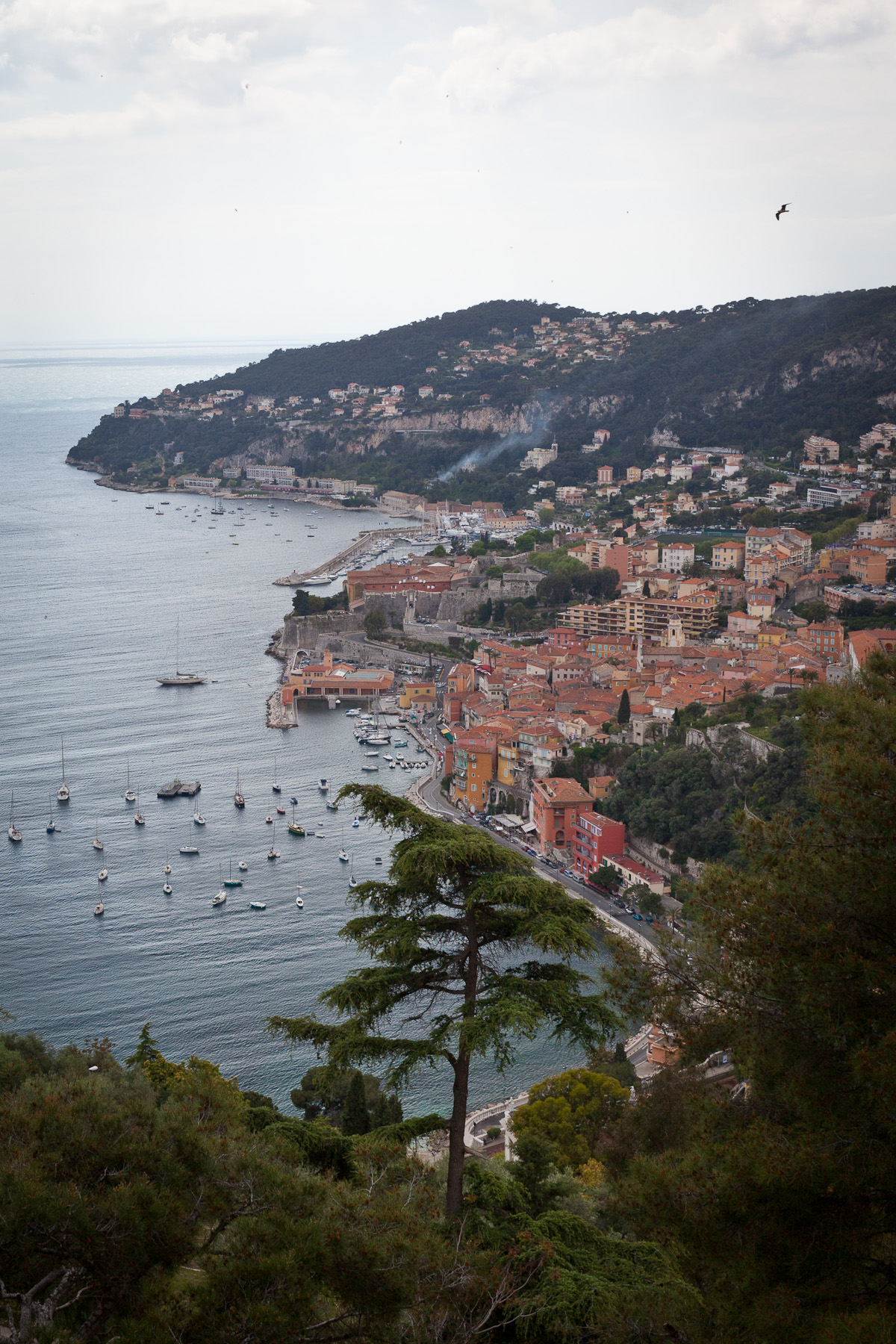
Villefranche-sur-Mer is the town people fall for. Tucked into a perfect bay between Nice and Cap Ferrat, it climbs from a small fishing harbour in tiers of ochre, saffron and rose façades, with green shutters, steep stairways and lanes that open onto glimpses of blue water. The bay itself is one of the deepest natural anchorages in the Mediterranean, which is why navies and now cruise ships anchor offshore, and why the town has a long military and maritime history. Its sights are small, free or inexpensive, and best enjoyed at a slow pace. The Citadelle Saint-Elme, built by the Dukes of Savoy in the sixteenth century, dominates the harbour; inside its walls are the town hall, gardens and several small museums of sculpture, painting and contemporary art, including works by the sculptor Antoniucci Volti. Below it, the Rue Obscure is a remarkable vaulted street running under the houses of the old town, dark and cool, that has sheltered townspeople from sun and bombardment for centuries. On the harbour, the little Chapelle Saint-Pierre was decorated by Jean Cocteau, who loved Villefranche and stayed often at the Welcome Hotel; his line drawings of Saint Peter and of the fishermen and girls of Villefranche cover every wall and repay a few euros and a few minutes. Along the quay, colourful traditional pointus boats bob beside restaurant terraces, and the Plage des Marinières, a long curve of fine shingle by the station, is one of the most pleasant beaches near Nice. Trains from Nice take under ten minutes, and buses run along the lower corniche.
A walk around town: start at the station above the Plage des Marinières and follow the seafront path to the harbour (ten minutes). Explore the quay, the Cocteau chapel and the fishermen's boats, then climb the stairways into the old town and find the Rue Obscure. Continue to the Citadelle, wander its ramparts and gardens, and look into the museums if they are open. Return along the Darse, the old naval port beyond the citadel, where there are a few cafés and the start of walks round the Cap. Allow two to three hours at an easy pace, plus lunch.
Eating and drinking: the harbour front is lined with seafood restaurants with views, and prices reflect the setting; the lanes of the old town hold smaller, cheaper places. For a picnic, buy bread and supplies in Nice or in the old town and eat on the beach. In winter, Villefranche is quiet, many restaurants close for a break, and the low sun lights the façades beautifully in the afternoon. When cruise ships are in, the narrow lanes can be busy around midday; early morning or late afternoon is calmer.
Fitting it in: Villefranche is easily done in half a day from Nice, but it combines well with the coastal walks of Cap Ferrat, with Villa Ephrussi de Rothschild on the cap or with Villa Kérylos in Beaulieu, the next stop on the train line. Energetic walkers can climb from Nice over the Mont Boron hill and descend into Villefranche on foot. This is the place for a lazy lunch, a swim in warm months and the best postcard view on the coast.
What to expect
The experience
A small harbour town to explore on foot: quays and fishing boats, a vaulted medieval street, a Cocteau-decorated chapel, a citadel with small museums and a long beach.
Best time
Morning or late afternoon, especially when cruise ships are anchored. Winter afternoons give warm light on the façades.
How long
Half a day with lunch.
Tips
Take the train: parking is scarce. Bring small change for the Cocteau chapel. Many restaurants take a winter break, so check before setting your heart on one.
Quick picks
- Best for
- The prettiest easy half-day from Nice.
- Families
- Beach, boats and a citadel to run around in; stairs everywhere though.
- Couples
- Lunch on the harbour and a sunset walk on the quay.
- Pair with
- Cap Ferrat coastal path, Villa Ephrussi or Villa Kérylos.
- Time needed
- Half a day.
Good questions
How do I get from Nice to Villefranche-sur-Mer?+
By train in under ten minutes on the Nice-Monaco line, or by bus along the lower corniche. The station is right above the Plage des Marinières.
What is the Rue Obscure?+
A medieval street covered by vaults and running underneath the houses of the old town, used for centuries as a sheltered passage.
Can you visit the Cocteau chapel?+
Yes. The Chapelle Saint-Pierre on the harbour was decorated by Jean Cocteau and opens to visitors for a small fee; hours vary by season.
Is there a beach in Villefranche?+
Yes, the Plage des Marinières, a long curve of fine shingle by the station, plus smaller beaches near the harbour and the Darse.
Is Villefranche worth visiting in winter?+
Yes. It is quiet and beautiful, though some restaurants close for a break and museum hours are shorter.