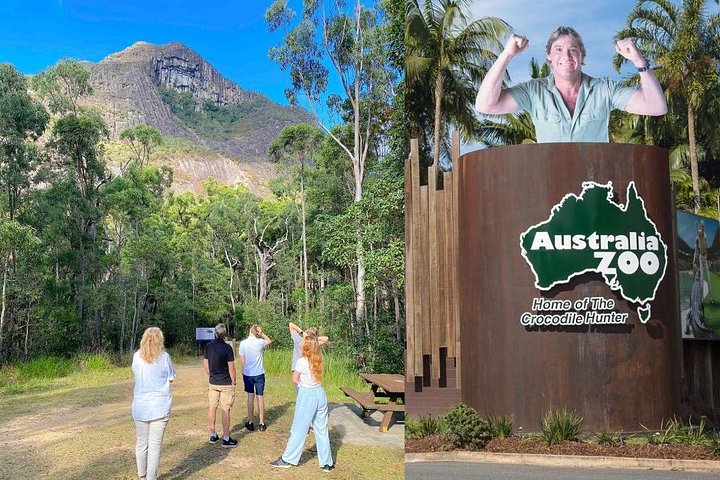
The Glass House Mountains are a group of steep volcanic plugs that rise abruptly from the coastal plain north of Brisbane and south of Noosa, and they make one of the most distinctive landscapes in south-east Queensland. The peaks are the remains of ancient volcanic activity, with hard rock cores that survived long after the softer surrounding material eroded away, leaving sharp, rounded and craggy shapes that dominate the skyline. Captain James Cook named them in 1770 because they reminded him of glass furnaces in his native Yorkshire. The national park protects the peaks and the surrounding bushland, and it includes lookouts, picnic areas and walking tracks that range from short, easy strolls to steep, demanding climbs. Entry is free, and the area is a simple addition to a drive between Noosa and Brisbane or a visit to Australia Zoo.
Visiting is mostly about viewpoints and walks. The Glass House Mountains Lookout on Mountain View Road gives sweeping views over the peaks and the pineapple fields, a good stop for photographs and a rest. Several tracks lead into the bush, including shorter walks to the base of peaks and longer climbs to summits such as Mount Ngungun, which is a popular half-hour or so summit track for fit walkers.
Others, such as Mount Tibrogargan, involve steep, exposed scrambling and are best left to experienced and well-equipped walkers. Some peaks and routes have restricted access or closures for safety, cultural or conservation reasons, so check the park's website for current conditions before setting out.
The mountains hold deep cultural significance for the Traditional Owners, the Gubbi Gubbi and Jinibara peoples, and their stories describe the peaks as family members, which is one reason that respectful behaviour and compliance with access rules matter. Visitors should stay on the marked tracks, avoid damaging the vegetation and follow signs that ask people not to climb in sensitive areas. The park also supports distinctive plants and animals, including heath and woodland communities, wallabies, birds and reptiles.
For practical planning, the weather and the heat make a big difference. Start early, carry plenty of water, wear a hat and shoes with grip, and avoid steep climbs in the hottest part of summer or after heavy rain, when rock surfaces can be slippery. Mobile coverage can be patchy on the tracks, so tell someone where you are going.
If you prefer not to drive, guided tours from Noosa and the Sunshine Coast visit the lookouts and sometimes combine them with a walk, a lunch stop and other attractions such as Australia Zoo. The mountains also work as a free, scenic stop on a loop through the hinterland, and the nearby towns and farm shops offer coffee, fruit and pineapples.
Check conditions, fire and safety advisories and track closures with the managing agency before you travel.Photographers favour the golden hours, when the low sun picks out the cliffs, and the mist that sometimes drifts across the farmland in winter mornings gives the peaks an almost dreamlike appearance. Picnic areas at the base of several peaks have tables and toilets, making the park suitable for a relaxed family stop even if no one wants to climb. Always carry more water than you expect to need.
What to expect
The experience
A self-guided visit to lookouts and walking tracks among the volcanic peaks, from easy viewpoints to steep summit climbs.
Best time
Cooler mornings and clear days. Avoid steep climbs in extreme heat or after heavy rain.
How long
One to four hours depending on the lookout or track you choose.
Tips
Carry water, wear sturdy shoes, check track conditions and closures and stay on marked paths.
Quick picks
- Best for
- Walkers, photographers and road-trippers.
- Families
- Lookouts and short walks suit families; steep climbs do not suit young children.
- Couples
- A scenic stop with big views.
- Pair with
- Australia Zoo or the hinterland villages.
- Time needed
- One to four hours.
Good questions
Is there an entry fee?+
No. The national park is free to enter, though some facilities and nearby attractions charge.
Which walk is easiest?+
The lookouts and shorter tracks are the easiest. Some summit tracks are steep and demanding, so check current track information.
Can I climb every peak?+
No. Some peaks are restricted or closed for safety, cultural or conservation reasons.
Who named them?+
Captain James Cook named them in 1770.
Can I visit on a tour?+
Yes. Several day tours visit the lookouts, sometimes with Australia Zoo.