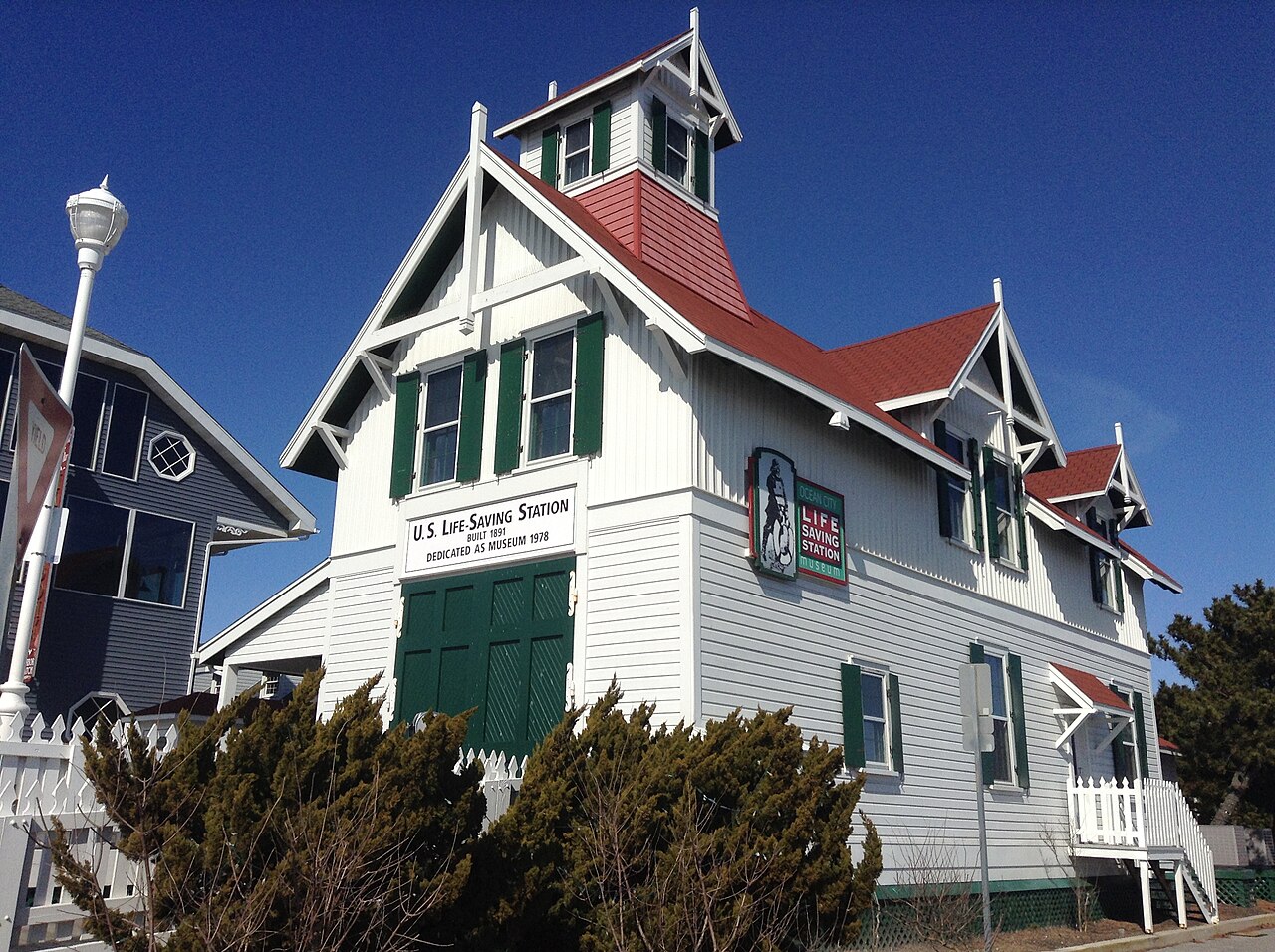
The Ocean City Life-Saving Station Museum is the best place to understand how the resort came to exist. It stands at the southern end of the boardwalk beside the inlet, in a handsome building that dates to the late nineteenth century and once housed the surfmen who rescued sailors from wrecks along this dangerous coast. Today the museum fills the station with exhibits on the lifesaving service, the great storm of 1933 that cut the inlet and separated Assateague from Ocean City, local shipwrecks and the evolution of the town from a few cottages to a modern resort. The displays are modest in scale but full of detail. Visitors see rescue boats and equipment, photographs of early beach life, models of ships, artifacts recovered from wrecks, and exhibits on marine life and local fishing. The aquarium-style tanks give younger children something to look at, and the staff and volunteers are keen to share stories. The museum is small, so you can see it in an hour, which makes it an easy addition to a boardwalk day.
The storm of 1933 is the story you should not miss. In a single night a hurricane tore a channel through the barrier island, creating the Ocean City inlet that now shelters the harbor and fishing fleet. The museum explains how the inlet changed the town's fortunes, giving boats access to the ocean and shaping the resort's economy. It also traces the long fight against erosion and the building of jetties, which anyone walking the beach will appreciate after seeing the exhibits.
Visiting is easy. The museum sits at the end of the boardwalk beside the inlet, and it is open for set hours that vary by season, usually daily in summer and more limited in other months. Admission is modest, and the building is accessible in part, though some areas may involve steps, so ask if you have mobility concerns. Photography is generally fine. Check hours before you plan, particularly outside the summer season.
The museum is a good rainy-day or hot-afternoon plan. It gives children a break from the sun, adults a thoughtful dose of local history, and everyone a better understanding of the inlet they cross each day. Pair it with a walk along the jetty, a cruise from the harbor, or lunch at the south end of the boardwalk.
Visitors interested in lighthouses, lifesaving history and maritime stories will want to stay a little longer, and the gift shop has books and local souvenirs. It is a small place with a large role in telling the Ocean City story.
What to expect
The experience
A small museum in a historic lifesaving station with exhibits on shipwrecks, the 1933 storm, the inlet and beach history.
Best time
Any day; ideal in the heat of the afternoon or in wet weather.
How long
About an hour.
Tips
Check seasonal hours, plan around the inlet end of the boardwalk and look for the storm exhibits.
Quick picks
- Best for
- History lovers, families and anyone who wants shelter from sun or rain.
- Families
- Good; the tanks and boats hold children's attention for an hour.
- Couples
- A quiet, thoughtful stop on a boardwalk stroll.
- Pair with
- The boardwalk, Trimper's Rides or a harbor cruise.
- Time needed
- About an hour.
Good questions
Where is the museum?+
At the south end of the boardwalk, beside the Ocean City inlet.
How long does it take?+
About an hour, depending on how closely you read the exhibits.
What is the main story?+
The lifesaving service, local shipwrecks and the 1933 storm that created the inlet.
Is it open year-round?+
Hours vary by season, with more days open in summer; check before you go.
Is it good for kids?+
Yes, the boats, tanks and artifacts keep many children interested.