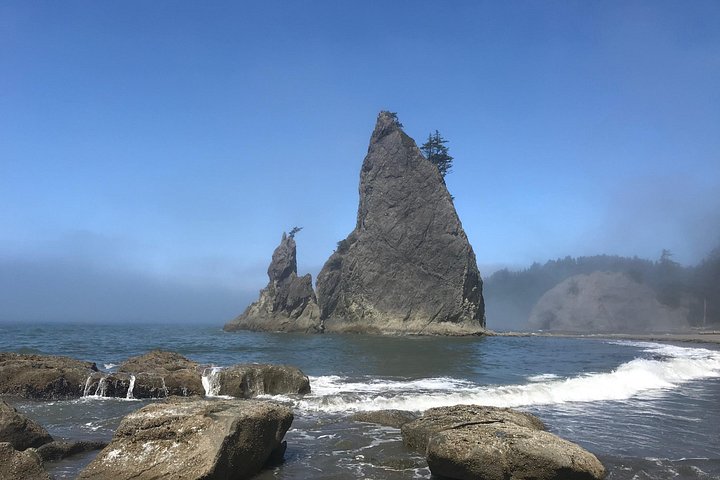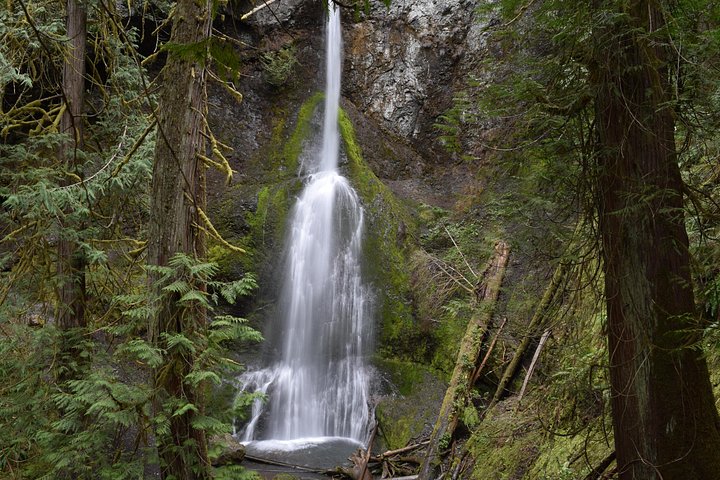
Olympic National Park is really three parks sharing a boundary: a rugged interior of glaciated peaks rising above 7,000 feet, a western side where Pacific storms feed one of the largest temperate rain forests in the world, and a wilderness coastline stretching roughly 73 miles with sea stacks, tide pools and driftwood-strewn beaches. President Franklin Roosevelt protected it in 1938, and it has since been named both a World Heritage Site and an International Biosphere Reserve. What surprises first-time visitors is that no road crosses it. US 101 loops around the outside of the mountains, and every main attraction is reached by its own spur, so a visit is built from separate drives of an hour or more rather than one continuous tour.
That geography is why a guided half day makes sense as a first orientation. Starting from Port Angeles, the northern gateway, a small-group tour with a knowledgeable driver covers the mountain-and-water story in a few hours without you spending the day behind the wheel on winding roads, and it is easy to pair with a stop at the national park visitor center to check road conditions. The two big questions on any Olympic trip are how much time you actually have and what the weather is doing, and a guide who drives these roads daily can tell you which spur is clear and which is socked in.
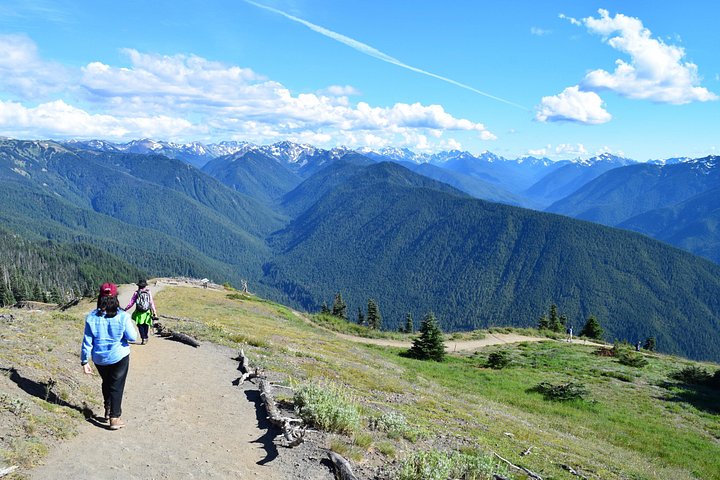
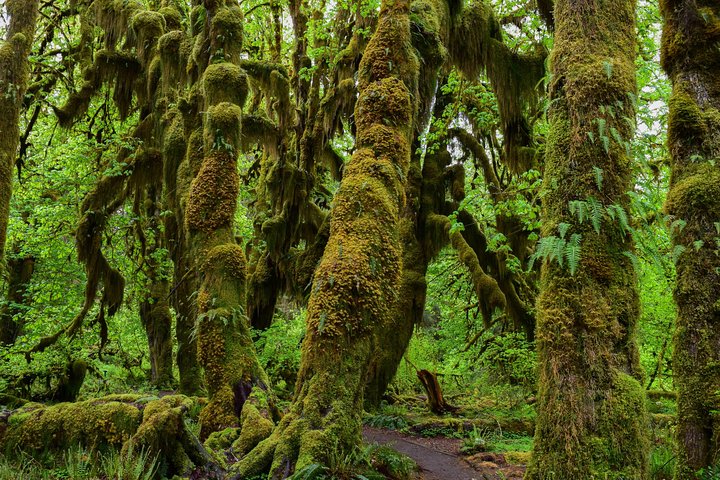
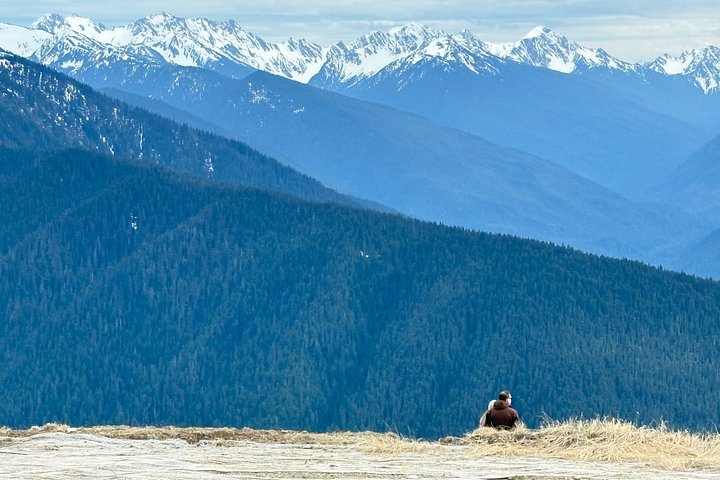
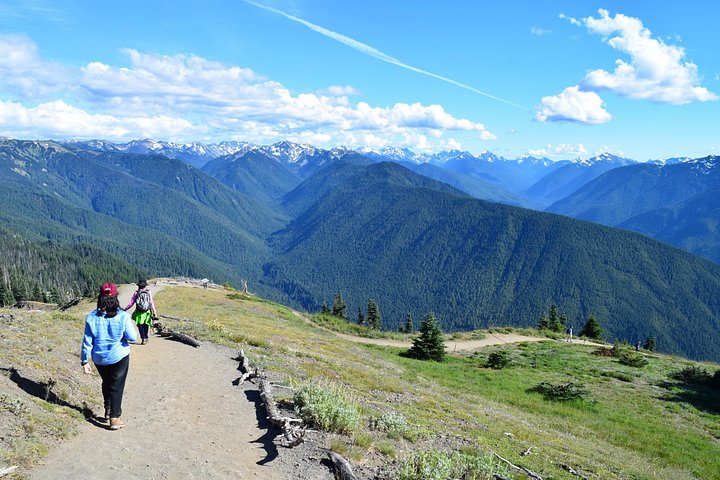
Understanding the layout helps you plan the rest. The north side offers Hurricane Ridge and Lake Crescent, both within an hour of Port Angeles. The west side offers the Hoh Rain Forest and the coastal beaches near Forks, about two and a half hours away. The southwest has Lake Quinault and the Kalaloch coast, and the east side has Hood Canal and the Staircase area.
Rain shadow effects are dramatic here
The Sequim area on the northeast gets a fraction of the rainfall that soaks the Hoh, only about 50 miles away, which is why you can be in sunshine at breakfast and fog-wrapped moss by lunch.
Practical points
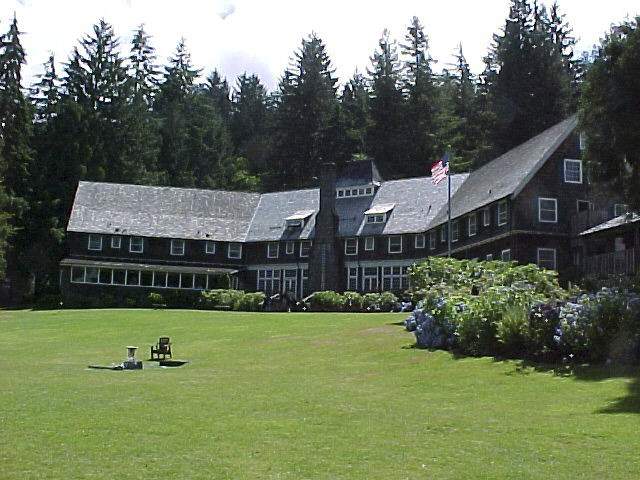
A national park entrance fee or valid pass is required, and some tour prices include it while others do not, so check what your tour covers when you book. Services inside the park are sparse, with a few lodges and small stores, so bring water, layers and snacks. Cell coverage is patchy once you leave Port Angeles. Wildlife is part of the draw, with Roosevelt elk common in the Hoh valley, black-tailed deer almost everywhere, and marmots on the high meadows in summer. Give animals space and never feed them.
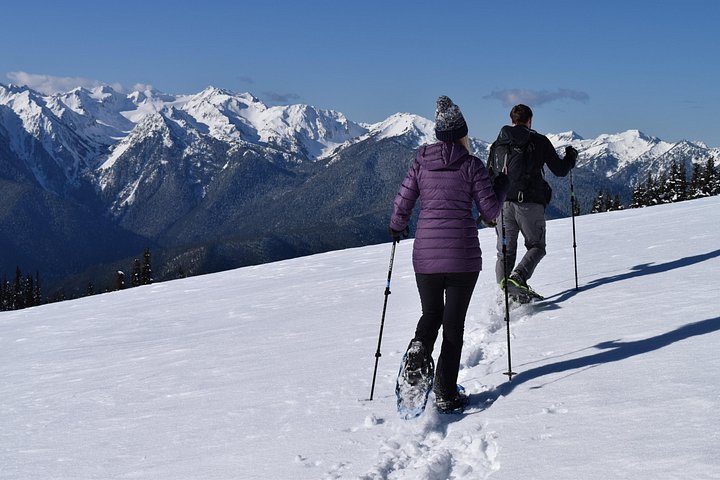
Season shapes everything. Summer brings the clearest weather and open high-country roads but also the biggest crowds at Hurricane Ridge and the Hoh. Spring and autumn are quieter, with autumn adding the return of salmon to the rivers and bugling elk. Winter means snow at elevation, storms on the coast, and a very different park, one that suits snowshoeing and storm watching. Whatever the month, treat the first guided day as a scouting trip and then plan return visits to the places that caught your attention.
A few planning rules of thumb save a lot of frustration. Allow at least two full days for the north side and the west side combined, three if you want the coast and Lake Quinault, and treat driving times on the map as optimistic because of slow stretches and summer traffic.
Book lodging early for July and August, since rooms inside and near the park fill months ahead. If you are arriving from Seattle, the Kingston and Bainbridge ferries are part of the journey rather than an obstacle, and they add a pleasant hour on the water before the mountains appear.
What to expect
The experience
A guided small-group half day out of Port Angeles covering the park's mountain and lake scenery, with a driver who explains the three ecosystems.
Best time
Late spring through early autumn for the clearest views; shoulder seasons for fewer people.
How long
About four hours on the road and at viewpoints, plus a visitor center stop if you want one.
Tips
Bring layers, water and a rain shell whatever the forecast says. Confirm whether the park entrance fee is included before you pay.
Quick picks
- Best for
- First-timers who want orientation before planning longer drives.
- Families
- Easy to follow with short walks and viewpoints, no long hikes required.
- Couples
- A relaxed way to see the scenery without one partner driving winding mountain roads.
- Pair with
- A Port Angeles waterfront dinner, then Lake Crescent the next morning.
- Time needed
- Half a day.
Good questions
Do I need to pay a park entrance fee separately?+
Entering the national park requires a fee or a pass. Some guided tours bundle it into the price and some do not, so check what is included when you book.
Is there a road through the park?+
No. US 101 circles the outside, and each major area is reached by its own spur road, which is why travel times between attractions are longer than the map suggests.
Can I see the rain forest on a half-day tour?+
Usually not. The Hoh Rain Forest is about two and a half hours from Port Angeles, so half-day tours stay on the north side. Look at full-day options for the rain forest.
What should I wear?+
Layers and a waterproof shell. Weather changes fast, and it can be 20 degrees cooler at Hurricane Ridge than in Port Angeles.
Where do I check road conditions?+
The park website and visitor center post current road and trail status. High-elevation roads can close for snow well into spring.