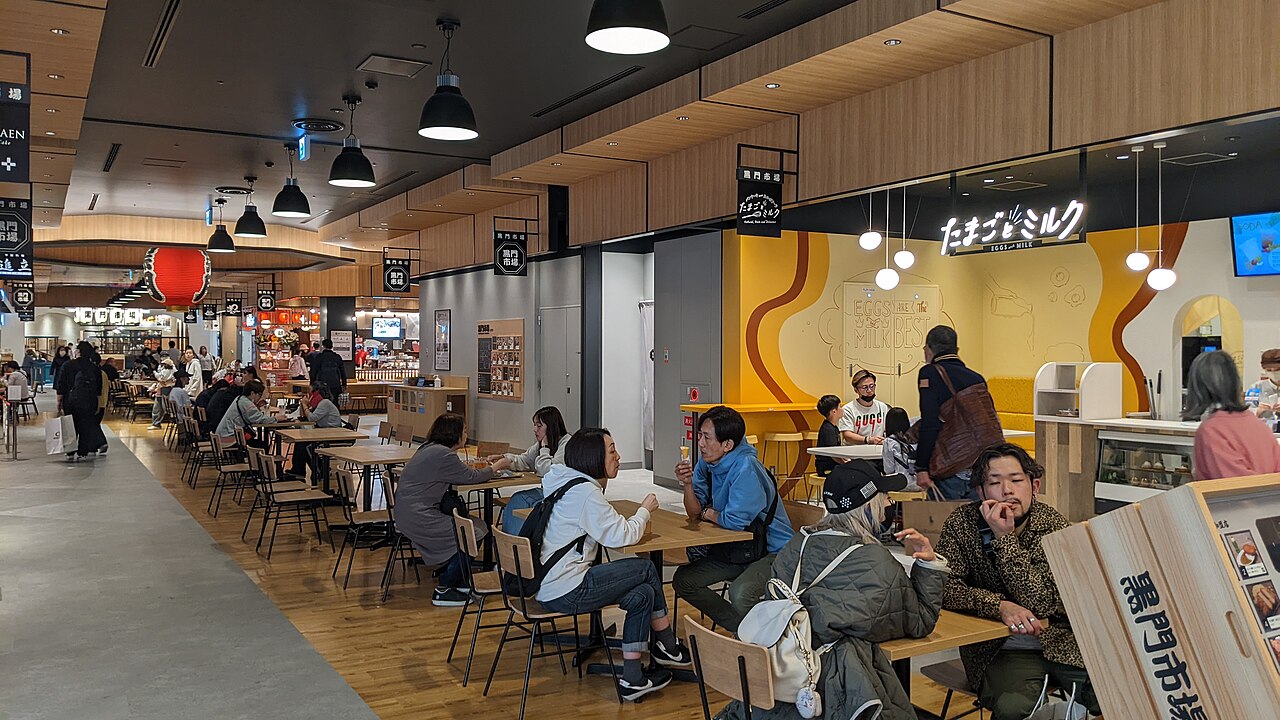
Osaka has long had one of the largest Korean communities in Japan, rooted in migration during the first half of the twentieth century, and its center is the Ikuno and Tsuruhashi area in the east of the city. The neighborhood has two faces. Right by Tsuruhashi Station, on the JR Osaka Loop Line, Kintetsu and Sennichimae subway line, a dense warren of covered market lanes spreads out under and around the tracks: stalls of kimchi in dozens of varieties, dried fish, Korean side dishes, rice cakes, chima jeogori dresses and household goods, interspersed with yakiniku grill restaurants. Tsuruhashi is famous as the yakiniku capital of Osaka, and the smell of charcoal and grilling meat greets you as you step off the train; locals joke that you can tell who has been there by the smell of their jacket. A short walk south-east, Osaka Koreatown, centered on the Miyukidori shopping street, has become one of the city's liveliest spots for young visitors: a long street of shops selling hotteok pancakes, tteokbokki, cheese hot dogs, gimbap, Korean cosmetics, skincare, K-pop merchandise and character goods, mixed with long-standing family shops and restaurants that have served the community for decades. Weekends are busy with day-trippers from across Kansai. Tsuruhashi is about sixteen minutes on the Loop Line from Osaka Station, or a few minutes from Namba and Nipponbashi on the subway or Kintetsu, and it is easy to combine with Tennoji or Osaka Castle.
Eating well. For lunch or dinner, sit down at a yakiniku restaurant near the station: you grill marinated beef, offal and vegetables yourself over charcoal or gas, with rice, soup and kimchi. Many places are casual and reasonably priced, and some still use the classic smoky setups. In Koreatown, graze instead: share a few street snacks, try fresh kimchi and banchan side dishes, and take home packaged seaweed or snacks. Some market stalls and older restaurants prefer cash, so carry some.
Visiting respectfully. This is a residential and working community, not a theme park. The market lanes are narrow, so keep moving and do not block stalls for photos, ask before photographing vendors, and avoid eating while walking through crowded lanes. Many shops in the older market close on certain weekdays and in the early evening, while Koreatown stays lively into the late afternoon; weekday late mornings are the calmest. The neighborhood's history includes difficult chapters of discrimination, and the Osaka Korea Town Museum nearby, a small paid facility, tells the story of the community in a thoughtful way.
Why go. Tsuruhashi shows that Osaka's food culture goes beyond takoyaki and okonomiyaki, and it gives a glimpse of a multicultural Osaka that many visitors never see. It suits food lovers above all, and anyone interested in the city's social history. A good half-day plan is to arrive at Tsuruhashi Station late in the morning, wander the market lanes, eat yakiniku for lunch near the station, then walk to Koreatown for snacks and shopping in the afternoon, before taking the Loop Line on to Tennoji or Osaka Castle.
What to expect
The experience
A free-to-wander neighborhood of covered market lanes by Tsuruhashi Station and a Koreatown shopping street of Korean food, cosmetics and pop-culture shops.
Best time
Weekday late mornings for space; lunchtime for yakiniku.
How long
Two to three hours including a meal.
Tips
Carry cash. Share street snacks to try more. Do not eat while walking in the narrow market lanes. Wear clothes you do not mind smelling of yakiniku.
Quick picks
- Best for
- Food lovers who want Korean barbecue and street snacks in Japan.
- Families
- Teens love the K-pop shops and snacks; the market lanes are tight for strollers.
- Couples
- A yakiniku lunch, then a stroll and a hotteok on Koreatown's main street.
- Pair with
- Tennoji, Shitennoji temple or Osaka Castle.
- Time needed
- Two to three hours.
Good questions
How do I get to Tsuruhashi?+
Tsuruhashi Station is on the JR Osaka Loop Line, the Kintetsu lines and the Sennichimae subway line. It is about sixteen minutes on the Loop Line from Osaka Station.
Where is Osaka Koreatown?+
Its main street, Miyukidori, is a short walk south-east of Tsuruhashi Station in Ikuno Ward.
What should I eat in Tsuruhashi?+
Yakiniku, the Korean-style barbecue the area is famous for, plus kimchi, hotteok pancakes, tteokbokki and gimbap in Koreatown.
Do I need cash?+
It helps. Many newer shops take cards and mobile payments, but some market stalls and older restaurants prefer cash.
When are shops open?+
Most open from the morning or late morning into the late afternoon or early evening. Some market shops close on certain weekdays.