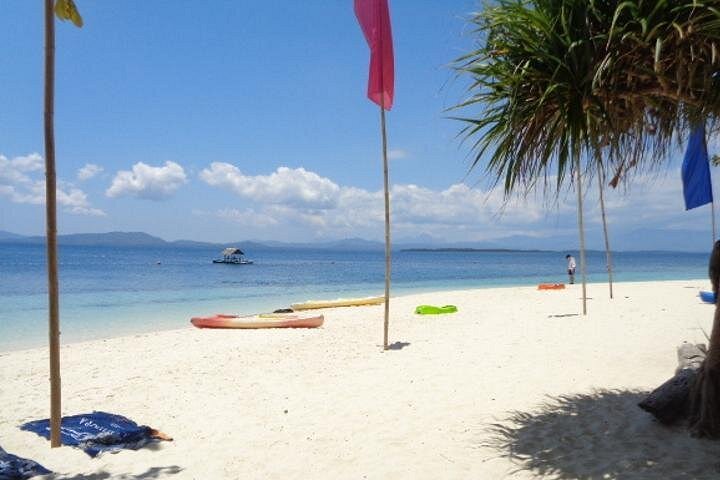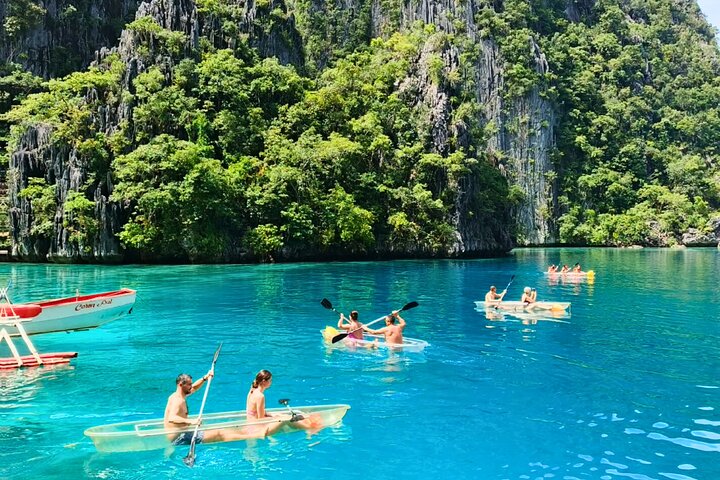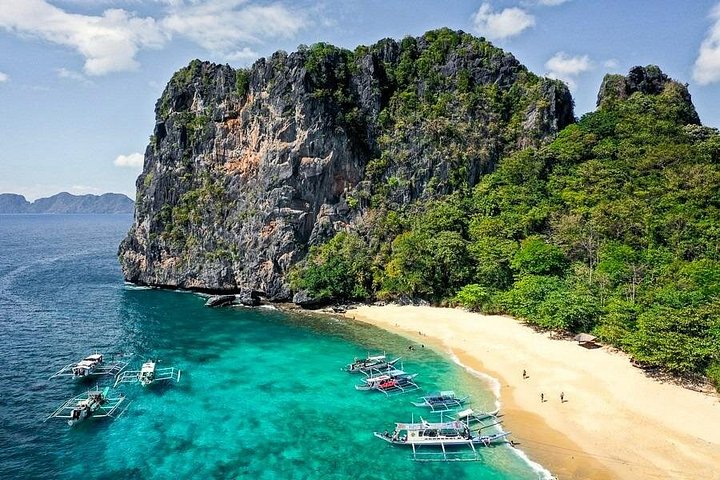
The dugong is a gentle marine mammal related to the manatee, and the waters around northern Palawan and Busuanga are among the few places in the Philippines where it is still seen with any regularity. Dugongs graze on seagrass meadows in shallow, protected bays, and they are shy, slow and easily disturbed, which is why a responsible tour keeps a respectful distance and limits the number of boats in the area. This group tour takes you out from Coron to those feeding areas, where the guide scans the surface for the telltale snout and the plume of a breath. Green sea turtles are more commonly encountered than dugongs, and the day usually includes a snorkel stop where they can be seen grazing over the seagrass or resting along reef edges. Lunch is served on the boat or on a beach, and the route often includes a quiet island where you can swim.
The honest framing matters here. A dugong sighting is a wildlife encounter, not a ticketed show. Some days the animals surface close to the boat for several minutes, and on others the guide finds none at all. The tour is worth taking because the setting is so pleasant, the turtles are a strong supporting act and the pace is far slower than the headline island-hopping routes. If you go with realistic expectations, a sighting becomes a bonus and not the point.
Responsible behaviour makes a real difference. Do not chase the animals, do not touch them and do not drop a boat engine close to a feeding dugong. Good guides will brief the group before anyone enters the water, and they will end an encounter if an animal shows signs of stress.
Snorkelling over the seagrass should be unhurried, with a gentle kick and no standing on the seabed, because seagrass is the dugong's entire food supply and it takes a long time to recover when damaged. Get tickets for the shared departure to keep the number of boats down.
As for the practicalities, the boat is a traditional outrigger, the day is relaxed and the swims are in warm, shallow water. Bring a rash vest, reef-safe sun cream, a waterproof phone pouch and binoculars if you have them, since a pair makes it much easier to scan the horizon. Early morning and late afternoon usually offer the calmest water and the best chance of spotting a surface breath, and the dry season from November to May brings the most settled conditions.
The tour pairs well with a wreck snorkel or the Coron Island tour on another day, giving you three very different views of the bay. As with all boat trips in Palawan, departures can be cancelled in rough weather, so avoid scheduling this on your last day.
It also helps to think about the trip as a way of supporting local conservation. Fees paid to community rangers and boat crews give people a reason to protect the seagrass and the animals that depend on it, so choose an operator that talks openly about its rules and does not promise guaranteed encounters. If the guide asks the group to stay on the boat for a while, treat it as part of the experience and enjoy the quiet.
What to expect
The experience
A shared boat day from Coron to seagrass feeding areas for dugong and turtle watching, with snorkelling and lunch.
Best time
Go in the dry season from November to May for calmer seas, and ask the guide about the best time of day for sightings.
How long
About seven hours, including time spent drifting and scanning for animals.
Tips
Keep a respectful distance, never touch or chase the animals and bring binoculars if you have them.
Quick picks
- Best for
- Wildlife lovers who want a slow, gentle day on the water instead of a packed island-hopping schedule.
- Families
- Good for families with older children who can stay quiet on the boat and snorkel in shallow water.
- Couples
- A relaxed, scenic day for two, with lunch on a quiet beach.
- Pair with
- Pair it with the Coron shipwreck snorkelling tour or the Kayangan Lake island tour.
- Time needed
- One full day.
Good questions
Will I definitely see a dugong?+
No. Dugongs are shy wild animals, and sightings are never guaranteed. Turtles are more commonly seen, and the tour is worthwhile for the setting and the snorkelling even if no dugong appears.
Can I swim with the dugongs?+
Responsible operators avoid close contact. You may be able to view them from the boat or from a respectful distance in the water, but you should never touch, chase or crowd the animals.
When is the best time to go?+
The dry season from November to May offers the calmest water, and early morning or late afternoon is often the best time for surface sightings.
Is the tour suitable for children?+
Yes for children who are comfortable in life jackets and can follow instructions. The pace is slow, but the day is long.
What should I bring?+
A rash vest, reef-safe sun cream, a waterproof phone pouch, binoculars and a little cash for small fees collected on the day.