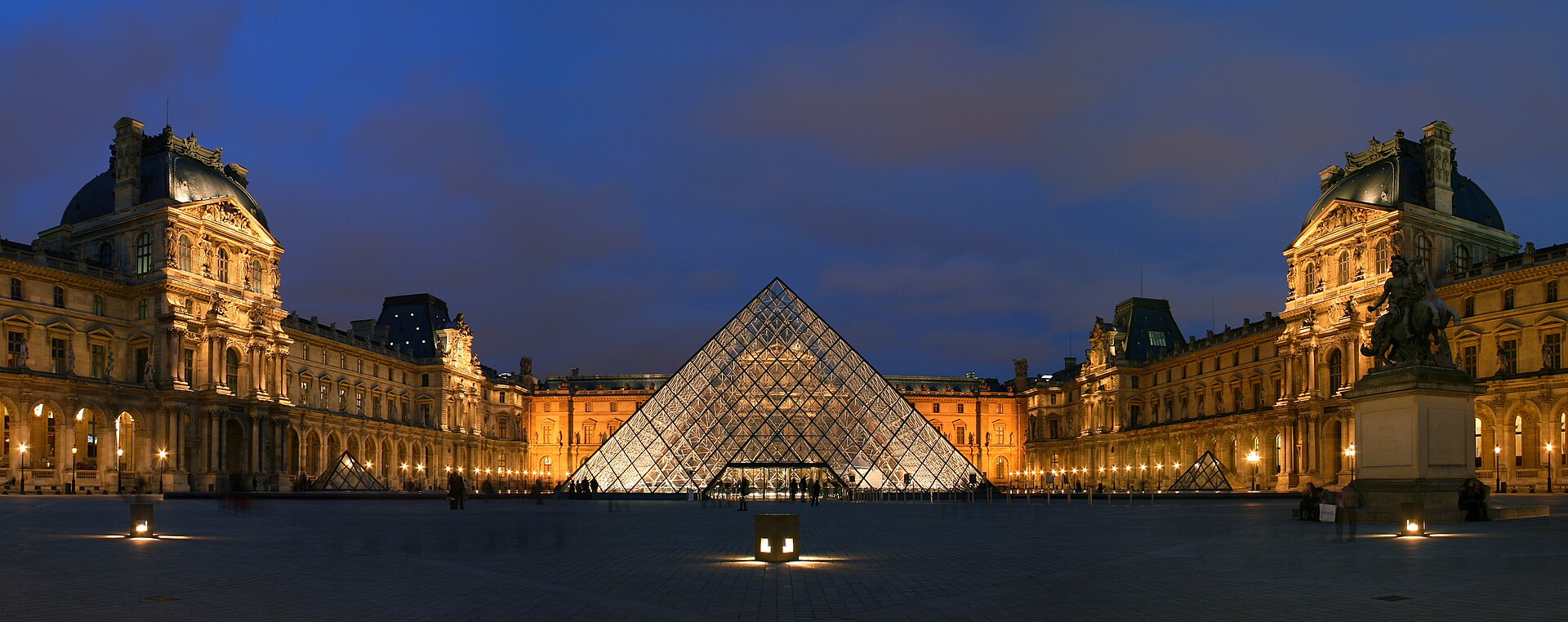
The Louvre is the largest and most-visited art museum in the world — a vast former royal palace on the Seine, entered through I.M. Pei's iconic glass pyramid. Its collection spans some 35,000 works across 8,000 years, from ancient Egyptian and Mesopotamian antiquities to European masterpieces, including the Mona Lisa, the Venus de Milo, and the Winged Victory of Samothrace. It's far too large to see in one visit, so the smart move is to pick a few wings and highlights. Book timed tickets ahead; it's closed on Tuesdays.
Originally a medieval fortress and then the principal royal palace of France, the Louvre became a public museum during the French Revolution and grew into the largest art museum on earth, with a collection of roughly 35,000 works on display spanning some eight millennia of human creativity. Its modern entrance, I.M. Pei's glass pyramid in the central courtyard (added in 1989), has itself become an icon.
The collection is encyclopedic and overwhelming: Egyptian, Near Eastern, Greek, Etruscan, and Roman antiquities; Islamic art; sculpture; decorative arts; and the celebrated European paintings, organized across three wings (Denon, Sully, and Richelieu). The marquee works draw the crowds — Leonardo da Vinci's Mona Lisa (expect a throng), the armless Venus de Milo, the dramatic Winged Victory of Samothrace atop its staircase, and masterpieces by Vermeer, Delacroix, and countless others.
Because it's impossible to see it all, the key is to plan: pick two or three sections or a highlights route, use the museum map or an app, and accept that you'll miss most of it (that's normal). Book a timed entry in advance to skip the worst queues, and note it's closed Tuesdays and busiest midday — early morning or late afternoon (it stays open late on certain evenings) is calmer. It sits in the 1st arrondissement, beside the Tuileries Garden and the Seine, central to everything.
What to expect
The experience
Timed-entry ticket; self-paced across three wings. Use a map or app and pick highlights. Closed Tuesdays; open late on certain evenings.
Best time
Early morning or late-afternoon/evening openings are calmest. Avoid midday and weekends if you can. Closed Tuesdays.
How long
3-4 hours for highlights; a full day for the dedicated.
Tips
Book a timed entry ahead to skip queues, and enter via the pyramid (or the less-crowded Carrousel entrance). Don't try to see it all — pick a route. See the Mona Lisa early or late to dodge the worst crowds. Wear comfortable shoes; the galleries are vast. It's closed Tuesdays.
Quick picks
- Best for
- Anyone with an interest in art and history — the collection is unmatched, even if you only scratch the surface.
- Families
- Pick a focused highlights route for kids (Egyptian antiquities and the famous statues tend to land); the scale tires young children.
- Couples
- A morning of highlights followed by a stroll through the Tuileries next door is a classic Paris day.
- Pair with
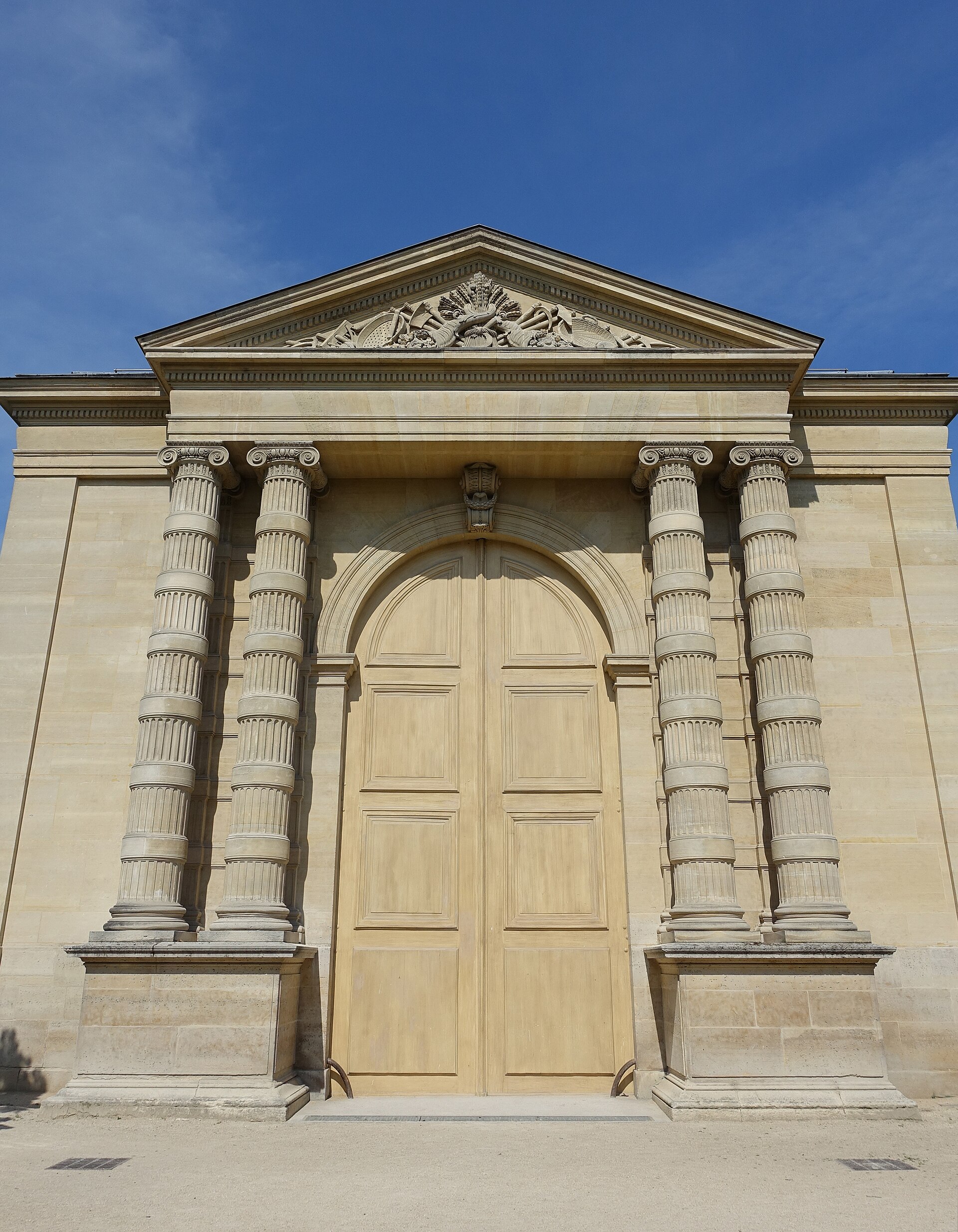
- The Tuileries Garden and Musée de l'Orangerie are adjacent; the Seine and the 1st arrondissement surround it.
- Time needed
- Half a day minimum.
Good questions
How long do I need at the Louvre?+
Plan 3-4 hours for the highlights — it's the largest museum in the world, so seeing everything in one visit is impossible. Pick a few wings or a highlights route instead.
Where is the Mona Lisa?+
In the Denon wing. It's the museum's most famous work and always crowded — visit it early in the day or late to avoid the worst of the throng.
Do I need to book ahead?+
Yes — a timed entry booked in advance helps you skip the long queues. The Louvre is also closed on Tuesdays, so plan around that.
What are the must-see works?+
The Mona Lisa, the Venus de Milo, and the Winged Victory of Samothrace are the headliners, alongside masterpieces of Egyptian, Greek, and European art across the three wings.
Which entrance is best?+
The pyramid is iconic but busy; the Carrousel du Louvre entrance (underground, via the mall) is often less crowded. With a timed ticket, follow the dedicated line.