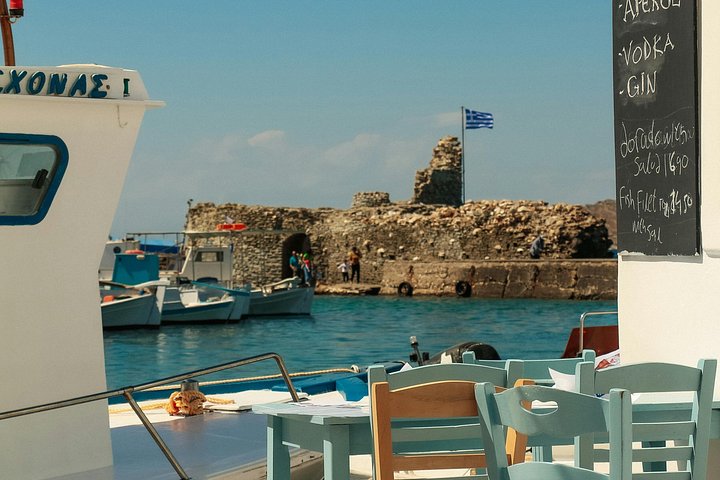
Parikia is where most visitors begin their time on Paros, and it deserves more than a ferry transfer. The town fans out from a curving harbour, and behind the waterfront promenade lies a maze of whitewashed lanes, flower-draped balconies, small chapels and marble-paved squares. The pleasure of the place is in wandering without a plan. Turn up a lane at random and you will find a bakery, a jewellery workshop, a courtyard cafe or a Byzantine church tucked between houses, all within a few minutes of the port. The historic heart is the kastro, a fortified quarter on a low hill above the harbour. The Venetian-era rulers raised it, and what makes it unusual is the building material: its walls incorporate column drums and blocks of white marble taken from an ancient temple that stood on the same spot. You can see the pale cylinders of the old columns set sideways into the masonry, a vivid reminder that Paros was a marble island long before it was a holiday island. The remains of the tower and the surrounding walls now frame a small park and viewpoints over the sea. Nearby you can find the ancient cemetery area and traces of the town's classical past, and the Archaeological Museum of Paros is a short walk away for those who want to see sculpture carved from the local stone.
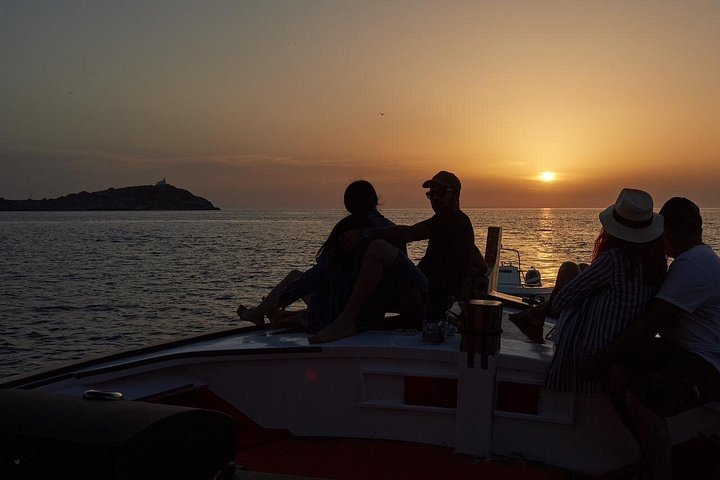
The waterfront is the town's living room. In the evening the promenade fills with families, fishermen mending nets and visitors working out where to eat, and the tavernas along the harbour road and in the lanes behind serve grilled fish, fava, local cheeses and sweet wine. A short walk along the shore takes you to Livadia, the town beach, where the water is calm and shallow and the cafes are casual. Windmills on the headland give a classic sunset view, and the whole circuit from the kastro to the windmills is easy on foot.
Come early in the day for photographs, when the lanes are empty and the light is soft, and again at sunset when the town glows. Midday in summer is hot, and the white walls reflect the sun, so carry water and use a hat. Wear shoes with grip, because the marble paving can be polished smooth.
The shopping streets are busiest in the evening and quiet in the early afternoon, when many small shops close for a siesta. Note that Parikia is a working port, so ferry arrival times bring bursts of noise and traffic along the harbour road, while the inner lanes stay calm.
As a base, Parikia suits travellers who want transport links, a choice of restaurants and a walkable centre. Buses to Naoussa, Lefkes and the southern beaches leave from the main station, and day cruises to Antiparos and the Small Cyclades depart from the port. Allow two to three hours for a relaxed walk including the kastro, a coffee stop and the waterfront, and extend it if you add the museum or Livadia Beach.
What to expect
The experience
A self-guided walk through the lanes of Parikia, the Venetian kastro and the waterfront, with no tickets or fixed route.
Best time
Early morning for empty lanes, or late afternoon into sunset.
How long
Two to three hours, longer with the museum or a swim at Livadia.
Tips
Wear shoes with grip on polished marble, carry water in summer and expect shops to close in the early afternoon.
Quick picks
- Best for
- Anyone arriving by ferry and visitors who like to wander.
- Families
- Safe and mostly pedestrian inside the lanes, with plenty of ice cream stops.
- Couples
- A romantic sunset walk to the windmills and dinner on the harbour.
- Pair with
- Panagia Ekatontapiliani, Livadia Beach and a harbour dinner.
- Time needed
- Two to three hours.
Good questions
Is Parikia worth more than a ferry stop?+
Yes. The kastro, the lanes and the waterfront are enough for a good half day, and the town is a convenient base.
What is special about the kastro?+
It dates from the Venetian period and was built using marble blocks and column drums taken from an ancient temple.
Is there a beach in town?+
Livadia Beach is a short walk from the harbour and has calm, shallow water and cafes.
When is the town busiest?+
Evenings in summer, and whenever ferries arrive. The lanes are quietest in the early morning.
Can I walk everywhere?+
Yes. The old town is compact and largely pedestrian, though buses to other villages leave from the main station.