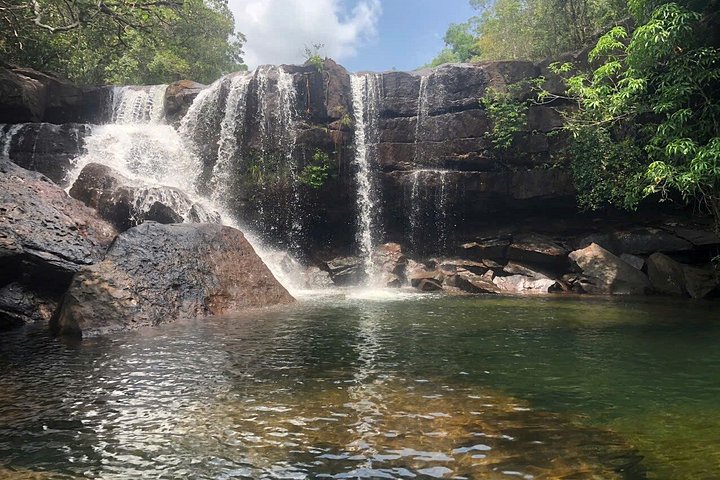
Phu Quoc's forest changes completely after sunset. Frogs call from the streams, insects hum in the leaf litter and reptiles and amphibians that hide by day come out to hunt. A jungle night wildlife walk, often called a herping tour after the word for searching for reptiles and amphibians, takes a small group into the forest with a guide who knows where to look. It is one of the more unusual things to do on the island and one of the most rewarding for anyone who likes nature up close. You walk along trails and tracks with head torches or hand lights, and the guide stops whenever something moves. Typical finds can include tree frogs, geckos, skinks, snakes, spiders, stick insects and other night creatures, although what you see depends on the weather, the season and a measure of luck. The guide identifies each species, explains its habits and shows you how to look without disturbing it, and photography is encouraged as long as the animals are left alone. This is a quieter, more thoughtful activity than a show or a bar night, and it works well for families with older children, couples and solo travellers. It is also a good choice on a rainy day, because amphibians are often most active after rain. Treat it as an educational walk rather than a safari, and enjoy the surprise of what turns up.
What the evening involves
The tour usually starts after dusk, with a pick-up from your hotel and a drive to the trail. The guide gives a safety briefing, hands out torches if they are not already part of your kit and sets out the rules. These generally cover staying on the path, keeping voices low, not touching animals and listening for instructions. Groups are small, which helps you see more and avoids disturbing the wildlife. The walk often lasts two to three hours, with stops for close looks at interesting finds.
What you might see
Southeast Asian forests are rich in small creatures, and Phu Quoc is no exception. Frogs and toads gather near water, geckos cling to trunks, and snakes may be seen coiled on branches or moving over the ground. Some are harmless, and some are venomous, which is the reason you walk only with a trained guide and never reach out to touch anything. Spiders, scorpions, centipedes and large insects are also common finds. Birds and mammals are less likely at night, though the guide may point out sleeping birds on low branches.
What to wear and bring
Closed shoes with good grip, long trousers and a long-sleeved top give the best protection from insects and scratches. Bring insect repellent, a small bag, water and a rain jacket in the wetter months. A head torch is useful if the operator does not supply one, and a camera with a good low-light setting or a phone with night mode helps, though the best photos need steady hands and patience.
Safety
Stay close to the guide, do not wander off the track and never handle wildlife. Anyone with a serious fear of snakes or insects might prefer a daytime nature walk, and people with mobility problems should ask about the terrain. Children should be old enough to follow instructions in the dark, so check the operator's minimum age.
Seasons and weather
The wetter months from about May to October bring more frogs and more activity, but also mud and storms. In the dry season from about November to April the forest is quieter but the paths are easier. Either way, expect humid air and a few mosquitoes.
Responsible practice
Good guides follow a strict code of leaving animals where they find them, and they keep the group away from nests and breeding sites. Choose operators who emphasise conservation and small groups, and do not ask for photos that involve handling wildlife.
How it fits
This is an evening activity, so pair it with a lazy day or a morning at the beach rather than a full day of trekking. Eat before you go, or arrange a late meal in Duong Dong afterwards.
What to expect
The experience
A small-group guided night walk on forest trails, searching for frogs, reptiles and insects by torchlight.
Best time
After dusk, with the wetter months from about May to October bringing the most amphibian activity.
How long
Allow around three hours including transfers.
Tips
Wear closed shoes, long trousers and repellent, and never touch wildlife.
Quick picks
- Best for
- Curious nature lovers who like small, quiet, guided activities.
- Families
- Good for older children who can follow instructions in the dark.
- Couples
- An unusual evening that most visitors never do.
- Pair with
- A relaxed day at the beach or a late meal in Duong Dong.
- Time needed
- An evening of about three hours.
Good questions
Will I see snakes?+
Possibly, but sightings depend on weather and luck. Your guide will keep you at a safe distance.
Is it safe?+
Yes with a trained guide, as long as you stay on the path and do not touch animals.
What should I wear?+
Closed shoes, long trousers, a long-sleeved top and insect repellent.
Is it suitable for children?+
Often for older children; ask the operator about the minimum age.
What if it rains?+
Light rain can improve amphibian activity, but heavy storms may lead to a change of time.