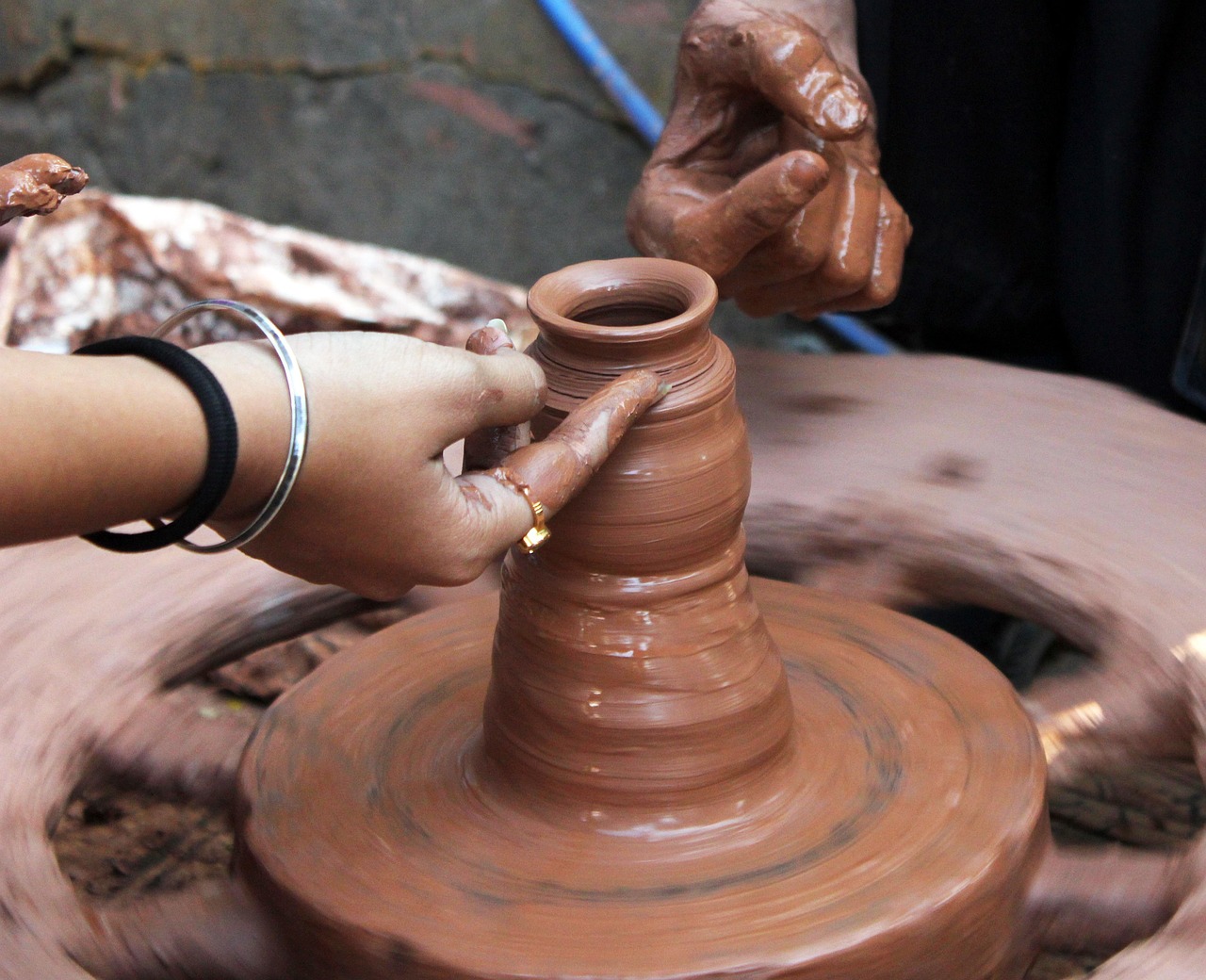
The Great Smoky Arts & Crafts Community is the corridor's authenticity reserve: an 8-mile loop along Glades Road and Buckhorn Road on Gatlinburg's quiet east side where a hundred-odd working artisans — organized as a community since 1937, billed credibly as North America's largest gathering of independent craftspeople — keep roadside studios, cabins, and converted barns open to visitors: potters throwing at the wheel mid-conversation, broom-squires binding sorghum the mountain way, woodcarvers and bowl-turners, leather and forge shops, stained glass, quilters, candle-dippers, painters, and the soup-bowl-and-cornbread cafes that grew up to feed the browsing. The difference from the Parkway's souvenir economy is the entire point: everything sells maker-direct from the hands that made it, demonstrations are the day's rhythm rather than staged events (ask, and the potter talks glazes; linger, and the carver explains the wood), and the loop's price-to-provenance ratio makes it the Smokies' correct answer for gifts that outlast the trip. The drive is self-guided (brochure maps at any member shop; the trolley's seasonal yellow route serves the car-free), parking is shop-by-shop, and the season calendar peaks sensibly — October's color drive doubling the craft run, the holiday weeks turning the loop into the area's best Christmas-shopping argument. Free to drive, dangerous to wallets, and the half day that sends visitors home with the mountains' actual work.
The community's history grounds the experience: the 1937 founding organized the Glades' existing subsistence-craft economy — mountain families who had always turned bowls, bound brooms, and pieced quilts for use — into a marketing cooperative as the new national park's tourism arrived, and the continuity is the loop's quiet marvel: member shops pass through generations (the broom-squire lineages and pottery families the community's literature celebrates), admission standards keep the roster genuinely handmade (the community polices maker-direct authenticity as its brand), and the studio-residence pattern — artists living behind and above the shops — keeps the loop a working neighborhood rather than a retail theme.
Working the loop
The 8 miles run Glades Road east from Highway 321's light, bending south on Buckhorn to rejoin the Parkway corridor — a self-guided hour at drive-through pace, a half day done properly: the craft taxonomy clusters loosely (pottery's kilns and wheel demonstrations the anchor stops, the woodworkers' bowl-and-spoon studios, the forge's hammer rhythm audible from the road, the candle-and-soap fragrance cluster, galleries hanging the painters and photographers), with the brochure map's shop list current at any member counter. The food stops are institutions in miniature — the soup-and-cornbread cafes and fudge counters built for browsing recovery — and restrooms-and-benches hospitality runs shop-by-shop generous.
Craft and fit
October's color season doubles the loop's case (the drive itself goes gold), holiday weeks make it the area's authentic-gift argument, and summer's demonstrations run fullest — but the loop rewards any season's half day, and rain matters little in a browsing format. Buying wisdom: maker-direct means the price is the fair one, shipping counters handle the bowl that will not fly carry-on, and commissioning (the quilters' and turners' order books) is normal practice. The fit: couples' browsing afternoons, multigenerational parties pacing differently through the same stops, and every visitor whose souvenir standard outranks the airbrush tier — the loop is where the Smokies' actual hands still work, and the only shopping in the corridor that doubles as cultural attraction.
What to expect
The experience
A self-guided 8-mile studio loop — pottery wheels, broom-binding, forges, and galleries in roadside cabins, everything maker-direct — with cafe institutions pacing the browse.
Best time
October doubles it with color; holiday weeks make the gift run; demonstrations fullest in summer. Free always, rain-tolerant by format.
How long
An hour at drive-through pace, a half day done properly.
Tips
Grab the brochure map at any member shop. Ask the potter about glazes — demonstration is the culture, not an event. Shipping counters solve the carry-on bowl problem. The seasonal yellow trolley serves the car-free.
Quick picks
- Best for
- The authenticity half day — souvenirs with provenance and the corridor's only shopping that counts as culture.
- Families
- Wheel-throwing and forge-hammer demonstrations hold kids better than expected; fudge counters meter the loop.
- Couples
- The browsing-afternoon classic — October color, gallery stops, soup-and-cornbread lunch.
- Pair with
- Gatlinburg's strip evening after; Ober's tram or the Space Needle to bracket the east-side day.
- Time needed
- A half day, wallet forewarned.
Good questions
Is it really all handmade?+
The community's admission standards police exactly that — maker-direct authenticity is the 1937 cooperative's brand, and the studio-residence pattern keeps makers at the counters they sell from.
How do we navigate the loop?+
Glades Road east from Highway 321, bending south on Buckhorn — 8 self-guided miles with brochure maps at any member shop and the seasonal trolley's yellow route for the car-free.
When is it best?+
October's color run doubles the drive's case; holiday weeks make the area's best gift argument; summer runs the fullest demonstrations. Any season's half day repays.
Can purchases be shipped?+
Routinely — the shops' shipping counters exist for the bowl that will not fly, and commissioning from the quilters' and turners' order books is normal practice.
What does it cost to visit?+
Nothing — the loop is free, parking is shop-by-shop, and the only danger is the wallet's own enthusiasm.