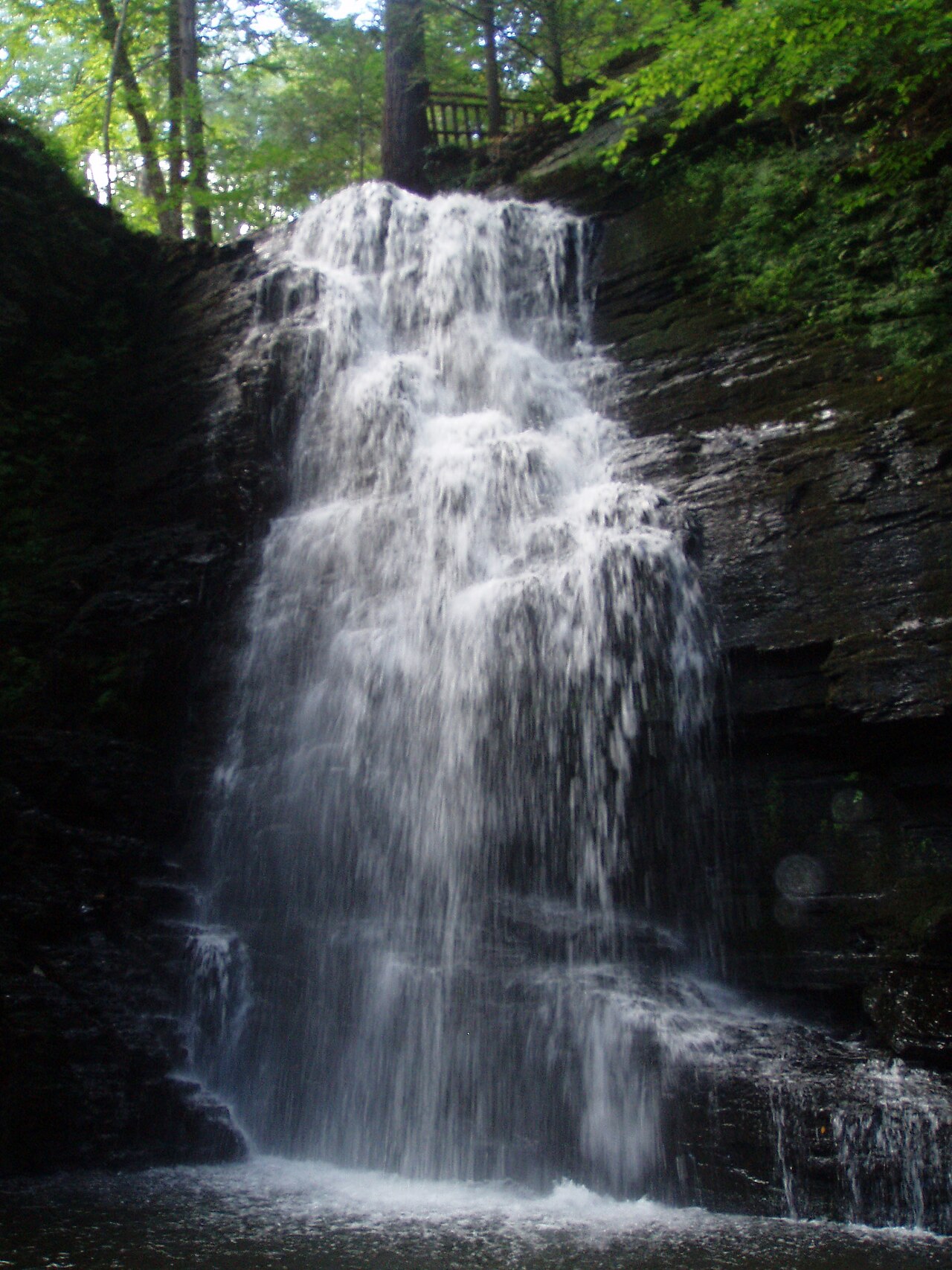
Dingmans Falls and Raymondskill Falls are the two waterfalls inside the Delaware Water Gap National Recreation Area that most visitors rank above all others, and each offers a different kind of experience. Dingmans Falls is a tall, slender plunge reached by a gentle boardwalk through a hemlock ravine, passing Silverthread Falls on the way. The walk is short and well built, and the combination of the cool, shaded gorge and the sound of falling water makes it one of the most pleasant easy outings in the Poconos. Because most of the route is a raised boardwalk, it works for a wide range of ages and abilities. Raymondskill Falls offers a more dramatic scale. It is a multi-tiered cascade that is commonly described as the tallest waterfall in Pennsylvania, dropping in three stages through a rocky cleft. A short trail leads from the parking area to viewing platforms at different levels, with the upper and lower sections each giving a different perspective. The path is steeper and rougher than the Dingmans boardwalk, with stairs and uneven ground, but the effort is modest and the payoff is substantial, particularly after rain.
Visit both on the same day for contrast. A sensible plan is to begin at Dingmans Falls, where the visitor area and parking lot are the starting point, and walk the boardwalk to Silverthread Falls and then the main falls. Spend a few extra minutes reading the signs about the hemlock ravine and the plant life, since the cool microclimate supports species that are unusual at this elevation. Then drive to Raymondskill Falls for the climb and the overlooks, and finish with a river picnic or lunch in Milford.
Water volume determines the experience. In spring and after heavy rain, both falls are powerful and misty, while in a dry late summer they can shrink to a thin ribbon. If you can choose your day, aim for a day or two after a good rain. Winter visits can be spectacular when ice forms, but the trails become hazardous, access roads may be closed, and facilities are limited, so go only if you are prepared and have checked conditions with the National Park Service.
Safety is straightforward but important. Stay on the boardwalks and designated paths, since the rocks near the falls are slick and every year visitors are hurt after leaving the trail. Wear shoes with real grip, keep children close at the platforms, and avoid climbing on wet ledges for photographs. The parking areas fill on summer and autumn weekends, so arrive in the morning. Restrooms and visitor information at Dingmans are seasonal.
If mobility is a concern, Dingmans Falls is the better pick, since the boardwalk is wide and graded for most of its length. Benches along the way allow rests, and the cool air in the hemlock ravine is a relief on hot days. Pack a light jacket in spring, when the ravine holds the chill, and a plastic bag to protect cameras and phones from spray.
Photographers should bring a tripod or brace the camera for slow shutter shots that smooth the water, and a lens cloth, because spray settles quickly. The light is best on overcast days, which reduce harsh contrast in the ravine. These falls are free to visit apart from any seasonal parking or use fees, and they combine well with Bushkill Falls, the river outfitters and the many hikes in the area, giving a waterfall-focused day that does not require a long drive.
What to expect
The experience
Short self-guided walks: a boardwalk to Dingmans Falls and a stair trail to the tiered Raymondskill Falls.
Best time
Spring or a day after heavy rain for the strongest flow; autumn for color.
How long
About an hour for each fall including parking and photographs.
Tips
Stay on marked paths, wear shoes with grip, and arrive early on weekends.
Quick picks
- Best for
- Easy waterfall walks with real scenery.
- Families
- Dingmans Falls is excellent for families because of the boardwalk.
- Couples
- Quiet and atmospheric on weekday mornings.
- Pair with
- Bushkill Falls or a river float.
- Time needed
- Two to three hours for both.
Good questions
Which waterfall is easier to reach?+
Dingmans Falls, because of its boardwalk. Raymondskill Falls involves stairs and rougher ground.
Is Raymondskill the tallest waterfall in Pennsylvania?+
It is commonly described that way, dropping in several tiers through a rocky cleft.
Do I need a ticket?+
These falls are within a national recreation area and are free to visit, though seasonal parking or use fees may apply.
When are the falls strongest?+
In spring and after heavy rain. Late summer can be much thinner.
Are they open in winter?+
Access can be limited by ice and road closures, so check conditions before you go.