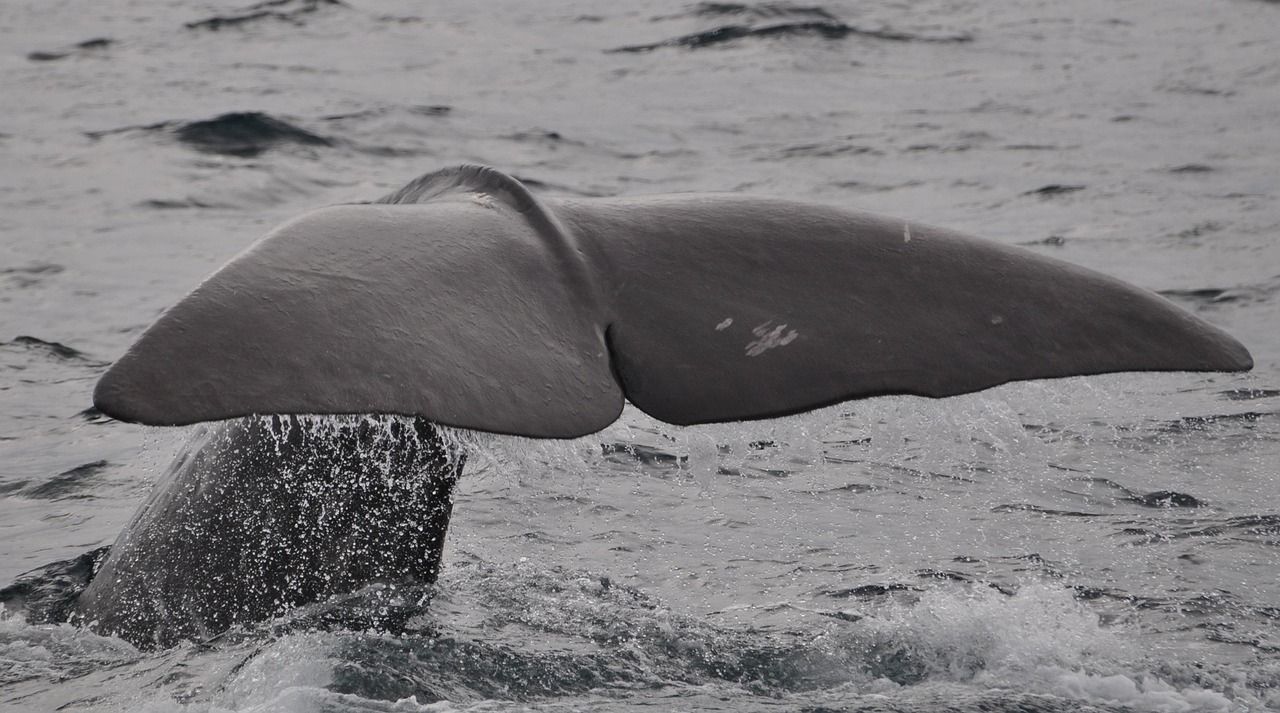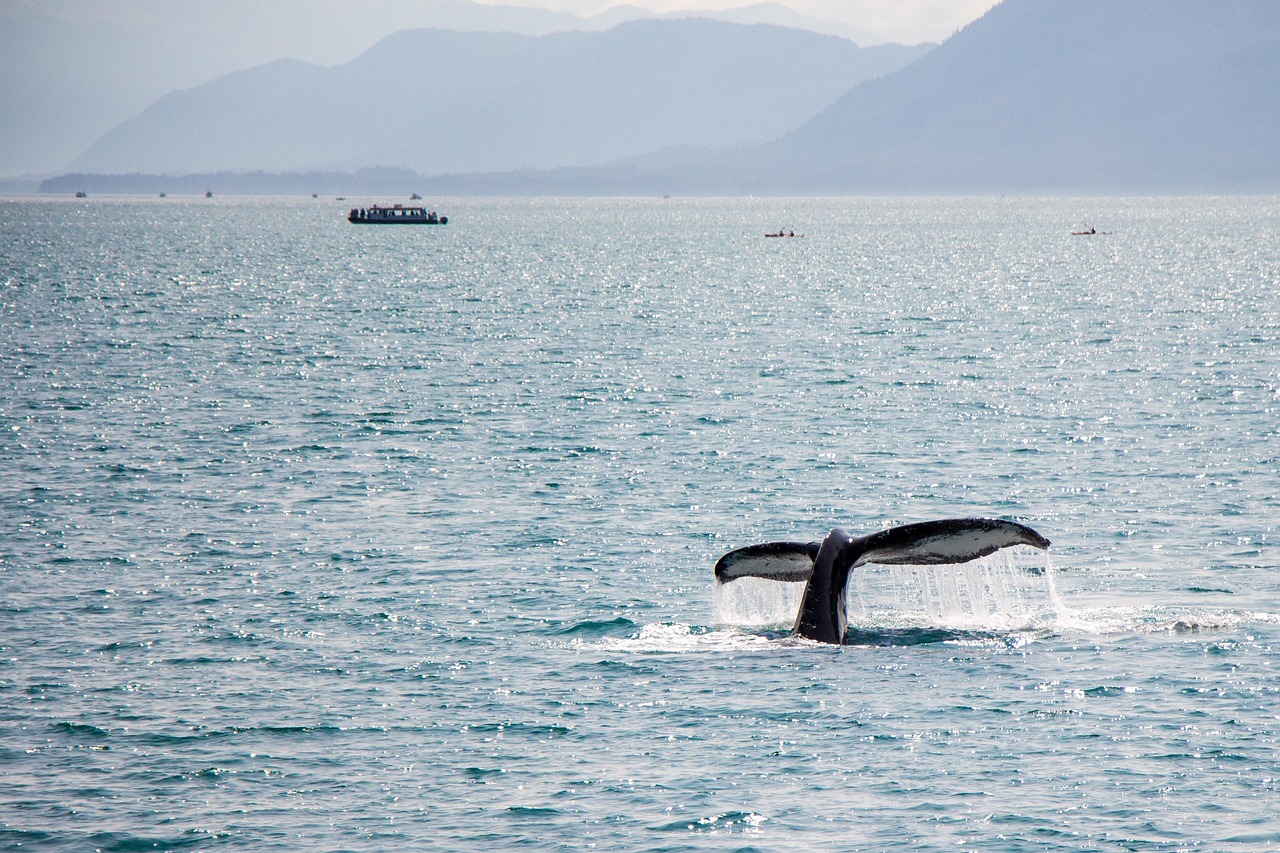
Whales of Iceland is the whale-watching trip's secret weapon and the Grandi district's gentle giant: Europe's largest whale exhibition — a harbor warehouse turned deep-ocean twilight where 23 life-size models of the whale species in Icelandic waters hang in blue light and whale-song ambience: the scale is the exhibit (the 25-meter blue whale fills the hall like a dirigible — walking under it recalibrates what the word whale means; the sperm whale's bulk, the humpback's pectorals, the orca pod and the narwhal's tusk complete the roll call), each model built from real recorded individuals (the markings and scars copy documented whales — the exhibition's models are portraits, not generics), and the interpretation layer runs genuinely good: the audio guide (included, multilingual) tells each species' Iceland story, the interactive stations cover echolocation, migration and the whaling history's honest telling (Iceland's complicated present included), the VR station dives with the giants, and the soft-floor hall works exactly as intended for children — the under-the-whale wander is the capital's best bad-weather family hour. The strategic placement: the exhibition sits in Grandi two minutes from the whale-watching piers (the roster's whale-watching-reykjavik entry runs the boats), and the sequence is the craft — the exhibition BEFORE the boat turns every distant blow and fluke into a recognized species (the minke-vs-humpback education pays off on the water), while the boat-then-museum order answers the what-was-that afterglow. The honest notes: it is models-not-aquarium (no live animals — the point is scale and story), 60-90 minutes covers it, and the admission runs Reykjavík-standard (the combo tickets with the boats soften it). Fit: families definitionally, first trips (the whale capital's primer), the pre-boat pairing for everyone, and the rainy-day bench alongside the Lava Show next door.
The collection's craft rewards attention
The models were built in Germany over years from documented individuals — the blue whale copies a female recorded off Iceland, the sperm whale's wrinkles and the orcas' saddle patches follow real animals, and the humpback's barnacle maps are species-accurate — so the hall functions as a portrait gallery of the North Atlantic's residents: the 23 span the full Icelandic roster (blue, fin, sei, humpback, minke, sperm, orca, pilot, beluga, narwhal, the beaked whales and the dolphin tier down to the harbor porpoise), and the size gradient — porpoise to blue — is the lesson no book lands. The interpretation's honest register: the whaling history exhibit tells Iceland's story without flinching (the stations cover the industry's past, the moratorium politics and the present's contested hunts — the exhibition sits firmly on the watching-over-whaling side and says so), and the conservation layer (ship strikes, entanglement, the ocean-noise problem) gives the gallery its point.
The visit craft
Take the audio guide (included — the species stories carry the hall), walk the size gradient small-to-large (saving the blue whale's hall for last lands the crescendo), give kids the soft floor under the giants (the running-under-the-blue-whale photo is the souvenir), and use the VR and interactive stations as the weather dictates. The pairing strategy restated: exhibition-then-boat is the connoisseur order (the water's distant blows become species), the Grandi cluster completes the day (Lava Show next door, FlyOver two blocks, the food halls between), and the combo tickets with the whale boats run the value play.
Practicals and fit
Fiskislóð in Grandi (two minutes from the whale piers), 60-90 minutes, audio guide included, all-weather. Fit: families and first trips first, every whale-boat ticket's primer, and the capital's gentlest museum hour.
What to expect
The experience
Europe's largest whale exhibition — 23 life-size models of Icelandic waters' species hanging in blue twilight, each a portrait of a documented individual, with included audio guide, VR dives and honest whaling-history interpretation.
Best time
Before the whale-watching boat — the species primer pays off on the water; rainy days fill it, and the Grandi cluster makes any slot work.
How long
Sixty to ninety minutes, audio guide paced.
Tips
Walk small-to-large and save the blue whale hall for the crescendo. The models copy real recorded whales — find the scars and barnacle maps. Combo tickets with the whale boats run the value play.
Quick picks
- Best for
- The whale capital's primer — every boat ticket improves after this hour.
- Families
- Soft floors under 25 meters of blue whale — the capital's best bad-weather kids' hour.
- Couples
- The blue-twilight hall runs quietly romantic at opening and closing slots.
- Pair with
- The whale boats two minutes away; Lava Show next door; FlyOver and the food halls complete Grandi.
- Time needed
- One blue-lit hour before the boat.
Good questions
Are there live whales?+
No — the exhibition is life-size models in a deep-ocean hall, and that is the point: nowhere else lets you walk under a 25-meter blue whale; the live animals are two minutes away on the whale-watching boats.
How accurate are the models?+
They are portraits — built from documented individuals recorded in Icelandic waters, with real markings, scars and barnacle maps copied: the hall is a who's-who of the North Atlantic, not a set of generics.
Museum first or boat first?+
Museum first — the species education turns the water's distant blows and flukes into recognized animals; the boat-first order works too, answering the what-was-that afterglow.
Does it cover whaling?+
Honestly — the history stations tell Iceland's whaling past and contested present without flinching, and the exhibition plants itself on the watching-over-whaling side of the national argument.
How long does it take?+
Sixty to ninety minutes with the included audio guide — the Grandi cluster (Lava Show, FlyOver, the food halls) fills the rest of the harbor afternoon.