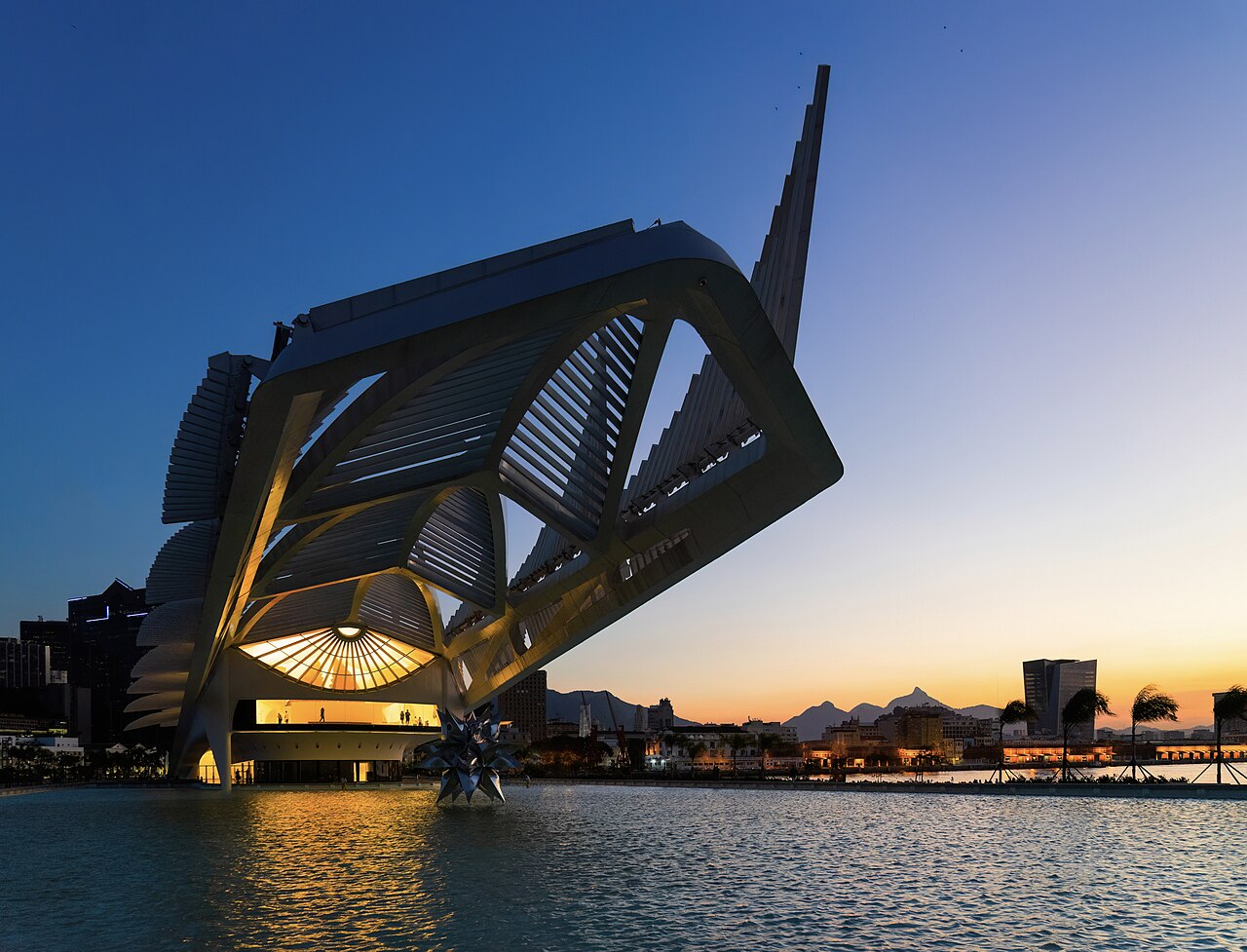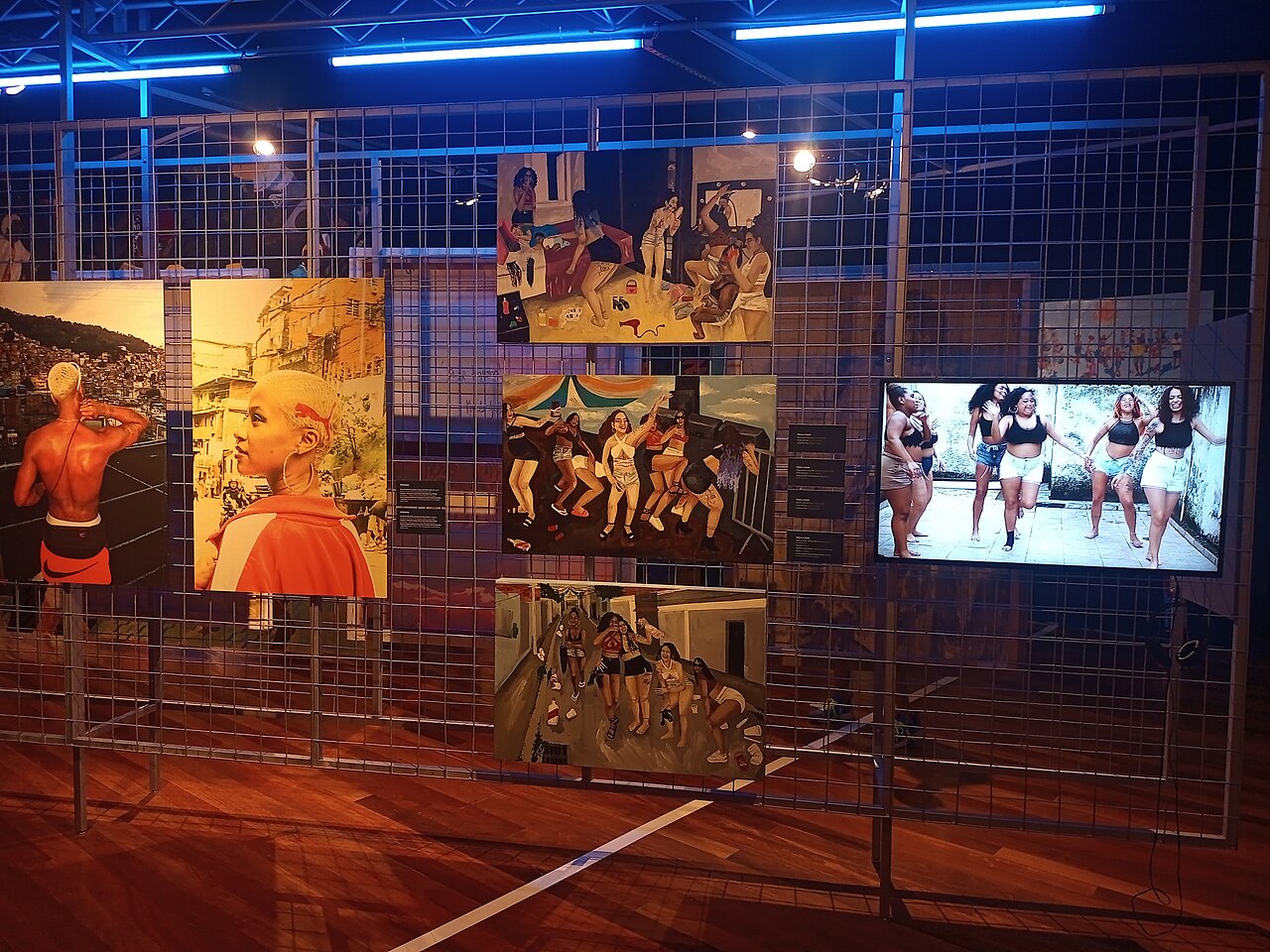
The Museu de Arte do Rio, known by its initials MAR (which also means sea in Portuguese), is the museum that explains the city to itself. It opened in 2013 on Praca Maua, the revived square at the heart of the old port, as one of the flagship projects of the Porto Maravilha regeneration that also produced the Museum of Tomorrow across the plaza. The building is part of the attraction. It joins two very different structures: an eclectic palace of the early twentieth century, the Palacete Dom Joao VI, and a plain modernist block that once served as a bus terminal and police building. A suspended, undulating concrete canopy, designed to evoke the surface of the sea, floats over both, and visitors take a lift to the top of the modernist building, cross by a walkway to the palace and work their way down through the galleries. Rather than a permanent display of masterpieces, MAR runs a programme of changing exhibitions that look at the history, culture and people of Rio from many angles: the African heritage of the port district, the favelas, carnival and funk, the landscape and the beaches, colonial maps and photographs, and the work of contemporary Brazilian artists who respond to the city. The quality of the curating is high, the exhibitions are well documented in Portuguese and often in English, and the result is one of the best introductions to Rio beyond the postcard. MAR also runs the Escola do Olhar, an education programme with workshops and talks for schools and the public. The rooftop, with its sweeping canopy, has a view over Praca Maua, the Museum of Tomorrow, the bay and the port, and is one of the best free-feeling moments of a visit. The museum appears regularly in the city's cultural news; in 2026 it took part in the ArtRio fair and has hosted a traveling exhibition from the Sao Paulo Bienal.
Practical details: the official site lists opening from 11am to 6pm with last entry at 5pm, and the museum closed on Wednesdays and open the other days of the week, including Mondays. Tickets cost a modest sum, with half-price concessions for many groups and free entry for others, and on Tuesdays admission is free for everyone. Payment is by card only, at self-service kiosks under the building or online. Check the official site before you go, as hours and free days have changed in recent years.
How to see it: start at the top, enjoy the rooftop view, then work down through the exhibitions in the palace. Give yourself around two hours. MAR pairs naturally with the Museum of Tomorrow, a short walk across Praca Maua, though doing both properly is a long day of museums; many visitors choose one per day. The Boulevard Olimpico along the waterfront, with its giant street murals, and the Little Africa district around Pedra do Sal are within walking distance, and the VLT light rail connects Praca Maua with the rest of the centre and the Santos Dumont airport.
Who it suits: travellers who want to understand Rio rather than just see it, art lovers, and anyone with a rainy day to fill. The changing programme means repeat visitors usually find something new. Children may enjoy the rooftop and some of the more visual shows, but the museum is aimed at adults and teenagers.
What to expect
The experience
Changing exhibitions about the history and culture of Rio, in a palace and a modernist building joined under a wave-shaped canopy, with a rooftop viewpoint over the port.
Best time
Tuesday for free entry (expect more visitors), or a quiet weekday morning soon after opening. Closed on Wednesdays.
How long
About two hours.
Tips
Bring a card, as cash is not accepted. Take the lift to the top first and walk down. Combine with the Museum of Tomorrow or Little Africa, and use the VLT light rail to get around the centre.
Quick picks
- Best for
- Understanding Rio through its own art, history and culture.
- Families
- Best for teenagers; younger children usually enjoy the rooftop more than the galleries.
- Couples
- A relaxed afternoon of art, then the waterfront murals and a drink near Praca Maua.
- Pair with
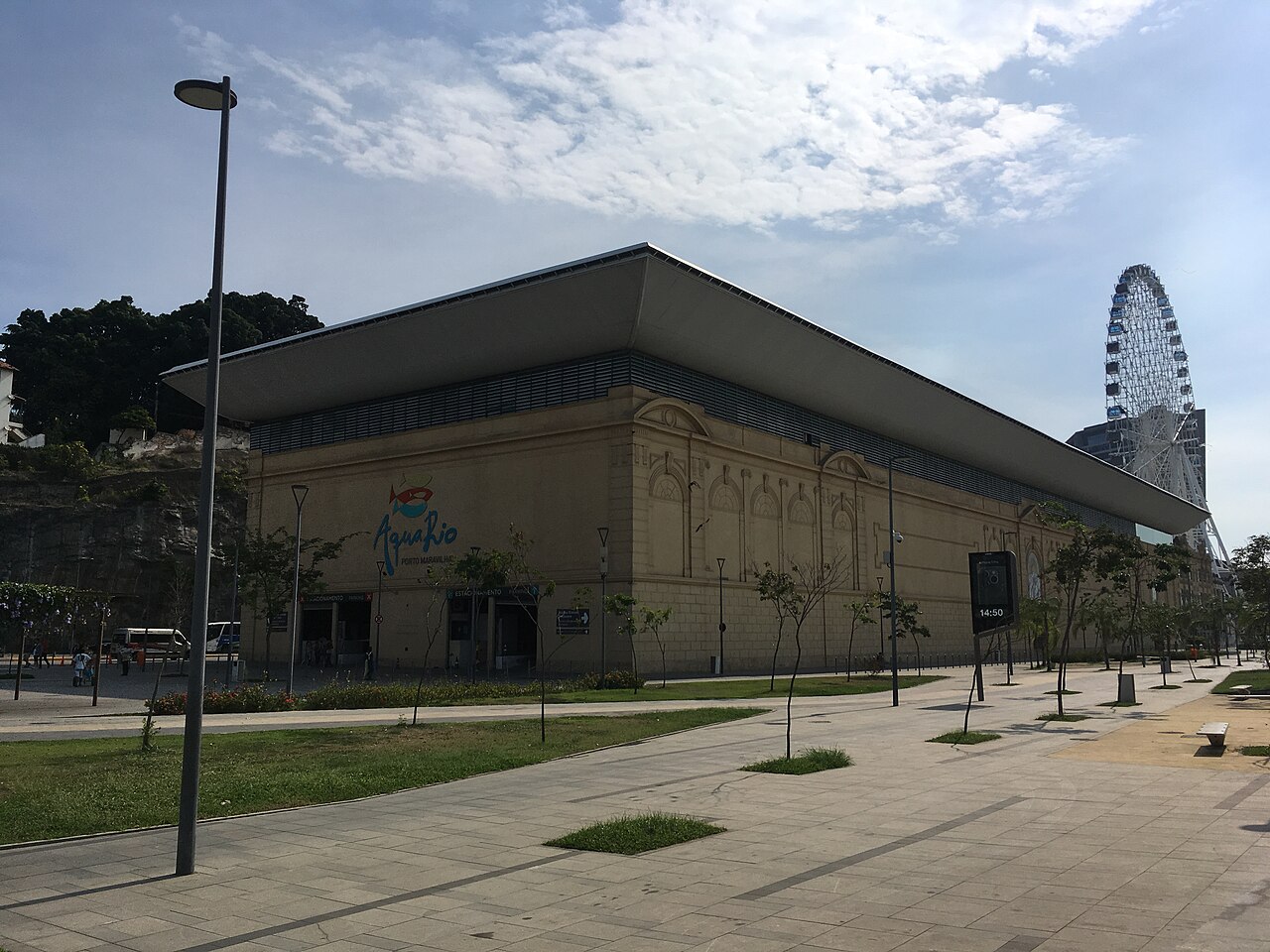
- The Museum of Tomorrow, Little Africa and Pedra do Sal, or the AquaRio for families.
- Time needed
- Two hours.
Good questions
When is the Museu de Arte do Rio free?+
Entry is free for everyone on Tuesdays, according to the museum's official site. Many groups, including children under five and people over sixty, are free on other days too, with proof.
What day is MAR closed?+
Wednesday. The museum opens on the other days of the week, including Mondays, from late morning to early evening.
Can I pay with cash?+
No. The museum accepts credit and debit cards only, at the self-service kiosks or online.
What is the difference between MAR and the Museum of Tomorrow?+
MAR is an art museum focused on Rio's history and culture; the Museum of Tomorrow, across Praca Maua, is a science museum about the future of the planet. They make a good pair, though both together are a long day.
How do I get to MAR?+
It is on Praca Maua in the port district. The VLT light rail stops nearby, and a ride-hailing car from the South Zone takes around twenty to forty minutes depending on traffic.