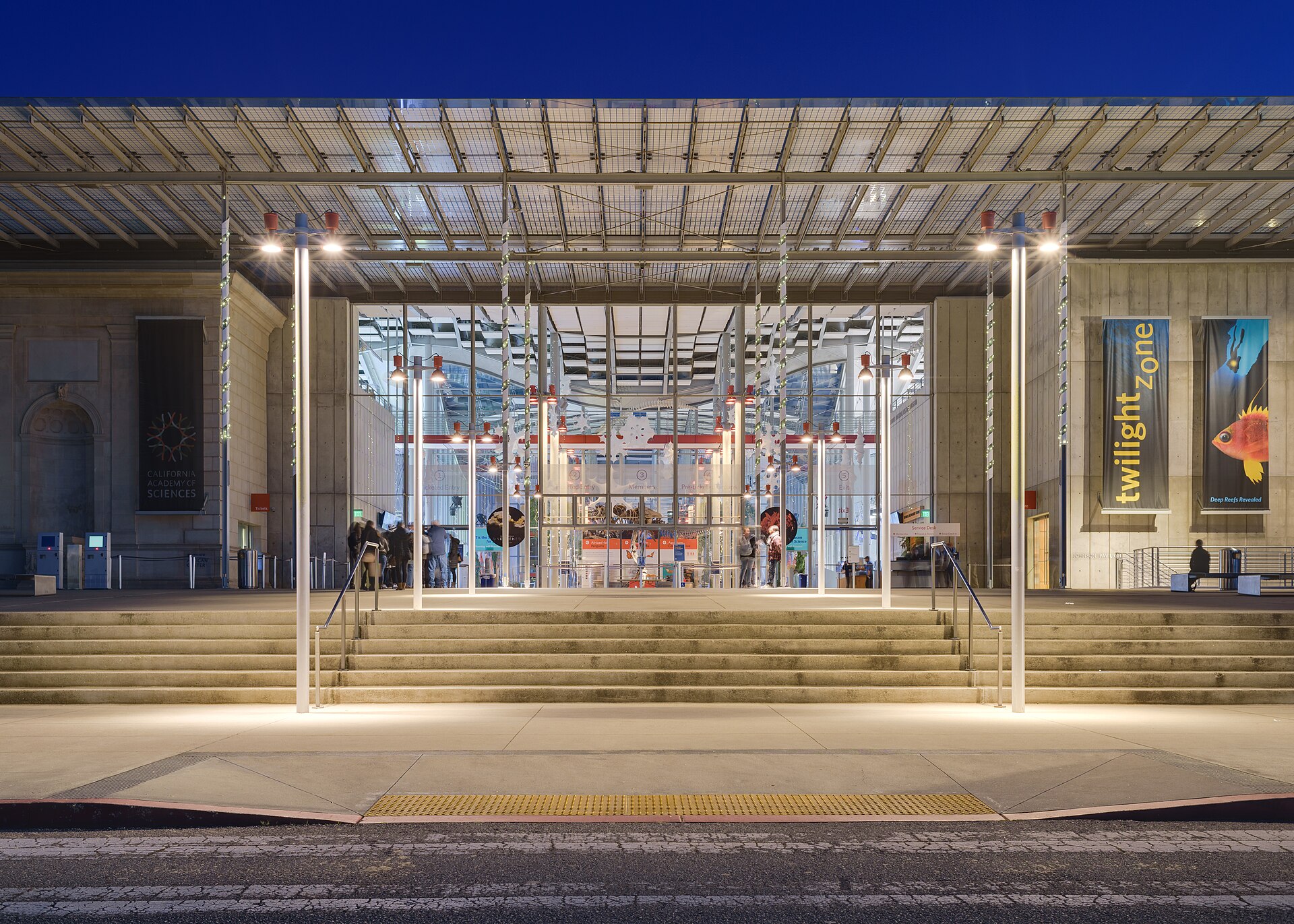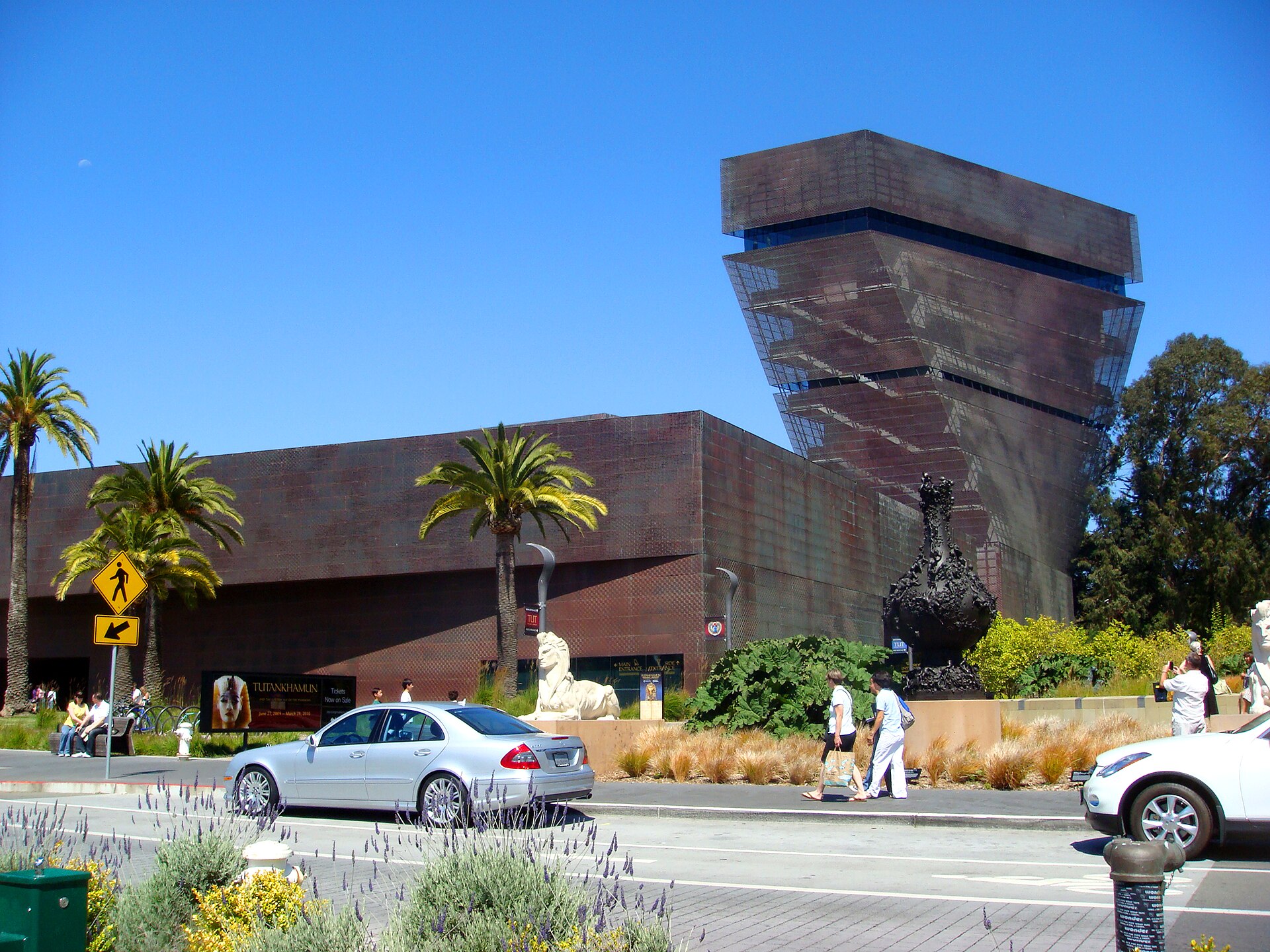
The Japanese Tea Garden is Golden Gate Park's oldest soul and the country's most venerable Japanese garden: built for the 1894 Midwinter Exposition and cultivated for decades after by the Hagiwara family (Makoto Hagiwara's story is the garden's — his family built and tended it for 30 years until internment took them in 1942; the plaque tells it, and the city's eventual apology is part of the visit's weight) across five hillside acres of the form's grammar: the Drum Bridge's near-vertical full-moon arc (climbed by every generation's photos — the garden's icon), the five-tiered pagoda and temple gates from the 1915 exposition, koi ponds threaded by stepping stones, the Zen garden's raked rectangle, dwarf-pine and maple compositions a century in the shaping, the bronze Buddha (1790, Gifu-cast) in his clearing, and the hillside Tea House where the ritual completes: jasmine or sencha with the garden below — and the fortune cookie's origin story served alongside (the Hagiwaras introduced them here in the 1890s via the Japanese senbei tradition; the garden's claim to the invention is the strongest anywhere, told with appropriate pride). The craft: March-April's cherry weeks are the city's hanami (crowds to match — weekday mornings), the before-10am local tradition (early entry historically discounted or free — check current rules) rewards with near-private paths and the fog's soft light, and the pairing is built into the park: the de Young's tower across the plaza, the Academy of Sciences beyond, the botanical garden adjacent — the garden is the museum day's exhale. An hour at stroll pace; the drum bridge's climb is the memory.
The Hagiwara story deserves the telling
Makoto Hagiwara — the immigrant gardener-entrepreneur who shaped the exposition plot into a true Japanese garden — lived on-site with his family, expanded it to its mature form, introduced the fortune cookie to America from the garden's tea service, and was expelled with his family to internment in 1942 (the garden was renamed "Oriental Tea Garden," his house demolished — the shame is documented); the family was never allowed back as stewards, the 1952 name restoration and later plaques acknowledge the wrong, and Tanforan-to-Topaz survivor descendants attended the city's formal apology decades on. Walking the garden with the story in hand changes it from pretty to profound — the century-old pines are the family's living work.
The garden's inventory rewards the slow lap: the Drum Bridge (taiko-bashi — the full-moon circle completed by its reflection; climb it, carefully, as every generation has), the pagoda-and-gate ensemble (1915 Panama-Pacific survivors), the Lantern of Peace (1953, gifted by Japanese children), the 1790 Buddha, the Zen garden's karesansui rectangle, and the spring sequence — magnolias into the March-April cherry crescendo (the city's hanami, with the crowds and the weekday-morning counsel that implies). The Tea House's service (tea, mochi, the cookies with their origin story) completes the form; the gift pagoda's trinkets fund the garden.
Practicals and fit
The park's museum concourse (between the de Young and the academy — garage and Muni serve it), modest admission with resident-and-early-hour traditions (check current), an hour's stroll, mornings for calm and light. Fit: every Golden Gate Park day's gentle hour, couples (the bridge and tea), families (koi, stepping stones, cookies), hanami pilgrims in the cherry weeks — and anyone ready to hold the garden's beauty and its history in one visit.
What to expect
The experience
Five hillside acres of the 1894 original — drum bridge, pagoda, koi stepping stones, the Zen rectangle — with tea and origin-story fortune cookies at the hillside teahouse.
Best time
Before 10am for near-private paths (early-hour traditions — check current rules); March-April for the city's hanami; fog's soft light flatters it.
How long
An hour at stroll pace, tea included.
Tips
Climb the drum bridge carefully — every generation has. Read the Hagiwara plaque; the garden's history is part of its weight. The de Young tower rises across the plaza for the view after.
Quick picks
- Best for
- The park museum day's exhale — America's oldest Japanese garden, an hour of composed calm.
- Families
- Koi, stepping stones, the bridge climb, and cookies with a story — the under-tens' favorite garden.
- Couples
- Tea above the maples in the fog's light — the park's most romantic hour.
- Pair with
- The de Young and Academy flank it; the botanical garden adjoins — the concourse composes the day.
- Time needed
- One stroll-paced hour, early if possible.
Good questions
Is it really where fortune cookies started?+
The strongest claim anywhere — the Hagiwara family introduced them from the Japanese senbei tradition via the garden's tea service in the 1890s, decades before Chinatown bakeries scaled them.
Who were the Hagiwaras?+
The family who built and tended the garden for 30 years until internment expelled them in 1942 — the plaque tells the story, the city's formal apology acknowledges the wrong, and the century-old pines are their living work.
When do the cherries bloom?+
March into April — the city's hanami, gorgeous and crowded; weekday mornings thread it best.
Can we climb the drum bridge?+
Carefully and traditionally — the near-vertical taiko-bashi has been every generation's photo since 1894; the steps are the handholds.
How does it fit the park day?+
Between the de Young and the Academy on the museum concourse — the hour of composed calm the big institutions need beside them.