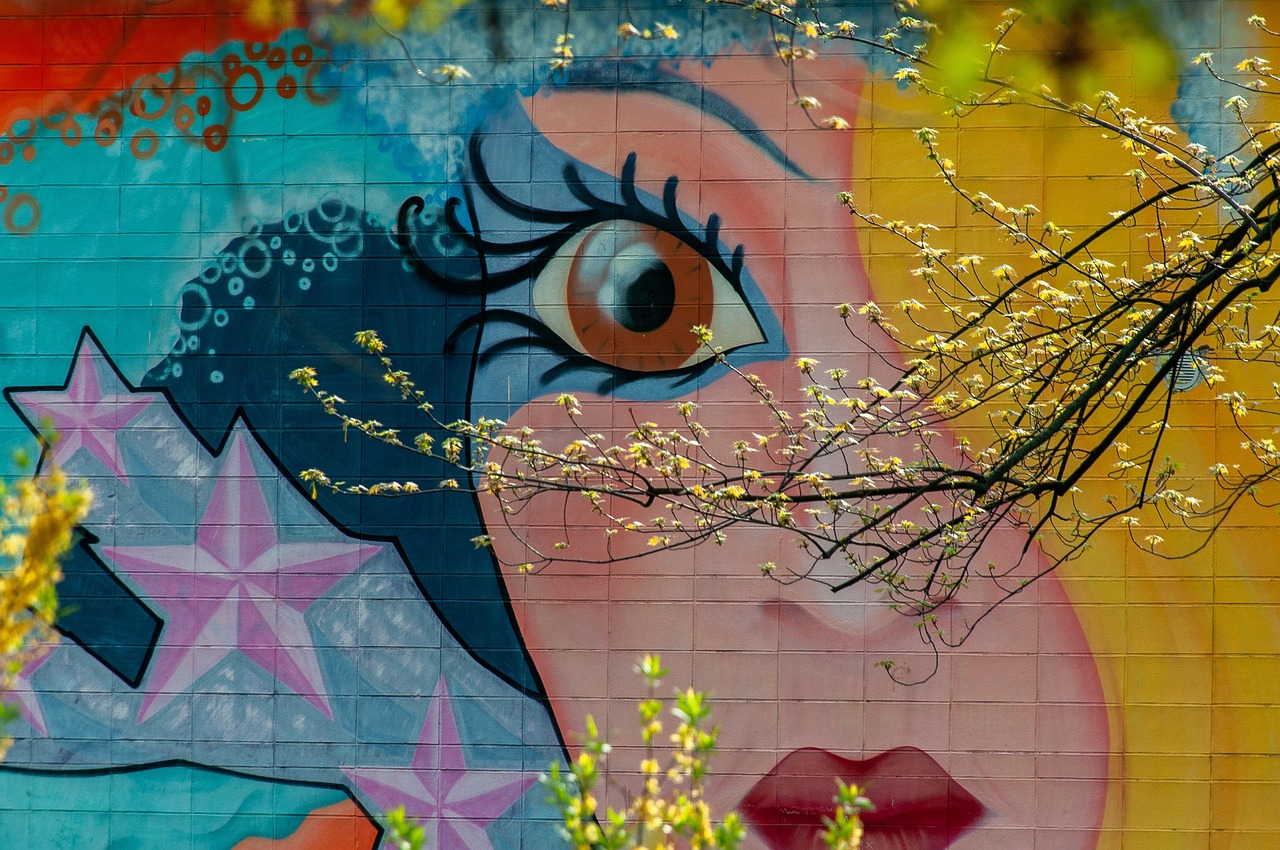
The Mission's murals are San Francisco's great free art experience and a living tradition, not a decoration: hundreds of works concentrated in the city's oldest neighborhood, descended directly from the Chicano mural movement of the 1970s — when Mission artists took Diego Rivera's San Francisco legacy (three Rivera murals survive in the city; the Mission painters claimed the lineage deliberately) onto garage doors and alley fences as community voice: immigration, labor, faith, protest and celebration painted at street scale and renewed generation by generation. The route sorts into anchors: Balmy Alley (24th Street's block-long alley, the tradition's ground zero — fence-to-fence murals since 1972, the oldest continuously painted muraled block in the city, where PLACA's 1984 Central America protest cycle set the political register and new works keep layering in); Clarion Alley (off Valencia between 17th and 18th — the punk younger sibling, CAMP-curated since 1992, turning over constantly: activist, queer, raw, repainted — no two visits match); the Women's Building's MaestraPeace (18th near Valencia — the four-story masterpiece painted by seven women muralists in 1994, goddesses and healers wrapping the whole building: the movement's cathedral wall); the 24th Street corridor itself (the Calle 24 Latino Cultural District — murals threading the taquerias and panaderias from Mission Street to Potrero, with the BART plaza's works and side-street surprises); and Precita Eyes Muralists (the 24th Street community arts center that painted or guided much of it — their weekend walking tours, led by working muralists, are the version with the stories: artist, context and controversy wall by wall; modest fees fund new murals, and self-guided maps sell at the center). The craft: pair the art with the eating (the Mission's taqueria tier — the mission burrito was invented blocks away — and 24th Street's panaderia-and-paleta rhythm), weekends for tour schedules, daylight hours for the alleys, and respect as the etiquette: these are working blocks and community statements — photograph the walls, not the residents. Free entirely self-guided; the tour is the upgrade that converts a photo walk into the neighborhood's story.
The lineage deserves the telling
Rivera painted three San Francisco murals in the 1930s-40s and the Chicano movement of the 1970s took the form back to the street — Mujeres Muralistas (the pioneering women's collective) painted Latinoamérica on the Mission's walls in 1974, Balmy Alley's early works followed, and 1984's PLACA project — 36 artists answering US intervention in Central America with a coordinated alley cycle — made Balmy the movement's manifesto. Precita Eyes (founded 1977 by Susan Cervantes, still family-run) institutionalized the tradition without embalming it: community-process murals (neighborhood meetings shape each design), restoration of the classics, and the painting continues — the alley gains and loses works yearly, which is the point: this is a practice, not a museum.
The deeper route for the committed
MaestraPeace's detail (Juana Alicia, Miranda Bergman and five collaborators layered world-culture healers across four stories — the painted hands alone reward binoculars), the 24th Street BART plaza's resistance cycle, Precita Park's edges, the Carnaval mural at 24th and South Van Ness (the neighborhood's festival self-portrait, restored to glory), and Clarion's turnover logic (CAMP curates for social-justice voice over polish — read the walls as the neighborhood's op-ed page). The gentrification tension is painted into the walls themselves — eviction and displacement are recurring subjects, and the murals' survival against the neighborhood's real-estate pressure is part of what the tours explain honestly.
Practicals and fit
24th Street BART lands in the corridor's heart (Balmy two blocks east, Precita Eyes between), Clarion sits off Valencia's restaurant row, all of it free self-guided in daylight, tours weekends-anchored (book the Precita Eyes classic — muralist-led), and the eating pairing is mandatory: the taqueria-and-panaderia tier is the Mission's other great art form. Fit: the foodie-plus-culture day (the chips pair naturally here), first-trip visitors wanting the city beyond the postcards, art travelers (this is a nationally significant mural concentration), and couples on the Valencia-to-24th wander.
What to expect
The experience
The city's largest outdoor gallery on foot — Balmy Alley's tradition, Clarion's turnover, the four-story MaestraPeace — free self-guided, or muralist-led through Precita Eyes.
Best time
Daylight for the alleys; weekends for the Precita Eyes tour schedule; pair with the 24th Street taqueria-and-panaderia rhythm.
How long
Two to three hours with the eating built in.
Tips
Take the muralist-led tour — the stories convert a photo walk into the neighborhood's history. Photograph the walls, not the residents. The Carnaval mural at 24th and South Van Ness is the restored masterpiece many walks miss.
Quick picks
- Best for
- The city beyond the postcards — a nationally significant mural tradition, alive and still painting.
- Families
- Alley scavenger-hunting with paleta stops — street art at kid pace.
- Couples
- The Valencia-to-24th wander — Clarion's walls, MaestraPeace, and the taqueria finish.
- Pair with
- The Mission's taqueria tier (the mission burrito was invented blocks away); Dolores Park uphill for the after.
- Time needed
- One walking-and-eating afternoon.
Good questions
Where do we start?+
24th Street BART — Balmy Alley sits two blocks east, Precita Eyes' center between (maps and tours), and the corridor's murals thread the taquerias the whole way.
What is Balmy Alley?+
The tradition's ground zero — a block-long alley painted fence to fence since 1972, where 1984's PLACA cycle set the political register and new generations keep layering in.
Are the tours worth it?+
The Precita Eyes walks are led by working muralists — artist, context and controversy wall by wall — and the modest fees fund new murals. It is the version with the stories.
What is MaestraPeace?+
The Women's Building's four-story 1994 masterpiece — seven women muralists wrapping the building in world-culture healers and goddesses — the movement's cathedral wall, on 18th near Valencia.
Is it free?+
Entirely, self-guided in daylight — the alleys and corridors are public streets. The guided tour is the paid upgrade, and the taquerias take care of the rest of the budget.