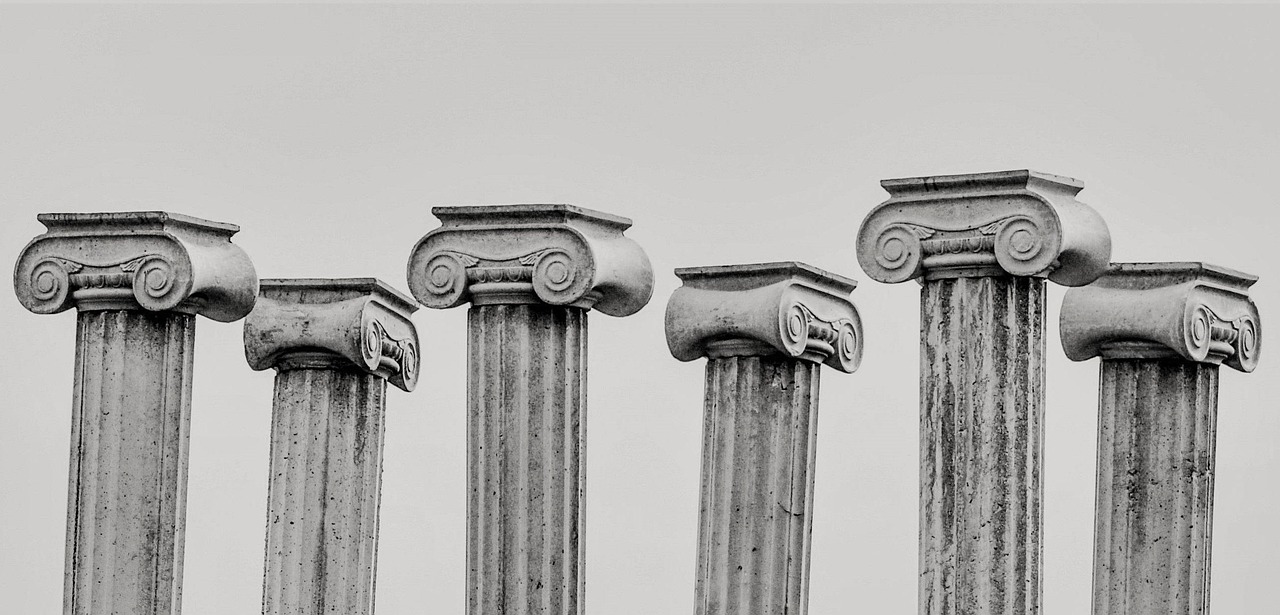
The Palace of Fine Arts is the loveliest thing the city ever decided not to tear down: Bernard Maybeck's centerpiece for the 1915 Panama-Pacific International Exposition — the world's fair that announced San Francisco's resurrection nine years after the earthquake — designed deliberately as a melancholy Roman ruin (Maybeck wanted the mood of a Piranesi engraving: a great rotunda and colonnade decaying nobly beside water, the weeping maidens atop the columns turned inward to mourn) and built, like all the fair, in temporary plaster meant to come down in 1916. The city refused: the Palace was too beloved to demolish, the plaster crumbled romantically for decades (fulfilling the design brief better than intended), and the 1960s rebuilt it permanently in concrete — the only survivor of the fair's dream city still standing on its original site. What stands now is the city's free romantic monument: the 162-foot open rotunda (ochre dome, Roman columns, the acoustics that make every visitor test an echo), the curved colonnade's maiden-topped columns, and the swan lagoon composing the reflection — the most photographed non-bridge frame in San Francisco, which is why wedding parties and quinceañera shoots queue on weekends (the people-watching is part of the visit) and why dawn belongs to photographers getting the mirror-still lagoon. The visit is an unticketed hour: the lagoon loop, the rotunda's echo, the maidens' backstory, resident swans and night herons, and the Marina district around it — Chestnut Street's cafés five minutes east, Crissy Field's bridge-view waterfront five minutes north, the Walt Disney Family Museum and Presidio parklands adjacent west. Evening floodlights turn the dome gold against the dusk — the second-best free night view in the city after the bridge itself.
The 1915 fair deserves the telling
The Panama-Pacific International Exposition filled 635 acres of what is now the Marina with a plaster dream city — the Tower of Jewels hung with 100,000 cut-glass novagems, palaces of industry and horticulture, the first transcontinental phone call demonstrated, aviators looping overhead — all of it deliberately temporary, all of it demolished on schedule except Maybeck's Palace, which the city could not bring itself to lose (a preservation league formed before the fair even closed). The Marina district itself is the fair's footprint: the rubble-filled land became the neighborhood, and the Palace stayed as its improbable Roman heart.
Maybeck's design brief is the visit's secret: he called the mood "modified melancholy" — an old Roman ruin beside water, the sadness of beauty passing — and the details carry it: the weeping maidens atop the colonnade face inward and away (mourning, by design, the fate of all built beauty), the rotunda's murals and friezes run allegories of art's struggle, and the plaster original crumbled so picturesquely that the 1964-75 concrete reconstruction (philanthropist Walter Johnson's crusade) had to engineer permanence into a design about impermanence. The lagoon completes it: a remnant of the old salt marsh shaped into the reflecting pool, home to the swans, herons and turtle sunning that give the loop its wildlife hour.
Practicals and fit
3601 Lyon Street at the Marina's western edge (the 30 and 43 lines; parking along the lagoon honest by SF standards), free and open always outside events (the adjacent theater building hosts its own calendar), an hour's loop, floodlit evenings. Fit: couples categorically (the proposal statistics here are real), photographers at dawn, families (swans and echoes), and every first-trip itinerary threading Marina-to-Presidio — the Palace is the hinge between Chestnut Street brunch and Crissy Field's bridge walk.
What to expect
The experience
Maybeck's deliberate Roman ruin from the 1915 fair — the 162-foot rotunda, weeping-maiden colonnade and swan lagoon — the city's free romantic monument, an unticketed hour.
Best time
Dawn for the mirror lagoon and empty frames; weekends for the wedding-shoot people-watching; floodlit dusk for the gold dome.
How long
An hour's lagoon loop and rotunda echo.
Tips
Look up at the maidens — they face inward, mourning by design. Test the rotunda's echo; everyone does. Crissy Field's bridge-view waterfront is five minutes north for the pairing.
Quick picks
- Best for
- Couples — the proposal statistics are real, and dusk floodlights seal it.
- Families
- Swans, herons, turtles and the echo game — the gentlest free hour in the Marina.
- Couples
- The rotunda at floodlit dusk — the city's second-best free night view after the bridge.
- Pair with
- Walt Disney Family Museum and the Presidio west; Chestnut Street cafés east; Crissy Field north.
- Time needed
- One golden hour.
Good questions
Why does it look like a ruin?+
By design — Maybeck wanted "modified melancholy," an old Roman ruin beside water, and the maidens atop the colonnade face inward to mourn the fate of built beauty. The 1915 fair's plaster original then crumbled right on theme.
Is it really from 1915?+
The design and site are — the sole survivor of the Panama-Pacific fair's dream city — but the beloved plaster was rebuilt permanently in concrete in the 1960s after the city refused for decades to let it go.
Does it cost anything?+
Nothing — the rotunda, colonnade and lagoon are free and open always; only the adjacent theater building tickets its own events.
When should photographers come?+
Dawn — the lagoon goes mirror-still and the frames empty; floodlit dusk is the other keeper, with the dome gold against the blue hour.
What else is nearby?+
The whole Marina-Presidio hinge — Chestnut Street's café row east, Crissy Field's bridge-view flats north, the Disney Family Museum and Presidio parklands west.