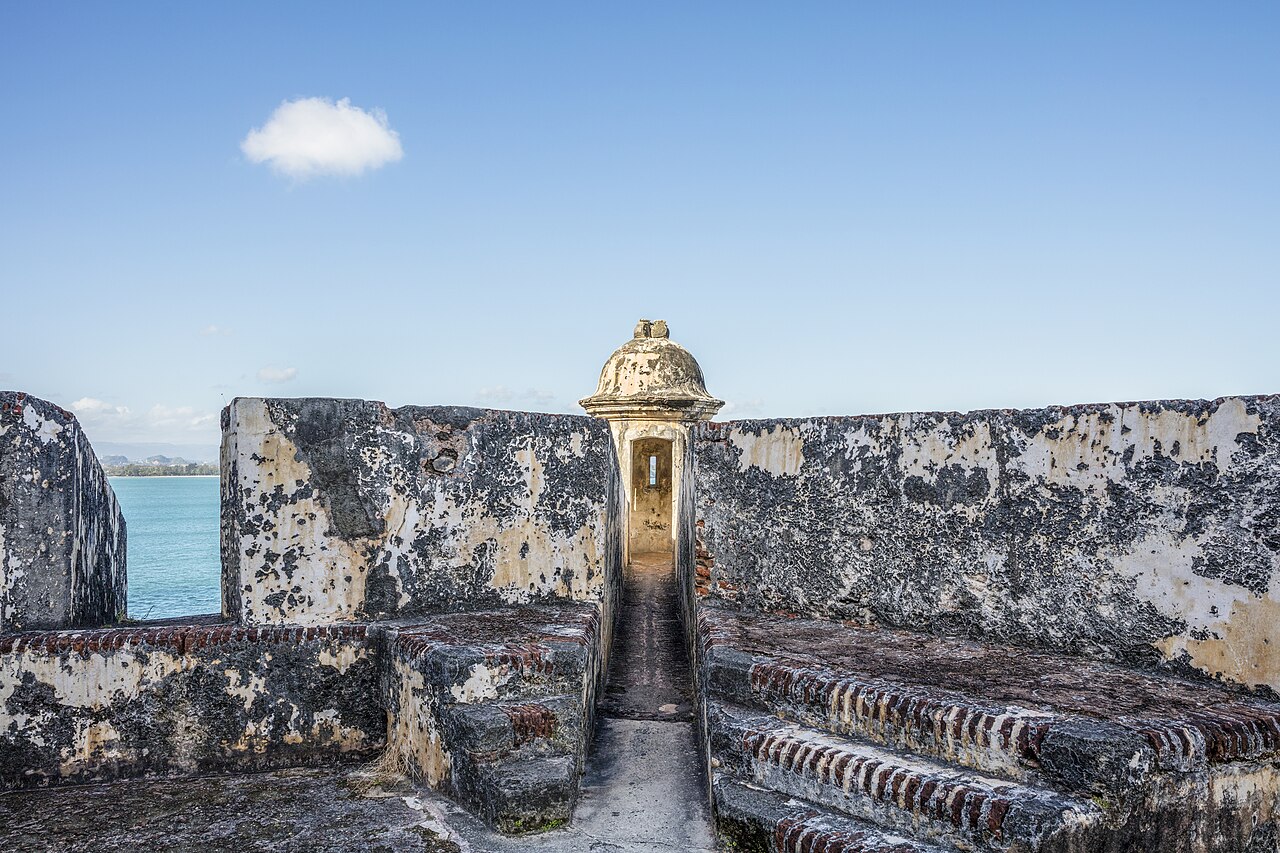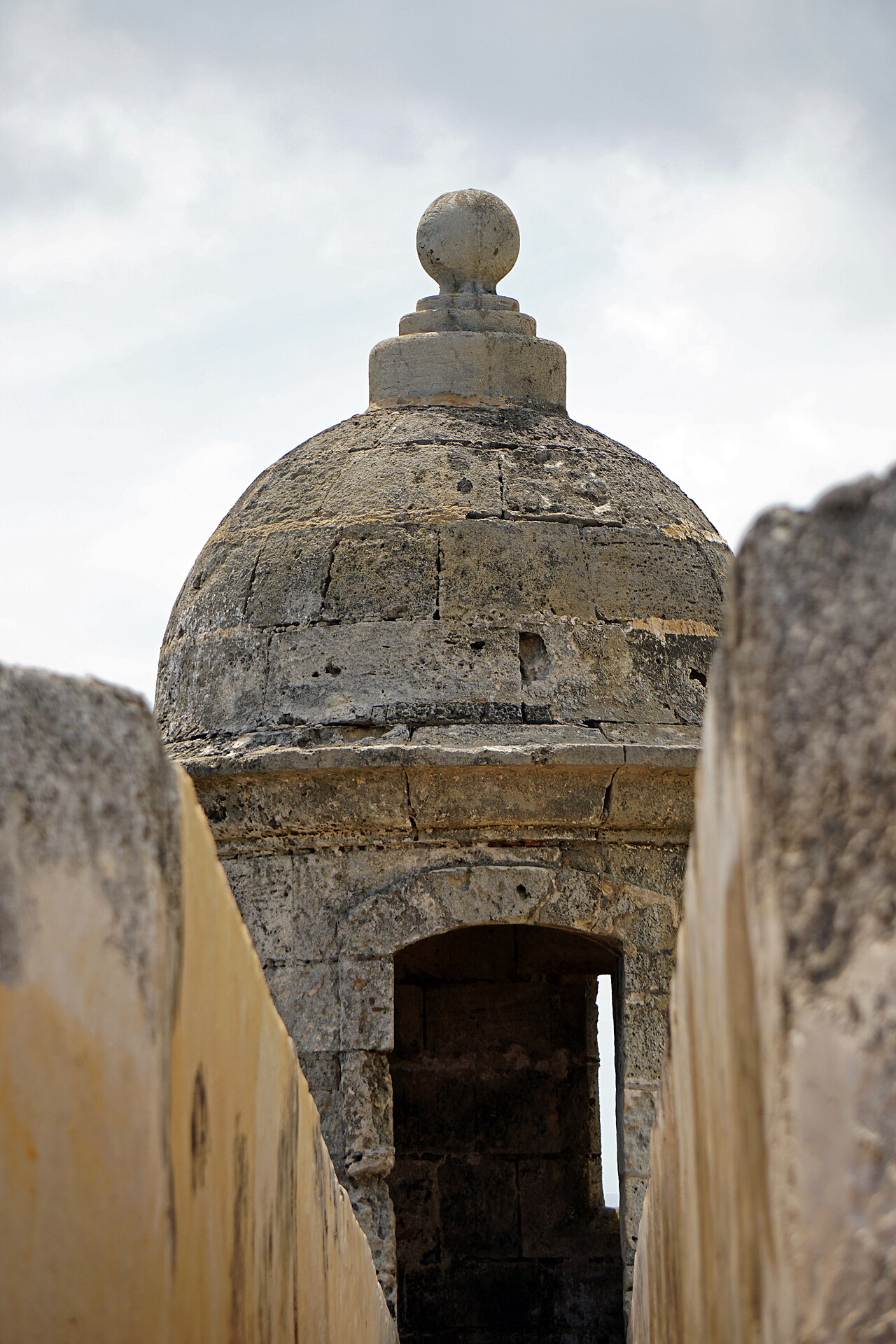
If El Morro watches the sea, San Cristobal watches the land. Begun in the seventeenth century and expanded through the eighteenth, it sits on the eastern side of the old town and is often described as the largest fortification the Spanish built in the Americas. Instead of a single tower, it is a system: outworks, bastions, a dry moat, hidden tunnels, a main plaza with barracks and the high Cavalier battery that dominates the skyline. Visitors enter through a long ramp and explore interconnected levels with thick stone walls, casemates and sentry boxes that look straight out over the Atlantic and down onto the surrounding streets. It is part of San Juan National Historic Site, managed by the National Park Service, and it is a UNESCO World Heritage property together with El Morro and the old city walls. The fort has fewer crowds than El Morro, so it is a good place to take your time, read the exhibits and find cool corners in the tunnels on a hot day.
San Cristobal was built to solve a problem. San Juan sits on an island, but an enemy could land elsewhere and attack overland, so the Spanish added a second great fortress and linked it to the city walls and El Morro in one defensive ring. The design is a textbook of military engineering, with each new layer of outworks built to catch attackers in crossfire. You can still trace the logic as you walk, from the outer defenses to the underground passages that let soldiers move unseen between positions. Informative panels and ranger-led programs explain the sieges and daily life of the garrison.
Most visitors treat the two forts as a pair, and the National Park Service describes both as open daily from nine in the morning to five in the afternoon. Many people do El Morro first for the sea views, then walk through Old San Juan to San Cristobal in the afternoon. A guided walking tour that covers both fortresses is the efficient choice if you only have a day, and Viator lists a well-reviewed Old San Juan two-castle walking tour. Confirm what the tour includes, particularly whether fort admission is part of the price, before booking.
Tips for a good visit: wear comfortable shoes, because the stone ramps and tunnels are uneven and slippery after rain. The upper levels have almost no shade, so bring water and sun protection. The tunnels are cool and darker than they look in photos, so a phone flashlight helps. Plan about an hour and a half, and leave time to walk the old city wall from here toward the San Juan Gate and the Paseo de la Princesa. As with El Morro, check the park service site for alerts on the day you plan to go.
What to expect
The experience
A self-guided visit through a multi-level fortress of tunnels, bastions, dry moats and gun batteries, with optional ranger programs or a guided walking tour.
Best time
Mornings are cooler and quieter, and the late afternoon light on the stone is excellent, though the fort closes in the evening.
How long
Allow about an hour and a half for the fort and more if you add the old city wall walk.
Tips
Bring a phone flashlight for the tunnels, water for the exposed upper levels, and sturdy shoes for wet stone.
Quick picks
- Best for
- History lovers, families with curious kids and anyone who wants fewer crowds than El Morro.
- Families
- The tunnels and moat feel like an adventure, though some drops and steep ramps need watching.
- Couples
- Pair the sunset light on the walls with a stroll into the old town and a dinner on a quiet side street.
- Pair with
- El Morro, the Old San Juan walking tour and the San Juan Gate.
- Time needed
- About two hours with the wall walk.
Good questions
Is San Cristobal worth visiting if I have seen El Morro?+
Yes. It is a different kind of fortress, built for land defense, with tunnels, a moat and a large central plaza, and it is usually calmer than El Morro.
Are both forts covered by one ticket?+
The National Park Service manages both and sells fees at its San Juan National Historic Site fees page. Check the current rules there, because fees and pass details can change.
What are the opening hours?+
The park service lists both forts as open daily from 9:00 am to 5:00 pm. Check the alerts page for closures on the day you plan to visit.
How long does the walk between the two forts take?+
About twenty minutes through the old town along Calle del Cristo and Calle San Francisco, mostly gentle. A free trolley or a taxi can skip the walk.
Is it suitable for children?+
Yes, children enjoy it, but hold hands near steep drops and keep an eye on small ones in the tunnels. Strollers are difficult on the ramps.