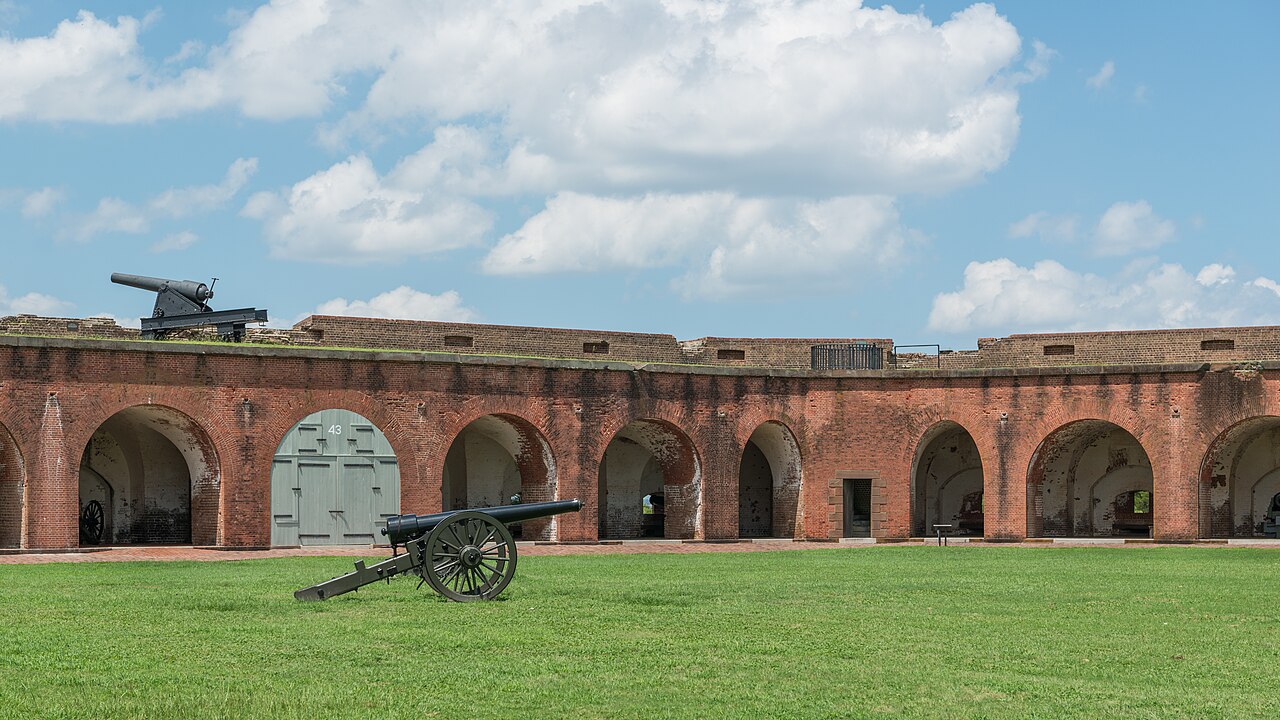
Fort Pulaski is the most dramatic history stop in the Savannah area and one of the best-value national park units in the South: a massive brick fortress rising from the marsh on Cockspur Island, about fifteen miles east of the city on US Highway 80, on the way to Tybee. Built over nearly two decades from 1829 — a young Lieutenant Robert E. Lee worked on the site early in his engineering career — it was designed as an unbreachable masonry fort, with walls more than seven feet thick, a wide moat and a drawbridge. In April 1862 Union forces on Tybee Island tested that idea with new rifled cannon, and the walls failed: after about thirty hours of bombardment, shells had opened the southeast angle and threatened the powder magazine, and the Confederate garrison surrendered. The lesson, that rifled artillery made brick forts obsolete, echoed through military engineering worldwide, and the scarred walls still show the shell craters. The fort's later chapters are just as striking — in April 1862 the Union commander David Hunter issued an order declaring enslaved people at the fort and on Cockspur Island free, months before the national Emancipation Proclamation, and in 1864-65 the casemates held Confederate officers known as the Immortal Six Hundred. Inside the walls you walk the parade ground, the vaulted casemates and the ramparts, with rangers and living-history volunteers adding demonstrations on many days. Outside, short trails cross marsh and maritime forest to a view of the little Cockspur Island Lighthouse. Fit: history buffs, families with school-age children, and first trips heading to Tybee who want a big story on the way.
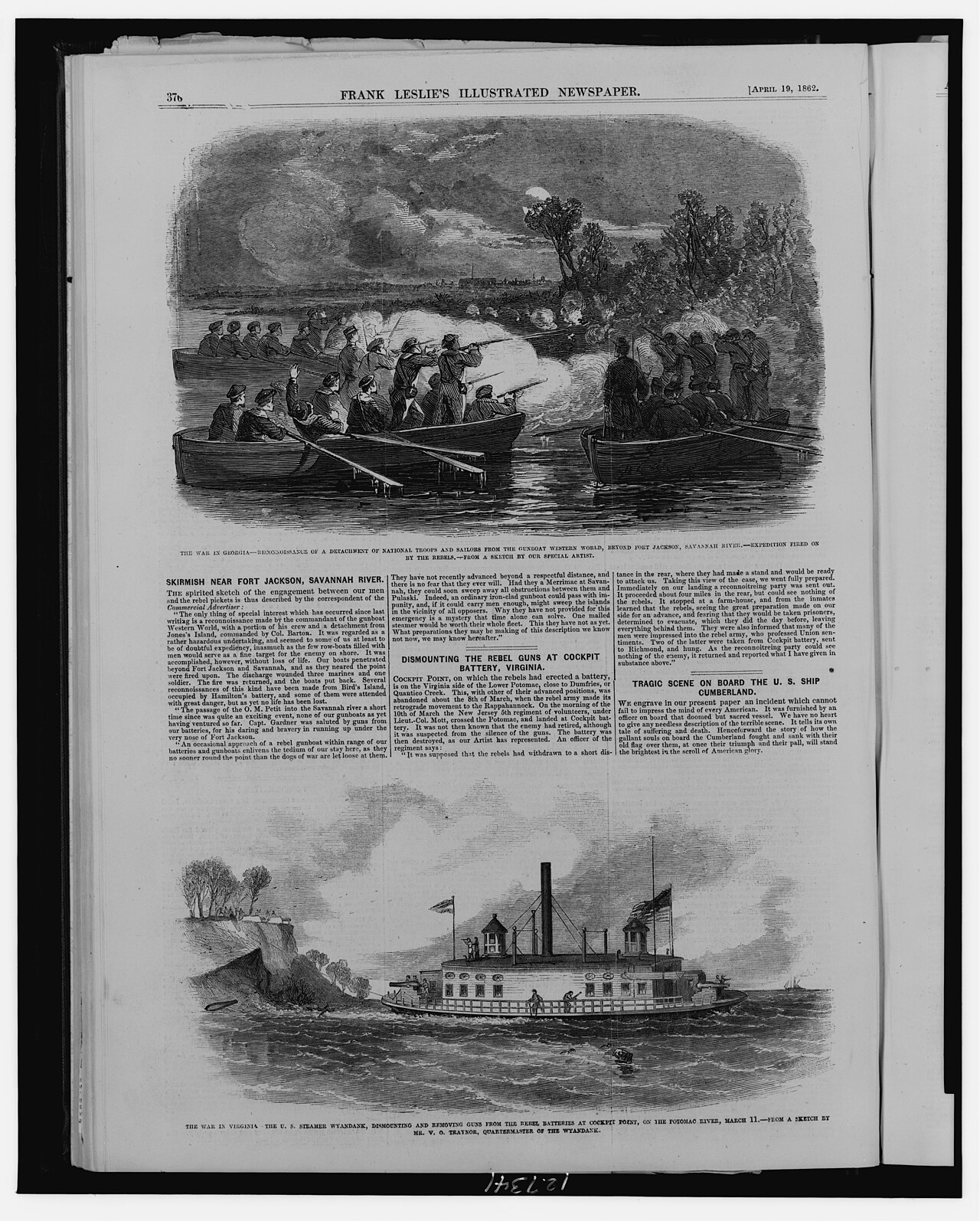
The siege is the story to know before you walk in. Fort Pulaski guarded the river approach to Savannah, and when Union troops occupied Tybee Island in early 1862 they placed batteries, including the new rifled guns, more than a mile away across the water — a distance the fort's designers had considered safe. The bombardment began on April 10, 1862; by the next afternoon the rifled shells had punched through the southeast wall and were striking near the magazine, and Colonel Charles Olmstead surrendered rather than risk the garrison. Standing at that repaired angle today, you can see the patched brickwork and the pockmarked walls, and the rangers' explanation of why a fort built to last centuries became obsolete in a day and a half is one of the best short history lessons in the region. The Immortal Six Hundred chapter is quieter and darker: Confederate officer prisoners held in the casemates in the winter of 1864-65 under harsh retaliatory conditions, an episode the park interprets with care; a Veterans Day living-history program in November 2026 is devoted to the soldiers and prisoners of that winter.
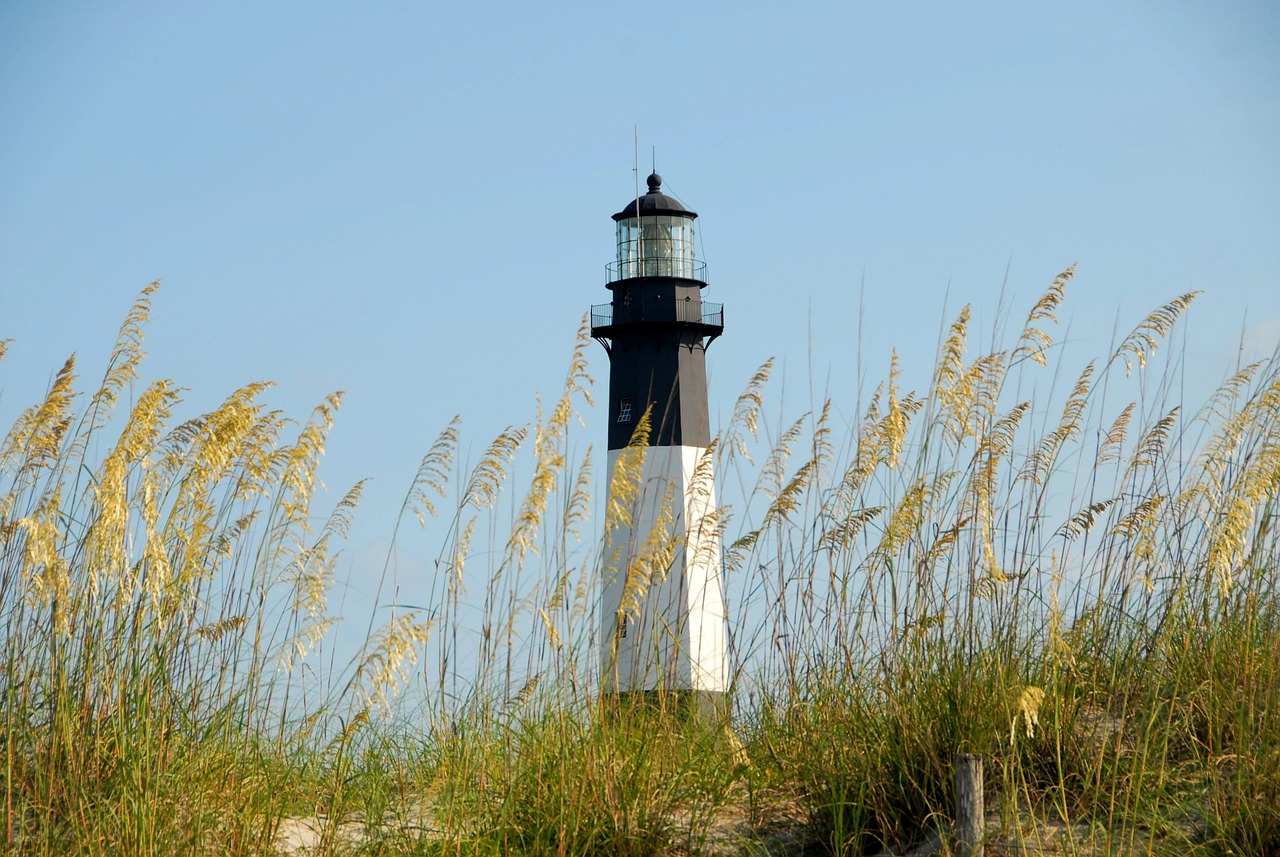
The setting is half the pleasure. The approach crosses salt marsh where egrets and herons work the creeks, and the fort's moat, drawbridge and demilune earthworks make the arrival feel like entering a castle. Short trails lead from the visitor area through the marsh and woods toward the Savannah River's mouth, with a view of the small Cockspur Island Lighthouse standing on its oyster bank; across the highway, the McQueen's Island Trail, a flat rail-trail along the marsh, is a favorite for an easy bike ride or walk. Container ships headed for the port pass close by on the river, which children find almost as exciting as the cannon.
Practicals: the park grounds are open daily from morning to late afternoon, with the historic fort itself closing a little earlier; an entrance fee applies per person for visitors sixteen and older, payable in person or through Recreation.gov, and America the Beautiful passes are honored. Plan ninety minutes to two hours, more for the trails and any ranger program. There is little shade on the parade ground and ramparts, so go early in summer, bring water and wear sun protection, and use insect repellent on the marsh trails. Fort Pulaski sits on the only road to Tybee, so it pairs naturally with this guide's Tybee Island entry — fort in the morning, beach and seafood after — and with Old Fort Jackson for travelers building a three-fort history day.
What to expect
The experience
A self-guided masonry fort with moat, drawbridge, casemates and ramparts, plus ranger programs, living-history days and short marsh trails to a lighthouse view.
Best time
Morning, before the heat builds on the open parade ground; shoulder seasons for the trails without mosquitoes.
How long
Ninety minutes to two hours, longer with the trails or a ranger talk.
Tips
Find the repaired southeast angle to see where the walls failed. Bring water, sunscreen and bug spray. Stop on the way to Tybee and save the beach for the afternoon.
Quick picks
- Best for
- Civil War and military-engineering buffs, and anyone driving out to Tybee.
- Families
- Excellent — a real moat and drawbridge, cannon, vaulted casemates and ships passing on the river.
- Couples
- A big-sky marsh setting and a gripping story, then sunset on Tybee down the road.
- Pair with
- Tybee Island for the afternoon; Old Fort Jackson for a forts-of-Savannah day.
- Time needed
- Two hours, fifteen miles east of downtown.
Good questions
Why is Fort Pulaski famous?+
In April 1862 Union rifled cannon breached its thick brick walls in about thirty hours, proving that masonry forts could no longer withstand modern artillery. The damage is still visible on the walls.
Is there an entrance fee?+
Yes, a per-person entrance fee applies for visitors sixteen and older, and America the Beautiful passes are accepted. You can pay in person or buy a site pass on Recreation.gov.
How long should I spend there?+
Ninety minutes to two hours for the fort and visitor area, plus time for the marsh trails or a ranger program.
Is it worth visiting with kids?+
Yes. The moat, drawbridge, cannon and vaulted casemates make it one of the most exciting history sites in the area for children, and the scale is manageable.
Can I combine it with Tybee Island?+
Easily — the fort is on US Highway 80, the only road to Tybee. Visit in the morning, then continue to the beach and lighthouse for the afternoon.