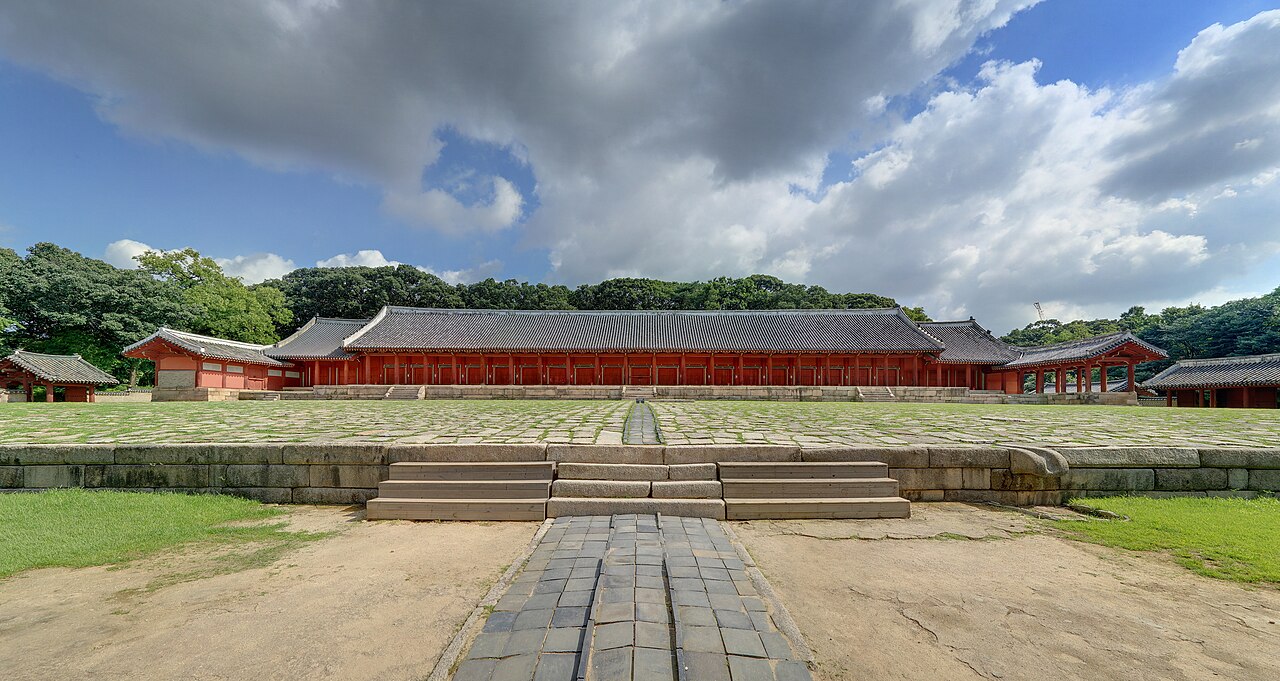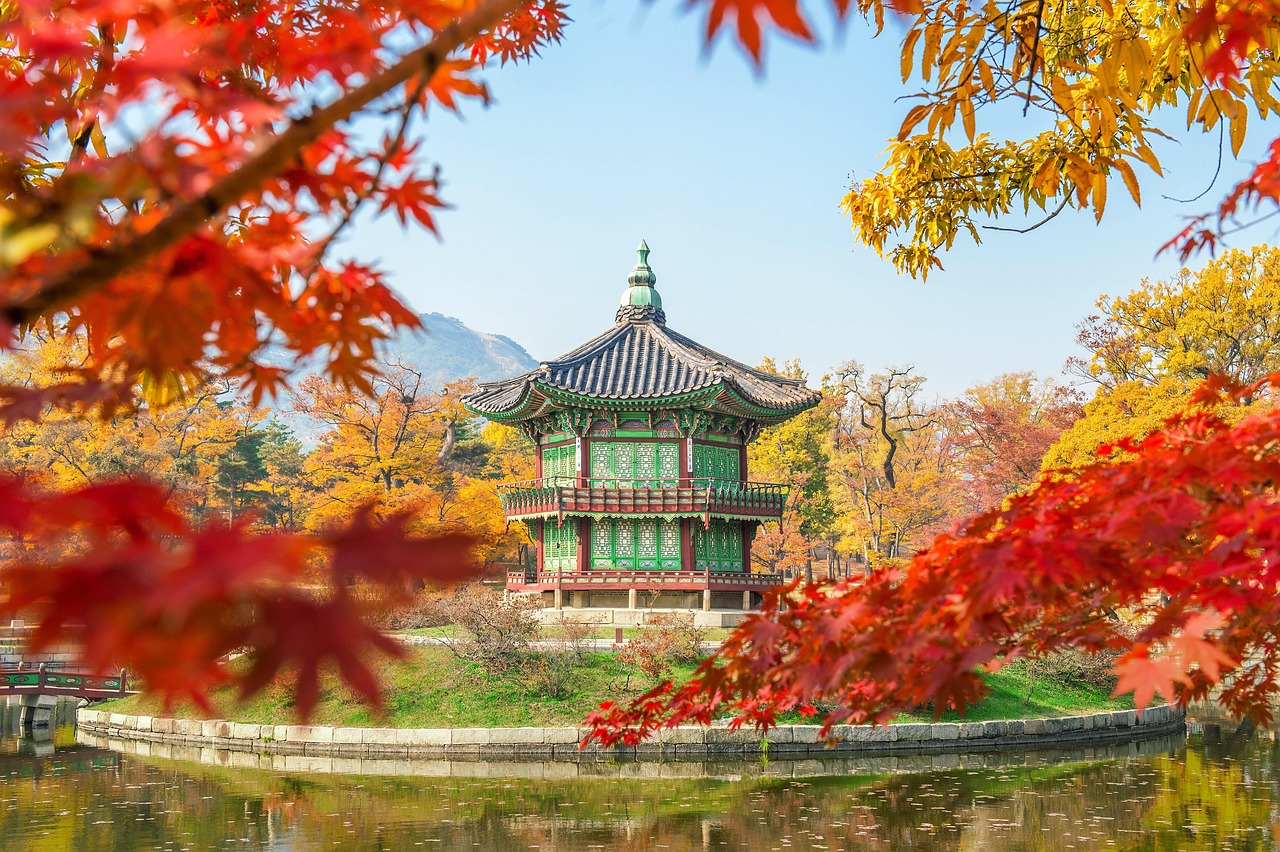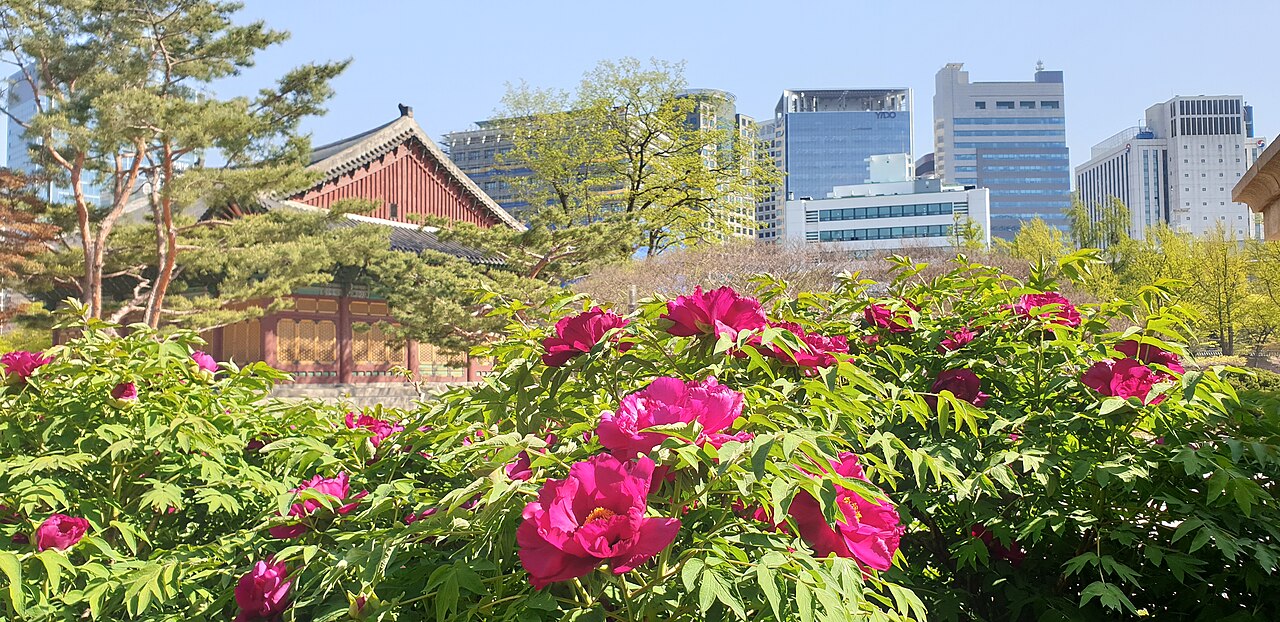
Deoksugung is the smallest of Seoul's five grand palaces and, for many visitors, the most surprising. It sits right in the middle of the modern city, across the road from City Hall and Seoul Plaza, and it tells the story of the dynasty's last, turbulent chapter. King Gojong moved here in the 1890s and in 1897 declared the Korean Empire, making the palace the seat of an emperor who was trying to modernize his country while Japan and the Western powers circled. The result is a palace unlike any other in Korea. Traditional halls such as Junghwajeon, the throne hall with its stone ranks of court officials, stand within a few steps of Seokjojeon, a grand neoclassical stone building with columns and a pediment, completed in 1910 and now housing a museum of the Korean Empire period. Between them is Jeonggwanheon, a pavilion that blends hanok and Western elements, where Gojong is said to have enjoyed coffee — the palace calls it the first cafe in Korea. Gojong died here in 1919, and the national mourning that followed helped spark the March First independence movement, so the palace carries real historical weight beneath its charm. The grounds are compact and pleasantly walkable, with a lotus pond, old trees and the Daehanmun gate facing the street. In front of that gate the royal guard changing ceremony is staged several times a day except Mondays, a colorful re-enactment with drums, banners and costumed guards that is free to watch from the plaza. A branch of the National Museum of Modern and Contemporary Art occupies one of the stone buildings, so a palace visit can easily include an exhibition.
What sets Deoksugung apart in practice is its hours. The palace stays open until nine in the evening, with last entry an hour earlier, which makes it the easiest palace to fit around a busy day and the best for a night visit: the halls are softly lit, the stone buildings glow, and office workers from the surrounding district stroll the paths after work. Admission is a nominal fee of the kind charged at all the royal palaces, it closes on Mondays, and it is included in the palace free-entry periods the heritage authorities announce from time to time. Visitors wearing hanbok that meets the palace dress criteria are also admitted free.
Allow time for the surroundings. The Deoksugung Stonewall Walkway, which runs along the palace's southern wall, is one of the most romantic streets in Seoul, shaded by ginkgo trees that turn gold in autumn, and it leads into the Jeongdong neighborhood, where Korea's earliest Western-style buildings cluster: old legation sites, the red-brick Jeongdong Church and Jungmyeongjeon, the library pavilion where the 1905 protectorate treaty was forced on the empire. The Seoul Museum of Art is a few minutes away, and Seoul Plaza in front of City Hall hosts an ice rink in winter and events through the year.
City Hall Station on Lines 1 and 2 is beside the main gate. Gyeongbokgung and Gwanghwamun Square are a ten- to fifteen-minute walk north, the Cheonggyecheon stream starts a few blocks east, and Myeongdong and Namdaemun Market are just south, so Deoksugung fits easily into a day in the downtown core. Many visitors use it as the final palace of a long first day — Gyeongbokgung in the morning, Bukchon and Insadong in the afternoon, and Deoksugung after dark.
What to expect
The experience
A compact walled palace mixing traditional throne halls with Western-style stone buildings, a museum of the Korean Empire, an art museum branch and a gate ceremony outside.
Best time
Late afternoon into evening, when the palace is lit. Autumn for the ginkgo-lined Stonewall Walkway.
How long
An hour inside the palace, longer with the museum and Jeongdong walk.
Tips
Closed Mondays. Check the guard ceremony times before you go. Book ahead if you want to enter the Seokjojeon interior, which can run on reservations. Combine with the Stonewall Walkway and Jeongdong.
Quick picks
- Best for
- An evening palace visit and the dramatic story of the Korean Empire.
- Families
- Kids love the guard ceremony at the gate; the grounds are small enough for little legs.
- Couples
- The lit palace and the Stonewall Walkway make a classic Seoul evening stroll.
- Pair with
- Gyeongbokgung, Cheonggyecheon Stream, or Myeongdong for dinner.
- Time needed
- One to two hours.
Good questions
What are Deoksugung's opening hours?+
It opens from 9am to 9pm, with last entry at 8pm, and is closed on Mondays. Those late hours make it the best palace for an evening visit.
When is the changing of the guard?+
The royal guard ceremony takes place in front of Daehanmun gate several times a day except Mondays. Check the official schedule, as times can change with weather and season.
What is Seokjojeon?+
A neoclassical stone palace completed in 1910 for Emperor Gojong. It now houses a museum about the Korean Empire, with restored interiors; entry to the interior can require a reservation.
Is Deoksugung worth it if I have seen Gyeongbokgung?+
Yes. It is smaller but completely different in character, mixing Western and Korean architecture and telling the story of the dynasty's final decades.
How do I get there?+
City Hall Station on Lines 1 and 2 is next to the main gate, Daehanmun.