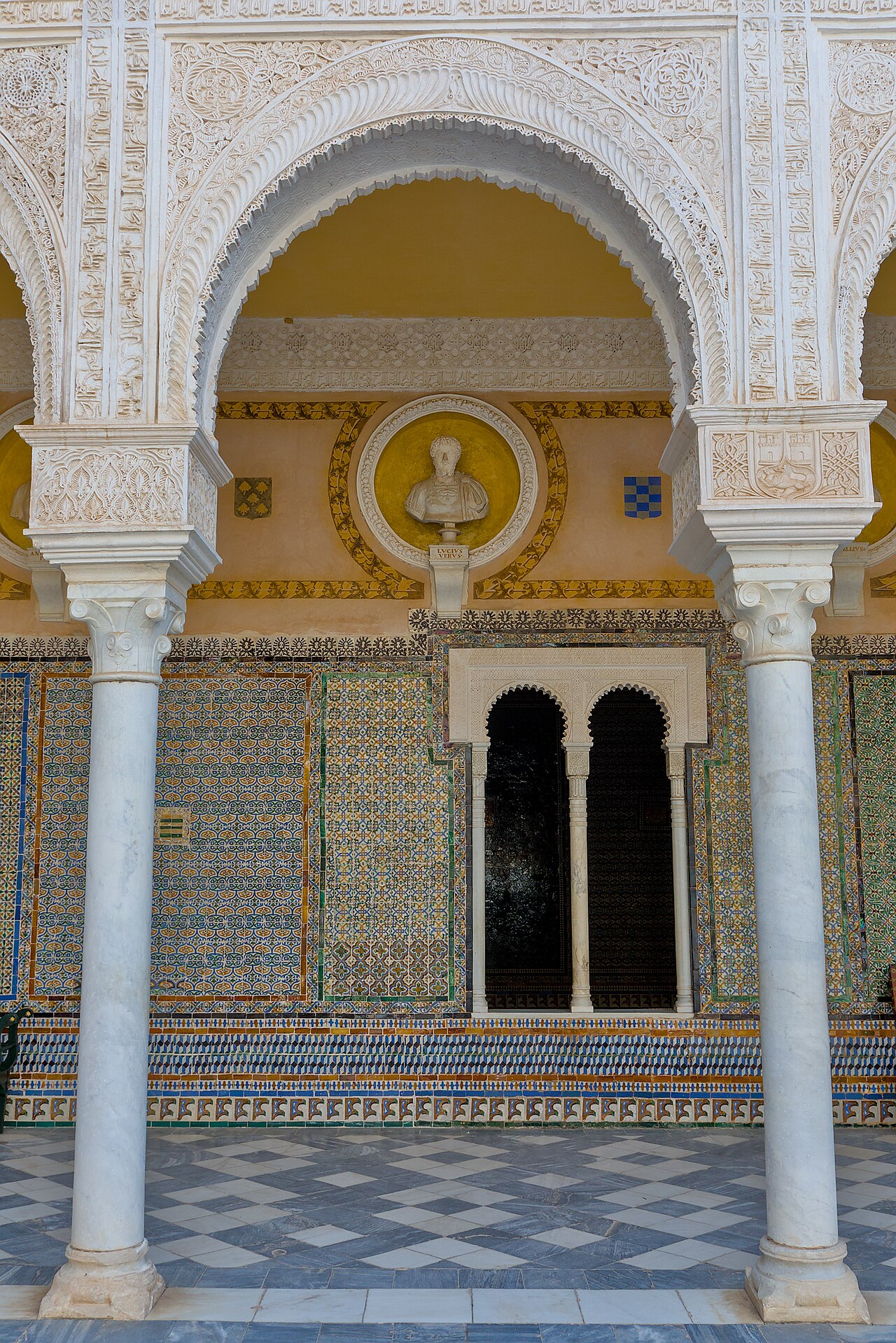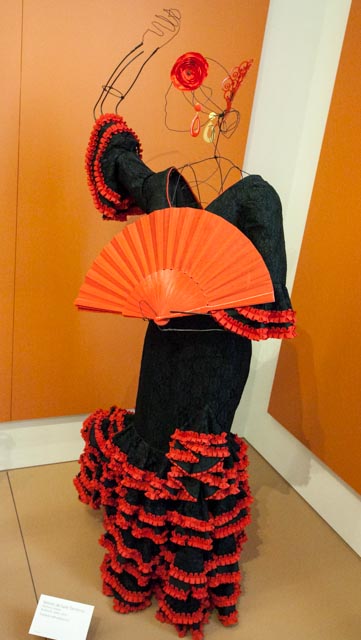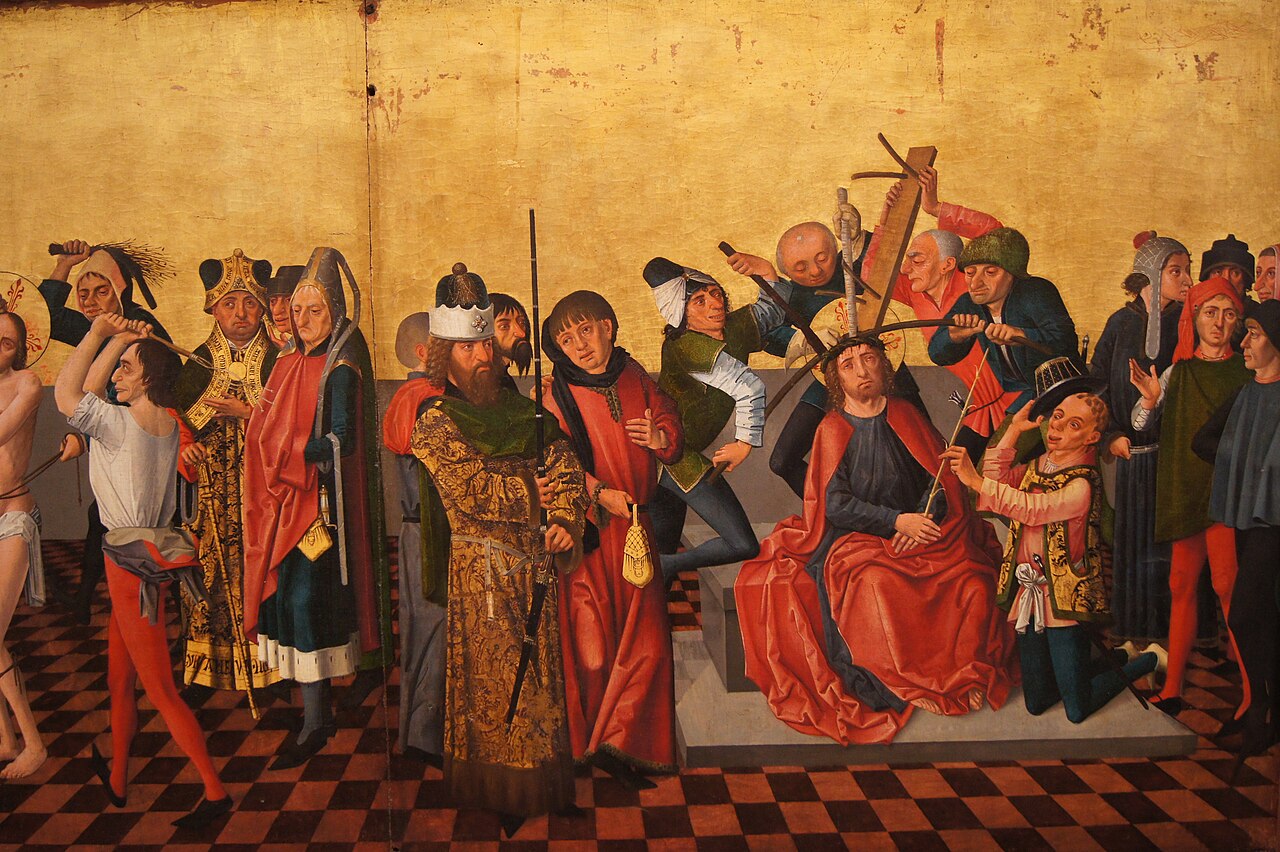
The Palacio de las Dueñas is the most personal of Seville's great houses, and for many visitors it is the surprise of the trip. Built between the fifteenth and sixteenth centuries in the Gothic-Mudéjar style, it has belonged for centuries to the House of Alba, one of the oldest and grandest noble families in Spain, and it still feels like a home rather than a museum. Its most famous modern resident was Cayetana Fitz-James Stuart, the eighteenth Duchess of Alba, a much-loved and much-photographed figure in Spanish life, who adored Seville, married here and spent her last years in the palace; her presence is everywhere, in the photographs, the flamenco dresses, the bullfighting posters and the Holy Week mementos that sit alongside Old Master paintings and Roman marbles. The house is also a shrine of Spanish poetry. Antonio Machado, one of the great poets of the twentieth century, was born here in 1875, when his family rented a dwelling within the palace precinct, and the opening line of his poem Retrato, which remembers a Seville patio and a bright orchard where the lemon tree ripens, is a description of the Dueñas garden; a plaque at the entrance quotes it. What you see: a sequence of patios and gardens with orange and lemon trees, palms, fountains and cascades of bougainvillea; a main courtyard with Mudéjar arches and plasterwork; a small chapel; and reception rooms filled with furniture, tapestries, ceramics, azulejos and art spanning some five centuries, the accumulated taste of a family that has collected since the Middle Ages. It is smaller and calmer than the Alcázar, and the combination of architecture, gardens and real family life is unique in the city.
The visit is self-guided with an audio guide app, or with a live guide in English, French or Spanish; the linked Tiqets page offers both, plus a combined guided tour with the Casa de Pilatos for a palace half-day. Allow an hour to an hour and a half. The route covers the ground-floor rooms, the patios and the gardens, and there is a café-shop at the end. Opening hours are generally longer from Tuesday to Sunday than on Monday, when the palace closes earlier, so check the day before you plan around it. Photography without flash is usually allowed, and the gardens are at their best in spring, when the orange blossom, the azahar, perfumes the whole city, and in the soft light of late afternoon.
Why it is worth a ticket: if the Casa de Pilatos shows you how a Renaissance nobleman built, Dueñas shows you how an aristocratic family has actually lived over five hundred years, with all the accumulated layers of taste, devotion and sentiment. The Duchess's own rooms, with their mix of grand portraits and personal souvenirs, are touching, and lovers of Spanish poetry will feel the presence of Machado in the garden. It is also a good choice on a busy day, when the Alcázar queues are long, because it rarely feels crowded.
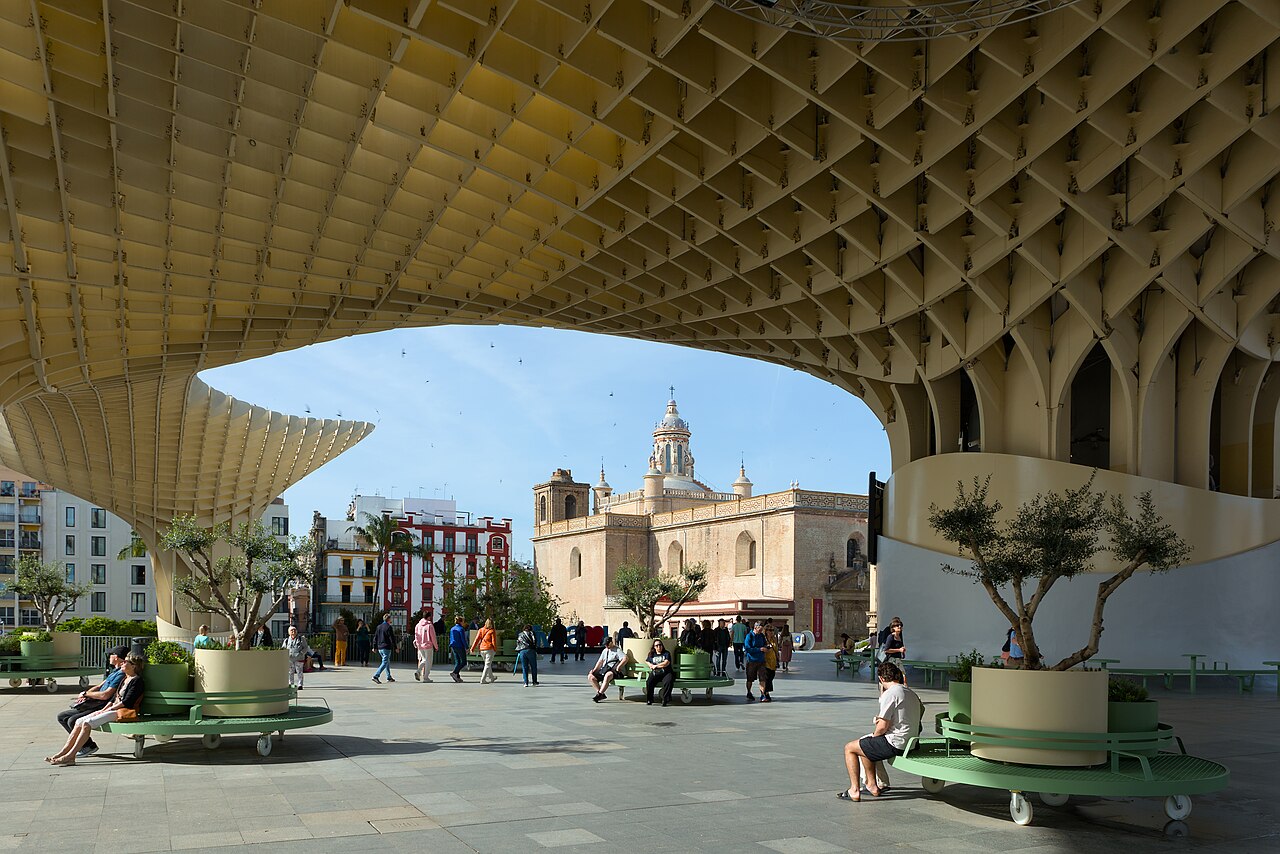
Getting there: the palace stands on the Calle Dueñas, a quiet street in the northern part of the old town, about five minutes on foot from the Setas de Sevilla and fifteen from the Cathedral. Combine it with the Setas, the Church of El Salvador and the Casa de Pilatos for a day of palaces and patios away from the Santa Cruz crowds, and finish with tapas around the Plaza de la Encarnación or the Calle Regina, one of the liveliest small streets in the city for food and wine.
What to expect
The experience
A visit to the patios, gardens, chapel and reception rooms of a noble palace still owned by the House of Alba, with an audio guide app or live guide.
Best time
Spring, when the orange and lemon trees are in blossom, or late afternoon for soft light in the patios. It is calm at most times of day.
How long
An hour to an hour and a half.
Tips
Check the Monday hours, which are shorter. Look for the Machado plaque at the entrance. Combine with the Setas de Sevilla and the Casa de Pilatos.
Quick picks
- Best for
- Travellers who love historic houses, gardens and the stories of the families who lived in them.
- Families
- Manageable for children, with gardens to explore, though the art rooms appeal more to adults.
- Couples
- One of the most romantic patios in Seville, perfumed with orange blossom in spring.
- Pair with
- The Setas de Sevilla, the Casa de Pilatos and tapas on the Calle Regina.
- Time needed
- About an hour and a half including the gardens and shop.
Good questions
Who owns the Palacio de las Dueñas?+
The House of Alba, one of Spain's oldest noble families. It was a favourite home of the eighteenth Duchess, Cayetana, whose personal collections are part of the visit.
What is the Antonio Machado connection?+
The poet was born in the palace precinct in 1875, when his family rented a dwelling there, and he later recalled its patio and lemon tree in the famous opening of his poem Retrato.
Do I need a guided tour?+
No. The audio guide app is enough for most visitors, but a live guided tour adds family stories and can be combined with the Casa de Pilatos.
How long does the visit take?+
About an hour to an hour and a half, including the gardens.
Is it better than the Casa de Pilatos?+
They are different. Pilatos is the finer Renaissance architecture; Dueñas has the lovelier gardens and the more personal, lived-in atmosphere. If you have time, see both.