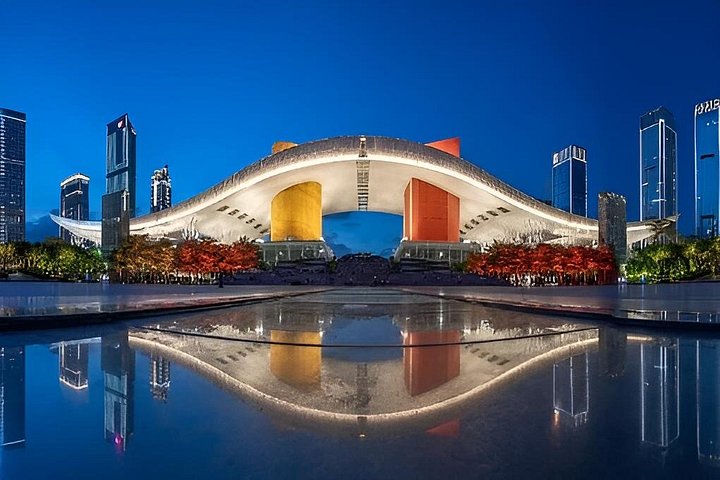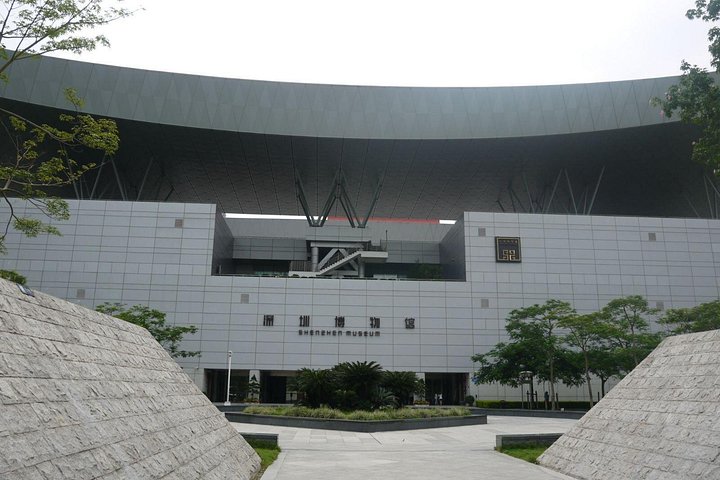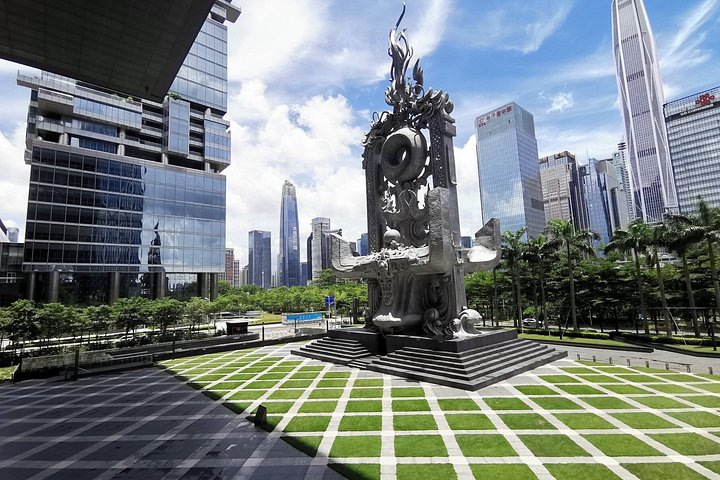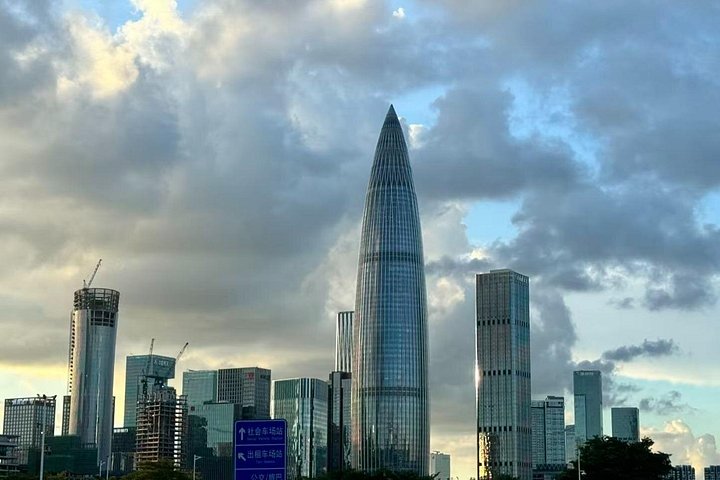
The Shenzhen Museum is the city's main history museum and a rewarding first stop for anyone who wants to understand how a small coastal district became one of China's greatest cities. Its permanent displays range from archaeological finds and local folk culture to the dramatic story of the reform era, when Shenzhen was chosen as a special economic zone and grew at astonishing speed. Photographs, objects, models and short films show life in the fishing villages before the boom, the first factories and the early skyscrapers, and the museum also hosts changing exhibitions on art and culture. It stands in the Civic Center area of Futian district, close to the contemporary art museum, the concert hall and the library, so it fits neatly into a cultural walk. The linked experience is a private history day tour with a driver and a guide, which helps link the museum to the places around the city where this history can be seen on the ground.
How to visit
The museum is close to a metro station near the Civic Center. Entry to many Chinese city museums is free but may require registration or identification, so check current rules and bring your passport. The linked tour is private with a driver and a guide, so read the details for the schedule and inclusions.
What to expect
Galleries arranged by theme and era, with objects and displays that show the full sweep from early settlement to the present. The reform-era section is the most gripping, with photographs and models of the first skyline. English labels are available in many areas, but a guide adds the stories that panels leave out.
Making the most of it
Spend your time on the modern history galleries and pick one or two earlier sections, rather than trying to read everything. Ask your guide about the old villages and forts that survive around the city, and about how the city's population changed. Allow time to see temporary exhibitions, which can be excellent.
Combine it sensibly
Pair the museum with MOCAUP and a walk across the Civic Center area. A private history tour can then take you to old walled sites or villages for contrast. Visitors interested in the border story can add the former customs areas and the Hong Kong crossing points.
Good to know
Museums often close on one weekday, and ticketing or reservation rules can change. Security checks are routine, and large bags may need to be stored. Air conditioning can be strong, so bring a light layer. Confirm all rules before your visit.
Seasons and timing
As an indoor attraction, the museum suits hot or rainy days, and weekday mornings are the quietest. Special exhibitions come and go, so check what is on. Pair the visit with a walk along the Civic Center axis in the late afternoon, when the buildings catch the light and the plazas fill with local families. A short rest in the museum cafe is a good way to absorb what you have seen.
Planning summary. Best for: History fans and first-time visitors who want context. Format: A city history museum with archaeology, folk culture and a vivid reform-era section, visited as part of a private history tour. Best time: Weekday morning, with time for the Civic Center area afterwards. Time needed: Two to three hours in the museum. Tip: Bring identification, check opening days and focus on the modern history galleries. Pairs well with: MOCAUP and the Futian walk.
What to expect
The experience
A city history museum with archaeology, folk culture and a vivid reform-era section, visited as part of a private history tour.
Best time
Weekday morning, with time for the Civic Center area afterwards.
How long
Two to three hours in the museum.
Tips
Bring identification, check opening days and focus on the modern history galleries.
Quick picks
- Best for
- History fans and first-time visitors who want context.
- Families
- Photographs and models hold the interest of older children.
- Couples
- A quiet, air-conditioned afternoon.
- Pair with
- MOCAUP and the Futian walk.
- Time needed
- A morning.
Good questions
What does the museum cover?+
Local archaeology, folk culture and the story of the reform era and the city's rapid growth.
Is entry free?+
Many city museums are free but may need registration or identification. Check current rules before you go.
Is there English information?+
Many areas have English labels, and a guide fills in the stories.
What is nearby?+
MOCAUP, the concert hall, the library and the Civic Center axis.
How long should I allow?+
Plan two to three hours, and more if you add a private tour of other sites.