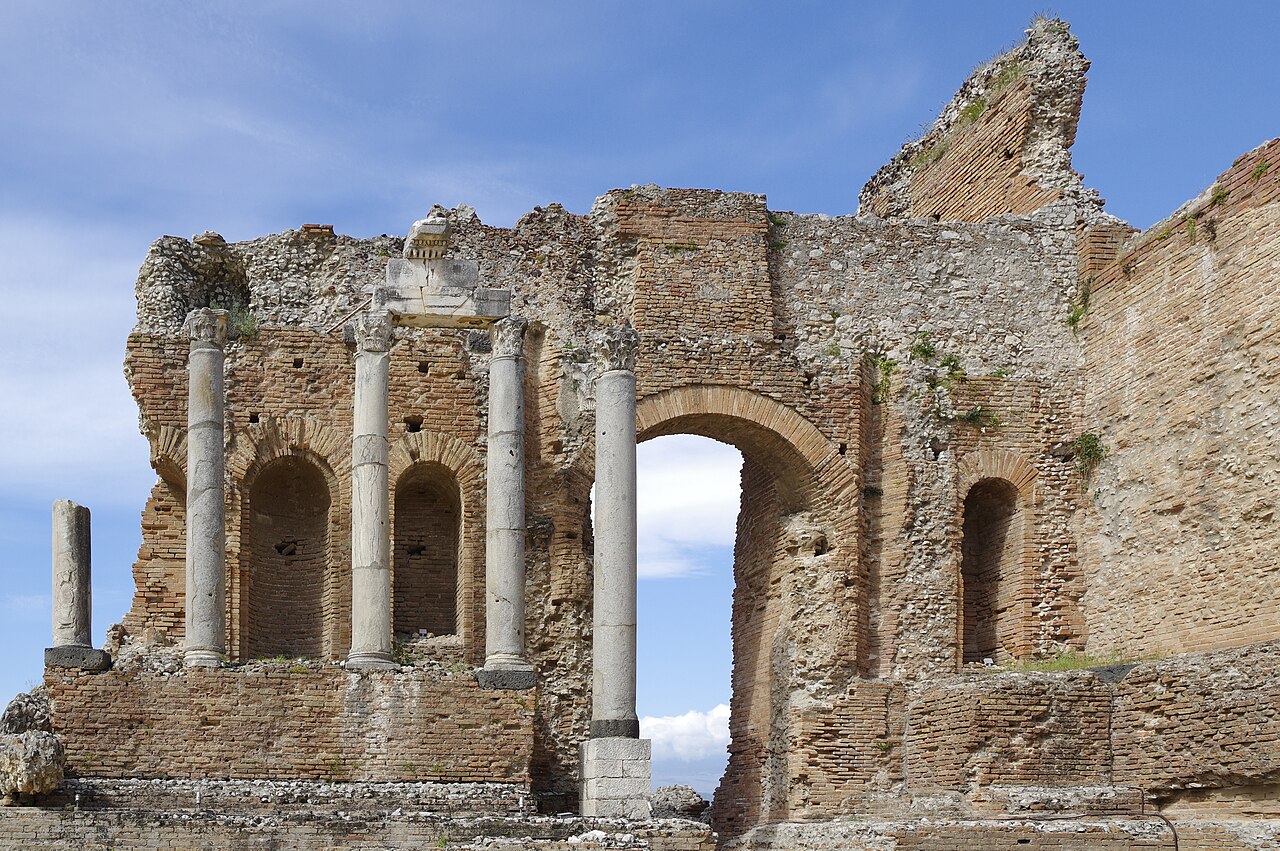
The Teatro Antico di Taormina is the sight that put the town on the grand tour map, and the reason is obvious the moment you walk through the entrance. The semicircle of stone seats looks straight across the bay of Naxos to the snowy-capped, steaming cone of Etna, and on a clear day the coastline curves away to the south for miles. Greek settlers first built the theatre in the third century BC, and the Romans later reworked it, adding the brick arcades and the stage building whose arches still frame the view. It is the second largest ancient theatre in Sicily after Syracuse, and it remains in use, hosting concerts and film events in the warmer months. A visit is short and rewarding. Climb to the top rows for the panorama, walk behind the stage wall to see the surviving Roman brickwork and wander the small antiquarium. Photographers favour early morning, when the light is soft and the crowds thin, though the golden hour before closing is also lovely.
Understanding what you see helps. The Greek theatre was carved into the hillside, with the cavea facing the sea, and the Romans converted it so it could stage gladiatorial shows too, which is why the structure looks more Roman than Greek today. Stand in the middle of the orchestra and speak, and you notice how well the acoustics carry. The stage building, partly collapsed, still holds tall arches that frame Etna like a picture frame.
Practicalities: the theatre sits at the top of Via Teatro Greco, a short uphill walk from Corso Umberto, the main pedestrian street. Buying a timed or skip-the-line ticket in advance saves queueing at busy times, and an audio guide adds context for those who like it. Entry hours change by season and event schedules can close the site early, so check the official hours before you plan around sunset. Wear shoes with grip, since the ancient steps are uneven and can be slippery after rain.
Making the most of it: arrive at opening time in summer to beat the heat and the tour groups, then continue to the Villa Comunale gardens or the Corso for lunch. In shoulder season, an afternoon visit with a late coffee on the terrace nearby is perfectly pleasant. If a concert is on, consider returning in the evening, because hearing music in an ancient theatre is one of Sicily's memorable experiences.
What to expect
The experience
A self-guided visit to the ancient theatre, with climbs to the upper seats, access behind the stage wall and a small antiquarium.
Best time
Early morning for soft light and fewer visitors, or the last hours of the day for warm tones on the stone.
How long
About an hour, a little longer if you add an audio guide and photo stops.
Tips
Book ahead in summer, wear grippy shoes on the uneven steps and check the official hours on event days.
Quick picks
- Best for
- First-timers who want one iconic view of Etna, the sea and ancient stone in the same frame.
- Families
- Easy for most ages, though the steps are uneven; children enjoy testing the acoustics.
- Couples
- Late afternoon light, then a stroll down the Corso for aperitivo.
- Pair with
- A Mount Etna excursion, a walk along Corso Umberto and the Villa Comunale gardens.
- Time needed
- One hour on site, plus the uphill walk from the town centre.
Good questions
Is the Taormina Greek Theatre Greek or Roman?+
Both. The Greeks founded it in the third century BC and the Romans rebuilt it, so the brick structure you see mostly dates from the Roman period.
When is the best time to visit?+
Go early in the morning or near closing time for softer light and fewer people. Midday in July and August is hot and crowded.
Can I see a concert there?+
Yes, the theatre hosts concerts and festival events in the warmer months. Check the official programme and book in advance.
Is it far from the town centre?+
It is a short uphill walk from Corso Umberto, about ten minutes at a relaxed pace. Taxis and minibuses also run in town.
Is the site accessible?+
The ancient steps are uneven, and parts of the theatre are hard for wheelchair users to reach. Ask at the entrance about the accessible route.