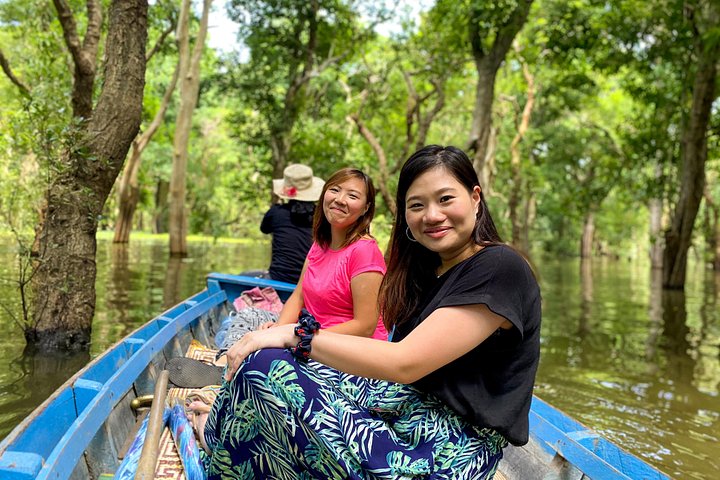
Prek Toal is the wildlife highlight of the Tonle Sap. It is a core zone of the Tonle Sap Biosphere Reserve, a UNESCO-recognised area where the flooded forest and the shallow lake support one of the most important waterbird colonies in Southeast Asia. In the dry season, from roughly November to May, thousands of birds gather here to nest, including spot-billed pelicans, painted storks, milky storks, black-headed ibis, greater adjutants and several species of cormorant, heron and egret. A day trip from Siem Reap takes you by road to the river, by motor boat along the channel and then by small paddled boat into the flooded forest to a viewing platform in the trees, where you look out over the colonies from just above the canopy. Along the way you pass floating villages, fish farms and the school and shops of a lake community, so the trip is also a glimpse of how people live on the water. For birders and keen photographers it is a bucket-list day; for others it is a quiet, unusual alternative to a temple.
How to visit
Tours leave Siem Reap early in the morning, because the birds are most active at dawn, and drive to the boat landing at the lake. You then take a motor boat through the channels and transfer to a smaller boat in the flooded forest. A guide with binoculars or a spotting scope helps you identify the birds. Most trips return in the early afternoon, and the operator lists the exact schedule, the meals and what is included, such as the reserve entry and the boat fees.
What to expect
The colonies can be spectacular in the dry season, with nests crowding the treetops and the sky filling with wings. As the water level falls, the birds congregate in tight communities, and the best months for large numbers are typically January to April. In the wet season the water is high and the forest is flooded, and the birds disperse, so the experience is quieter, although the scenery is lush.
The boat ride is slow and quiet, and you may also see monitor lizards, kingfishers and fishing eagles. The viewing platform gives you a broad panorama of the lake and the trees.
Making the most of it
Bring binoculars if you have them, and a camera with a long zoom lens, plus a hat, sunscreen, insect repellent and plenty of water. Wear lightweight clothes with long sleeves for sun and mosquito protection, and shoes that can get wet. The trip is physically easy but long, with an early start, and there are few facilities on the water. It suits birdwatchers, photographers, families with patient older children and anyone who enjoys nature, but it is less suitable for young children.
Because the reserve is a protected area, follow the guides’ instructions, keep noise down and never feed or disturb the birds. A visit supports the rangers and community who guard the colonies, so ask your guide how the fees help with conservation. Combine it with a village stop at Kampong Phluk on another day for the full lake story.
What to expect
The experience
An early start, a drive to the lake, a boat journey through the floating villages and flooded forest, and a viewing platform above the bird colonies.
Best time
The dry season from about November to May, with the biggest colonies usually from January to April.
How long
About eight to nine hours including transfers.
Tips
Bring binoculars, a long camera lens, sun protection, insect repellent and water, and keep quiet near the colonies.
Quick picks
- Best for
- Birdwatchers, photographers and nature lovers.
- Families
- Better for older children who can sit quietly in a boat for long periods.
- Couples
- A peaceful, unusual day on the water far from the crowds.
- Pair with
- A Kampong Phluk or Kampong Khleang visit on another day for the human side of the lake.
- Time needed
- A full day.
Good questions
What birds can I see at Prek Toal?+
Common sightings include spot-billed pelicans, painted storks, milky storks, black-headed ibis, greater adjutants, cormorants, herons and egrets. The species and numbers vary with the season.
When is the best time to go?+
The dry season from about November to May is best, when the birds nest in large colonies. The peak is usually from January to April.
Do I need binoculars?+
They help a great deal, although guides often carry spotting scopes. Bring your own if you have them.
Is it suitable for children?+
The trip is long, with an early start and a lot of sitting, so it suits older children who enjoy nature.
Does my visit help conservation?+
The entry fees and boat fees support the rangers and community who protect the colonies. Ask your guide how the money is used.