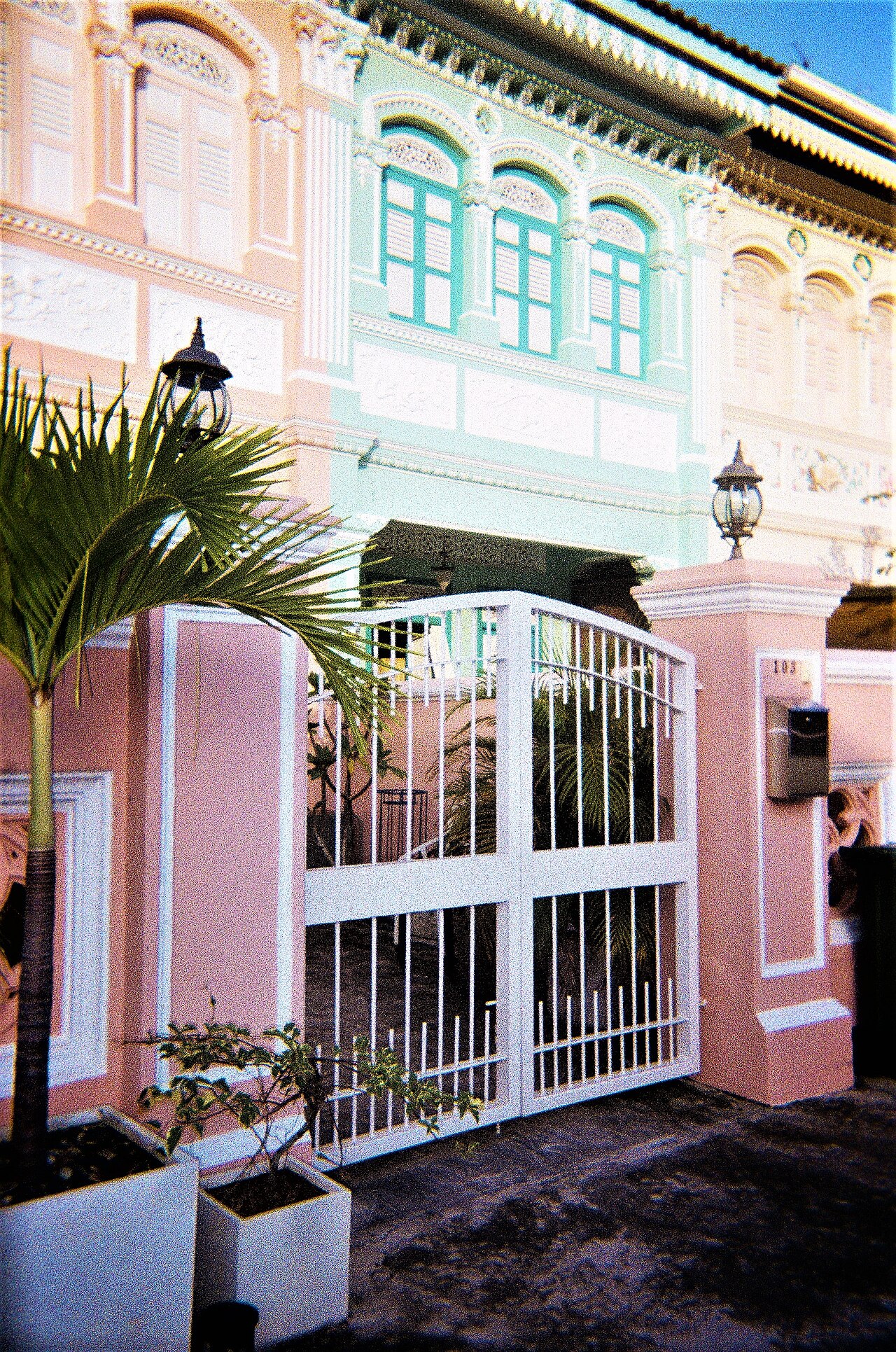
Katong and Joo Chiat, in the east of the island, are the heartland of Singapore's Peranakan community and one of the most rewarding neighbourhoods for food and photography. The Peranakans, also called Straits Chinese, are descendants of Chinese traders who settled in the Malay world and married locally from as early as the fifteenth century, creating a hybrid culture with its own language, dress, beadwork, porcelain and, above all, cuisine. In the early twentieth century, wealthy Peranakan families built seaside villas and terraced houses here, when the coast still ran close by, and the area kept its character as the city grew. Today the signature sight is the row of brightly painted terrace houses along Koon Seng Road, with their pastel facades, ornate plasterwork, carved pintu pagar half-doors and glazed ceramic tiles; it is one of the most photographed streets in Singapore. Around it, Joo Chiat Road and East Coast Road are lined with conserved shophouses that hold old-school bakeries, kueh shops, Peranakan restaurants, heritage stores selling beaded slippers and kebaya, and newer cafes and bars. Food is the main reason to come. Katong laksa, a rich, coconut-based curry noodle soup in which the noodles are cut short so you can eat it with a spoon, is the neighbourhood's famous dish, and the area is also known for Nyonya kueh (colourful steamed cakes), Peranakan classics such as ayam buah keluak, and excellent bak chang (rice dumplings). At the northern edge, Geylang Serai is the heart of the Malay community, with a busy market and food centre. It is a half day of eating and wandering that feels nothing like downtown.
A good route starts at the northern end. Take the MRT to Paya Lebar, eat at Geylang Serai Market's food centre or browse its stalls, then walk south down Joo Chiat Road, looking at the shophouses and stopping at bakeries and kueh shops. Turn left onto Koon Seng Road for the famous pastel terrace houses, then continue to East Coast Road, where the Katong laksa shops and Peranakan restaurants cluster. Joo Chiat Road and East Coast Road also have small heritage shops and galleries devoted to Peranakan beadwork, embroidery and porcelain. The full walk takes two to three hours with eating stops.
Visit in the morning or late afternoon to avoid the midday heat; many shops and eateries close one day a week and some close by late afternoon, so weekends are the liveliest. During Hari Raya Puasa, the Geylang Serai area hosts a large festive bazaar and street light-up, a spectacular time to visit. The terrace houses on Koon Seng Road are private homes, so photograph from the street and keep doorways clear. Bring an appetite and some cash for older shops.
Getting there: Paya Lebar MRT serves the northern end, and the Thomson-East Coast Line stations at Marine Parade and Marine Terrace bring you close to East Coast Road at the southern end. East Coast Park, with its long seaside cycling and walking path and seafood restaurants, is a short walk south, which makes it easy to turn the visit into a full day by the sea. Hotel Indigo Singapore Katong is a good base if you want to stay in the area.
What to expect
The experience
A free self-guided walk through the Peranakan and Malay heartland of the east, with colourful terrace houses, heritage shops, bakeries and famous noodle shops.
Best time
Morning or late afternoon, ideally on a weekend when the neighbourhood is liveliest.
How long
Two to three hours with eating stops; longer with East Coast Park.
Tips
Walk south from Paya Lebar MRT to East Coast Road. Come hungry. Photograph Koon Seng Road from the street, as the houses are private homes.
Quick picks
- Best for
- Peranakan food and architecture away from the downtown crowds.
- Families
- Colourful houses and snacks keep kids happy; finish at East Coast Park.
- Couples
- A slow food walk, then a sunset stroll by the sea at East Coast Park.
- Pair with
- East Coast Park, or Jewel Changi Airport on the way to the airport.
- Time needed
- Half a day.
Good questions
What is Katong famous for?+
Peranakan culture and food: the pastel terrace houses of Koon Seng Road, Katong laksa, Nyonya kueh and heritage shops, along with the Malay market and food centre at nearby Geylang Serai.
What is Katong laksa?+
A rich, coconut-based curry noodle soup with prawns and cockles, in which the noodles are cut short so the whole bowl can be eaten with a spoon. It is the neighbourhood's signature dish.
Who are the Peranakans?+
Descendants of Chinese traders who settled in the Malay world and married locally centuries ago, creating a distinct culture with its own cuisine, dress, beadwork and architecture.
How do I get to Katong and Joo Chiat?+
Take the MRT to Paya Lebar for the northern end, or to Marine Parade or Marine Terrace on the Thomson-East Coast Line for East Coast Road.
Can I visit the houses on Koon Seng Road?+
They are private homes, so admire and photograph them from the street. For Peranakan interiors, visit the heritage shops on East Coast Road or the Peranakan Museum in the Civic District.