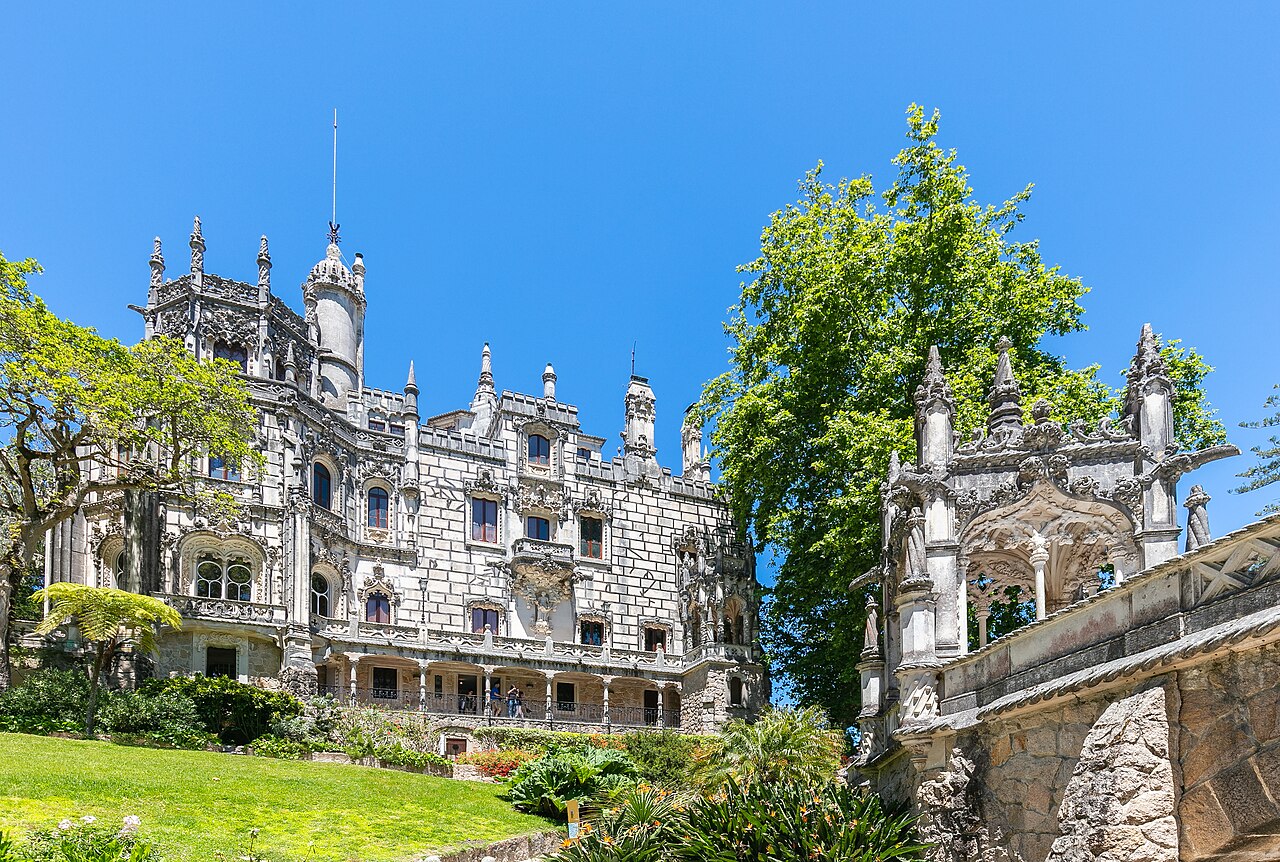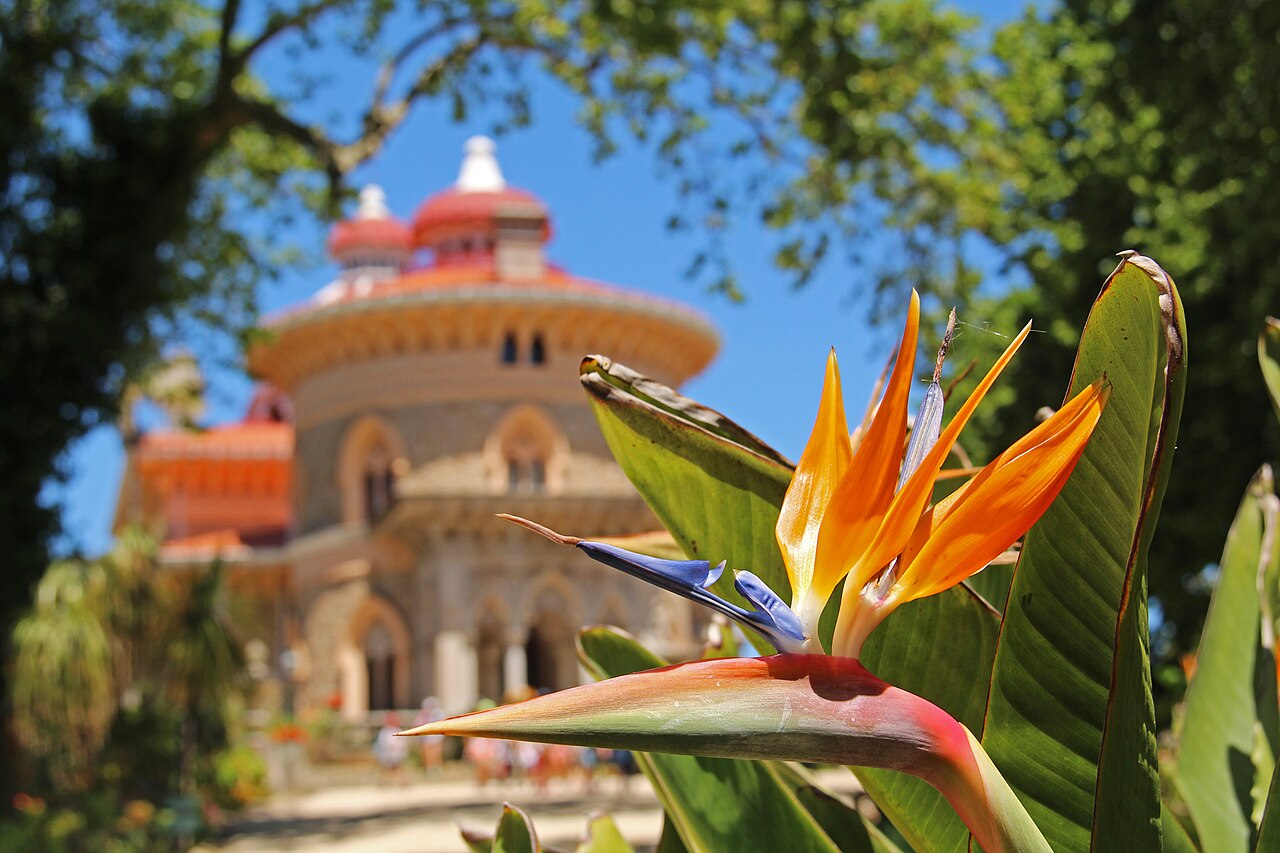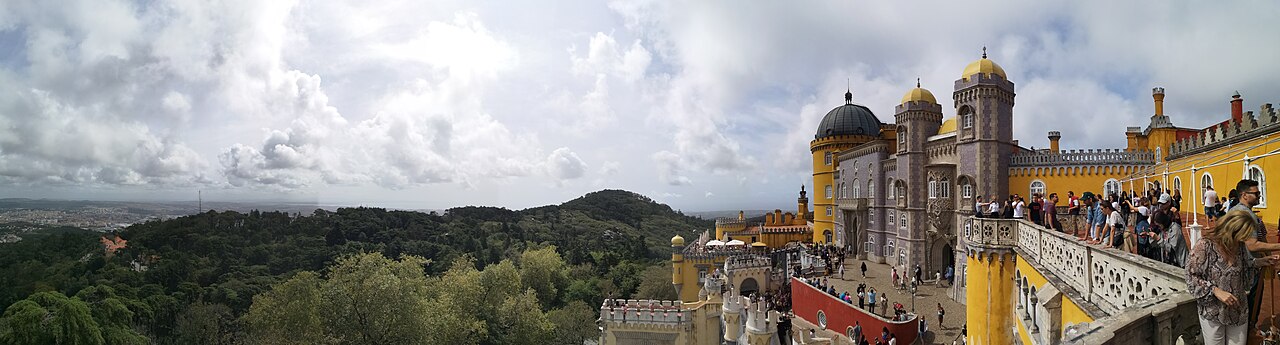
Sintra Village, known as Vila Velha, is the old centre beneath the hills, a tangle of narrow lanes, tiled facades, shops and cafes clustered around the National Palace. It sits inside the Cultural Landscape of Sintra, which UNESCO describes as the first centre of European Romantic architecture, a place where Ferdinand II turned a ruined monastery into a palace and created a park with local and exotic trees, influencing landscape design across Europe. Walking through the village gives you the human scale of the place. Pastry shops sell the local specialities, travesseiros and queijadas, and small shops sell ceramics and Portuguese tinned fish. Viewpoints lead up through the lanes to the hillside, and the National Palace, Regaleira and the Seteais area are all within a walk. The village is also the transport hub: the train station, the bus stops for the 434 and 435 routes and the taxi ranks are all here. It is busy in the middle of the day, calm early in the morning and charming at dusk, when the day trippers have left.
Understand the layout. The train station is in the lower part of the town, a short walk from the historic centre. The centre itself is compact, with the National Palace as its focal point, and the lanes climb toward Regaleira and Seteais. Parques de Sintra notes that private vehicles are restricted in the historic centre to residents, so arrive by train or park at a car park on the edge and walk or take a bus. Traffic limits and occasional circulation changes can affect buses, so check the notices before you go.
What to do: walk the old lanes in the early morning, visit the National Palace, then eat. Pastries are the standard snack, and many cafes and restaurants serve Portuguese dishes. In the evening, when the crowds thin, the village is far nicer, which is one reason to spend a night here rather than rushing back to Lisbon. The surrounding landscape has marked trails, including routes to the Moorish Castle, and the village is a good starting point for walking.
The UNESCO listing covers a large area of palaces, gardens and forest, not only the village, so think of the village as the doorway. If you are planning a longer stay, use the village as your base, book your timed entries in advance and put the hardest climb, Pena, early in the morning. Crowds are heaviest from late morning to mid-afternoon, so schedule the village walk for early or late. There is no entry fee for the village itself, though the monuments around it have their own tickets.
What to expect
The experience
A self-guided walk through the historic centre's lanes, with pastry stops and short climbs to viewpoints, before or after a palace visit.
Best time
Early morning or evening, when the day-trip crowds are away.
How long
Two to three hours at a relaxed pace, longer with a palace visit.
Tips
Arrive by train, avoid driving into the centre, try a travesseiro and stay a night to enjoy the village after the crowds leave.
Quick picks
- Best for
- First-timers who want to see the village and plan the transport for the palaces.
- Families
- Pastry stops and short walks keep children happy, but cobbles and slopes are hard with strollers.
- Couples
- A quiet dinner after the day trippers leave.
- Pair with
- The National Palace, Regaleira and the 434 bus to Pena and the Moorish Castle.
- Time needed
- Two to three hours, or an evening if you stay overnight.
Good questions
Why is Sintra a UNESCO World Heritage Site?+
UNESCO describes the Cultural Landscape of Sintra as the first centre of European Romantic architecture, with palaces and gardens that influenced landscape design across Europe.
Can I drive into Sintra village?+
Private vehicles are restricted in the historic centre to residents. Use a car park on the edge, a taxi, or the train and bus.
What should I eat in Sintra?+
Try the local pastries, travesseiros and queijadas, which are sold in the village's pastry shops.
Is it worth staying overnight?+
Yes. The village is much calmer in the evening and early morning, and you can plan your timed palace entries without rushing.
Is entry to the village free?+
Yes. Walking the village costs nothing, though the palaces and parks have their own tickets.